With more than 2400 shows on offer, unpredictable weather and sky-high prices, David Whitley shares his tips on how to survive Edinburgh’s crazy-chaotic-but-awesome Fringe festival.
One for the bucket list? Heck, yes. If you ever want to have your view of ‘cultural’ radically redefined, visiting Edinburgh during August should do the trick.
The city is usually handsome, relatively refined and sedate, but when the festivals come to town, it suddenly resembles a zoo where all the animals have been dosed up on caffeine then let out of their enclosures.
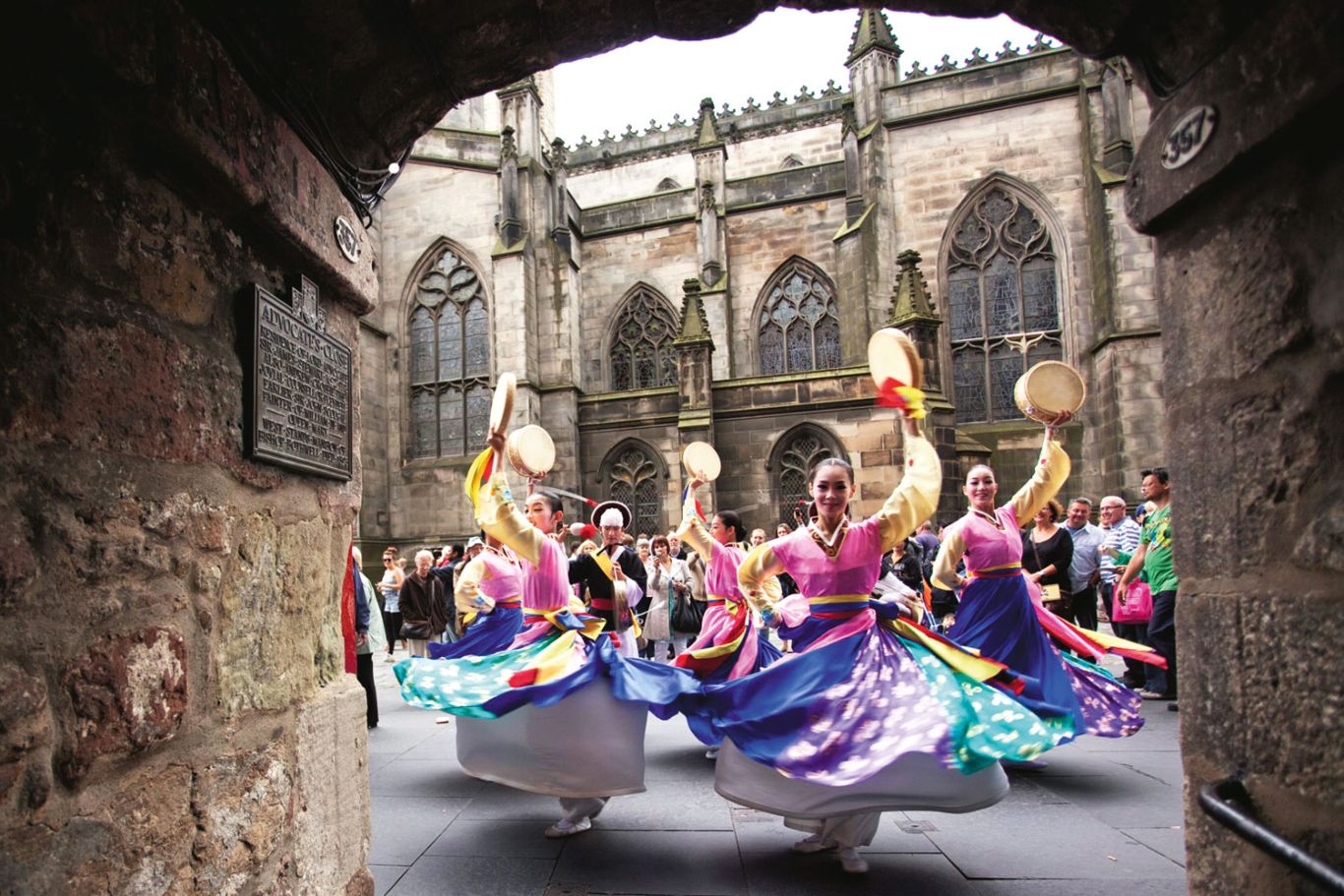
It’s scarcely disguised chaos, with visitors doubling the usual population and hundreds of venues across the city – from major theatres to small pubs sticking a microphone in a tiny back room – becoming performance hubs.
It leads to a creative, adventurous energy unmatched by any place or event on earth. There’s so much going on that it’s only possible to capture a tiny fraction of it.
Grumpy locals who like their city quiet and reserved tend to hightail it out of the mayhem; everyone else becomes a reveller, swept along by the alcohol-fuelled, sleepless tide.
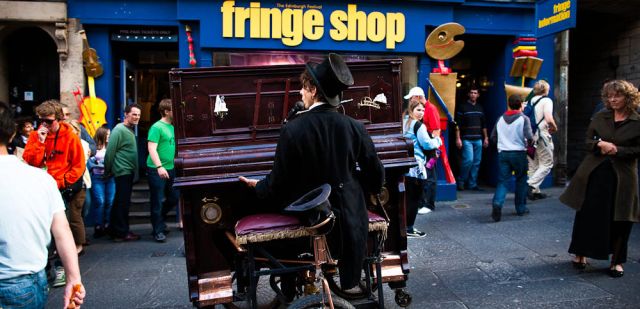
What exactly is it?
Even though people come to the Scottish capital for the ‘Edinburgh Festival’, there is no such thing. During August, there are actually five separate festivals going on at once. The Edinburgh Art Festival is about the visual arts, and is largely restricted to the museums and galleries.
The Royal Edinburgh Military Tattoo is all marching, bagpipers and pomp outside the castle, and the Edinburgh International Book Festival pulls in hundreds of top-drawer writers for talking shops and literary events.
However, for most visitors, the ‘Edinburgh Festival’ means either the Edinburgh International Festival or the Edinburgh Festival Fringe.
The former leans towards high culture – a curated programme of theatre, classical music, opera and dance.
The Edinburgh Festival Fringe – or simply The Fringe – however, is what creates the vibe. It’s the largest arts festival in the world, and it’s gloriously unmanaged.
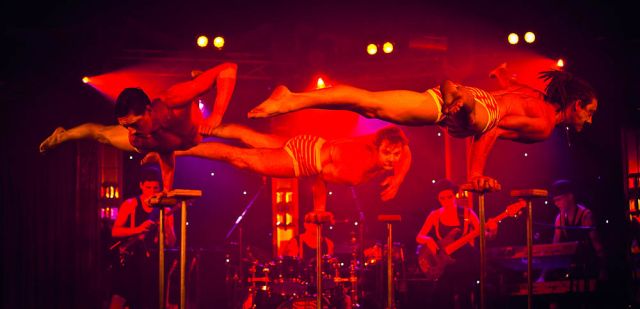
Anyone can come to Edinburgh and put on a show. And thousands of comics, dancers, poets, theatre groups and bizarre cabaret acts do just that.
How it works
The performers book whatever venue they can afford.
Bigger name comics tend to snap up the plum evening slots at key venues such as the Pleasance, Gilded Balloon, Underbelly and Assembly.
Unknowns are left with the scraps – early afternoon slots in small rooms at the big venues, or later shows at lesser-known venues that struggle to pull in the crowds.
For all but a few performers, The Fringe is an exercise in haemorrhaging money – transport, accommodation, living expenses, venue hire and marketing costs far exceed the money collected at the door.
But it’s not all about money. The experience – doing a show a day for three weeks through a hungover fug, sleeping on friends’ couches, networking with other performers and that slim possibility of being ‘discovered’ by major promoters or TV talent-spotters – is what makes it an obligatory rite of passage.
For visitors, the experience is what you make it. Throw yourself right in, however, and it’s likely to be a highly experimental stagger between three or four shows a day, spaced out by drinks in sunny courtyards and arguments about what to see next.
The essential tools
The first step in negotiating through the bewildering minefield is to pick up The Fringe Programme, which is free in bookshops and venues across the city, including the Visit Scotland Information Centre (3 Princes Street).
It’s a daunting brick of a thing, seemingly designed to foster indecisive panic. Every show is listed, and sitting in a café trying to pick out which ones might be half-decent is a time-honoured ritual.
A bit of advanced planning helps – The Fringe and Edinburgh Festival’s websites have searchable databases of everything that’s going on. The latter also has a printable version of the festival venues map – something that can prove crucial when trying to get from show to show in a hurry.
For narrowing things down, harnessing the power of the press is pretty much essential. The Scotsman newspaper publishes a daily festivals supplement full of reviews. The Herald and The Guardian also have extensive coverage, whilst detailed listings magazine The List comes out weekly during August.
This said, only going to things that get reviewed is massively against the spirit of The Fringe. Taking a gamble on unknown comedians and ambiguously-described Albanian nose-flute orchestras is an integral part of the fun.
The barstool bragging rights over the most atrocious piece of pseudo-dramatic guff you’ve wasted money on are generally more keenly contested than those over the best unheralded discovery you’ve made.
Sometimes – just sometimes, mind – it’s worth going on a whim to see whatever you’ve just been handed a flyer for. And have faith, you will never have to walk more than a couple of metres to find someone who wants to give you a flyer.
How to get tickets
If booking in advance – and this is pretty much essential for any act you’ve heard of or has been receiving five-star reviews – the Edinburgh Festivals website is the easiest one-stop shop for getting tickets.
It’s also possible to book over the phone from June to September (+44 131 226 0000) or using The Fringe app for iPhone and Android smartphones.
The tickets can be picked up at The Fringe Box Office (next door to The Fringe shop at 180 High Street), the University of Edinburgh Visitor Centre (2 Charles Street) or the Half Price Hut (near the Royal Scottish Academy at the bottom of The Mound).
As the name would suggest, the Half Price Hut is where tickets for shows that haven’t sold out are flogged for 50% off in a bid to stir up interest. That applies on the day as well as in advance.
Sadly, ticket prices have rocketed in recent years. Most shows cost between £8 and £15, and if you’re watching a few every day, wallets empty very quickly.
For those with wiped-out budgets, the rival Free Fringe and Free Edinburgh Fringe Festival are offshoot festivals putting on gratis shows in various venues. The fluctuations in quality are even wilder, however.
On the day, it’s often better to book with the venues themselves and pick up the tickets on the door. Major players include the Assembly Rooms, and the Traverse – which is the best venue for drama.
Slightly off the usual circuit are the Stand – perennially cited as the favoured venue for comedians – and Greenside.
For such gigantic-scale borderline anarchy, scams are surprisingly rare. You should be fine if you don’t get tickets from touts and watch out for pickpockets on the ultra-touristy Royal Mile between Edinburgh Castle and the Palace of Holyroodhouse.
When to go?
(Please note, these dates are subject to slight change each year)
The Fringe kicks off on the first Friday in August, and ends on the last Monday of August.
The first week is the best bet cost-wise – accommodation is slightly cheaper, and more shows sell discounted tickets in order to get the word out.
But the needle in a haystack factor is higher – you’ve very few reviews to go on, and a lot of the shows are still works in progress.
By the second weekend, when the International Festival starts (9 August – 1 September), everything’s in full swing and accommodation prices hit the ceiling.
To catch the Royal Military Tattoo, be there between 2-24 August.
The Book Festival runs from the 10-26 August, and the Art Festival takes place between 1 August and 1 September.
Where to stay?
Predictably, the massive influx of people means hotel prices soar during August.
There are two schools of thought for dealing with this. The first is to book way in advance, and the second is to leave it until late, hoping the hotels have overestimated demand and will drop prices at the last minute. This is a massive, potentially disastrous gamble however. It happened in 2012, but that’s largely because of the London Olympics.
As most of the festival venues are in the Old Town or just to the south of it, that’s where you’ll want to stay if you want to be able to temporarily duck out of the action without cab rides or schleps up and down big hills.
The perfectly-located Missoni (1 George IV Bridge; +44 131 220 6666) brings fashion house flair, blazes of colour, free minibar and a general excitable buzz to the Royal Mile. Expect to pay from $337 a night during the peak festival weeks.
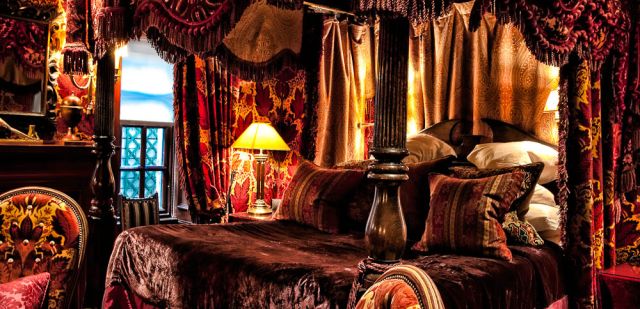
But if you want something truly special, the eight rooms of the Witchery by the Castle are a theatrically flamboyant gothic fantasy world. Prices are from$472 a night.
If relative affordability is the goal, the recently refurbed Edinburgh City Hotel is smart if un-enthralling, and is within easy walking distance of most venues. From $208 a night.
If you’d prefer to spend on shows than sleep, Laterooms tends to have the biggest range of guesthouses – many a bus or taxi ride away from the Old Town.
Renting an apartment – many locals get out of town during the festivals and let their homes out as accommodation – can cost as little as $725 a week. Reputable agencies include Festival Apartments and Festival Beds.
Another surprisingly decent quality option is staying in the student flats and halls of residence that are rented out to visitors during the summer months.
Check out Edinburgh First, for basic but perfectly adequate single en-suite rooms at the Pollock Halls. Available from $99. Twins cost from $167.
Weekly travel news, experiences
insider tips, offers, and more.
Playing tourist – and plotting your escape
The Castle is usually billed as Edinburgh’s top attraction, but Real Mary King’s Close is better.
The tours go down into a maze of long-buried underground streets, melding ghost stories and fascinating social history.
The city’s other surprisingly brilliant attraction is the Royal Yacht Britannia, which is moored in the old docklands area of Leith.
The audio guides do a tremendous job of digging into the minutiae of royal life and explaining how it was the one place that the Queen could truly relax.
In terms of city tours, Eat Walk Edinburgh is mainly about generous samples of food and booze in a series of establishments you might not otherwise find, but it does a good job on the history and legends of the city too.
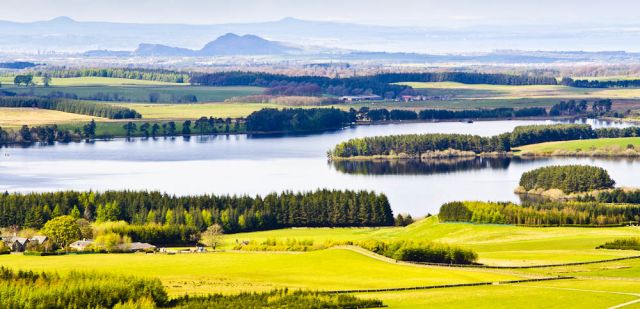
If ducking out of the madness becomes a necessity, a walk in the Pentland Hills to the south of the city should do the job, as should gawping at the engineering marvels that are the Forth Road Bridge at Queensferry.
Wildlife lovers can either head to the exemplary Edinburgh Zoo – the parading penguins and bamboo-guzzling pandas are the highlights – or head out on a seal and seabird-watching boat trip from Newhaven Harbour with Sea.fari Adventures.
Top bars, pubs and restaurants
For fine dining, heading to Leith with an advance booking is the way forward.
Both The Kitchin and Restaurant Martin Wishart have deserved Michelin stars.
For reasonable prices and high quality in the Old Town (which is something of a holy grail combo), the art-filled, colourful Hula Juice Bar is great for wraps, soups and salads. Meanwhile, Mums Great Comfort Food does classic comfort food such as bangers and mash, stews and pies, with premium, locally-sourced ingredients.
For Old Town drinks, the Bow Bar is an archetypal one-room Edinburgh pub with a commendable range of tap beers and 200 whiskies to choose from.
Beer-lovers should beeline it to Brewdog. It showcases the exceptional (and often very strong) range from Scotland’s self-styled ‘punk brewery’ of the same name.
If you can find it – it’s a cellar bar behind an unmarked wooden door – Bramble in the New Town is the top bet for atmospheric, speakeasy-style cocktails.
Further information
Want to see more stories from International Traveller in your Google search results?
- Click here to set International Traveller as a preferred source.
- Tick the box next to "International Traveller". That's it.