hero media

Bizarre but scrumptious foods to try in Scotland

Want to try Scottish fare but can’t quite stomach the idea of haggis? Here are some bizarre but scrumptious foods to try as you explore Scotland, by Kara Murphy.

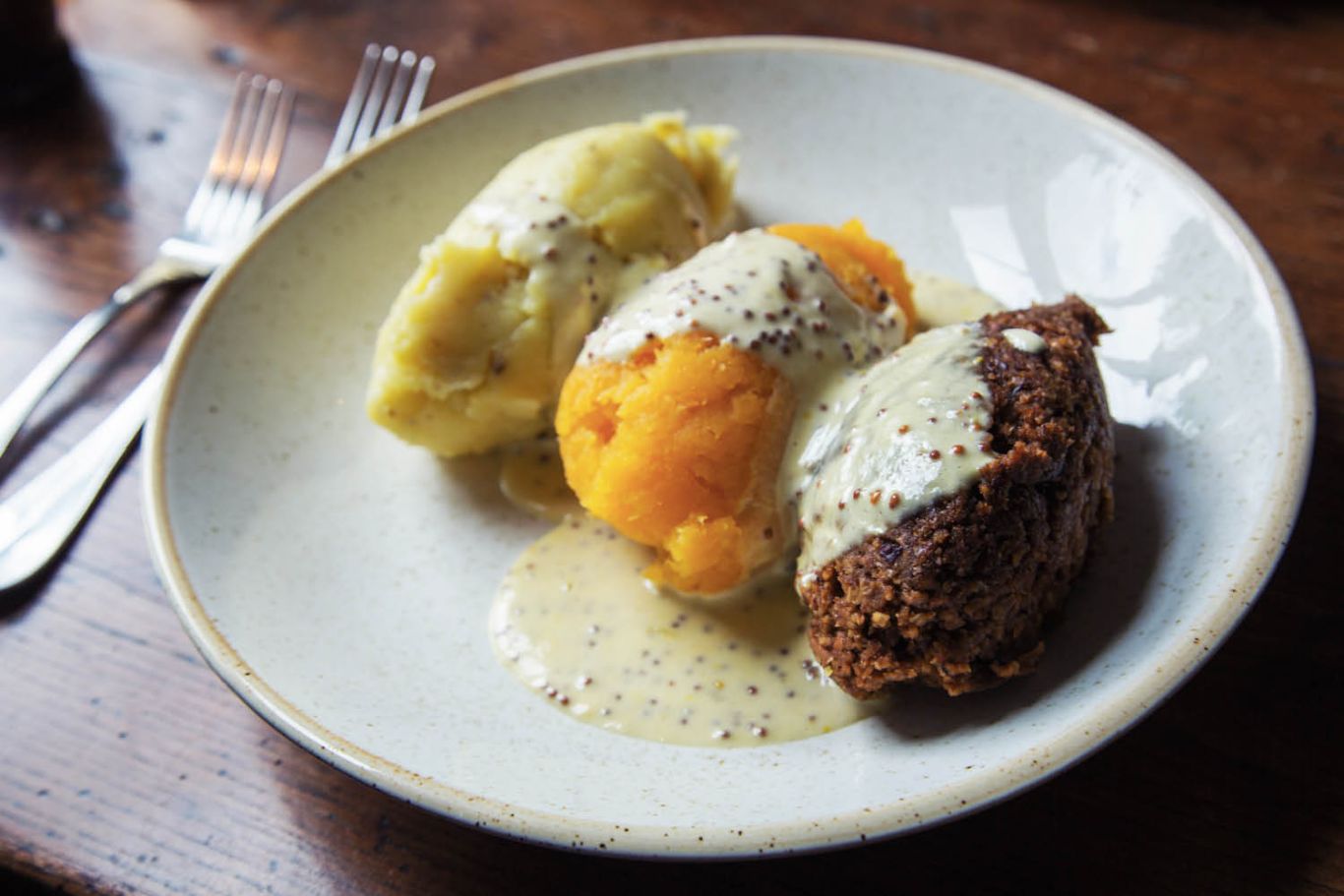
Ah, haggis – the spicy and crumbly carnivore delicacy that, when mentioned, inspires many Scots to adopt a sentimental and suddenly ravenous expression. Those of us who haven’t devoured Scotland’s national dish from childhood, though, might feel uneasy, or even downright frightened, at the prospect. This savoury pudding is, after all, a concoction of confronting sheep parts – the heart, liver, and lungs – minced and mixed with onion, oatmeal, suet, spices, and salt, and encased in either the sheep’s stomach or a synthetic casing for cooking. Yummy?

Throughout Scotland, you’ll find it served traditionally, with bashed neeps (turnips), mashed tatties (potatoes), and whisky sauce, and some restaurants (for example, the Glen Nevis Restaurant & Bar) also serve it on burgers and prepare it in deep fried formations (for example, croquettes or bon bons).

But if you’re not quite that adventurous, or you generally refrain from eating mammals, you can still seek out some unusual Scottish sustenance. Here are five other bizarre but delightful Scottish foods to try.

Hold the offal

Like its meaty relative, vegetarian haggis is typically served with neeps and tatties, but its ingredients – oatmeal, lentils, nuts or seeds, kidney beans, onions, other veggies, and spices – are less likely to make you squirm. And it’s tasty – some meat eaters even order it occasionally.

Where to try it: Loch Lomond Arms Hotel, in the village of Luss and within Loch Lomond and the Trossachs National Park, serves a traditional vegetarian haggis as well as veggie haggis bon bons.

Rhymes with stink

Its name may inspire you to wrinkle your nose, but Cullen skink – a thick, creamy soup made from smoked haddock, potatoes, onions, milk, cream, and butter – is delicious … when prepared well. My first bowl was bland, with only a couple small pieces of haddock; it left me puzzled about the dish’s popularity. But after making it myself (with generous amounts of smoked haddock) and ordering better versions elsewhere, I better understand the hype.
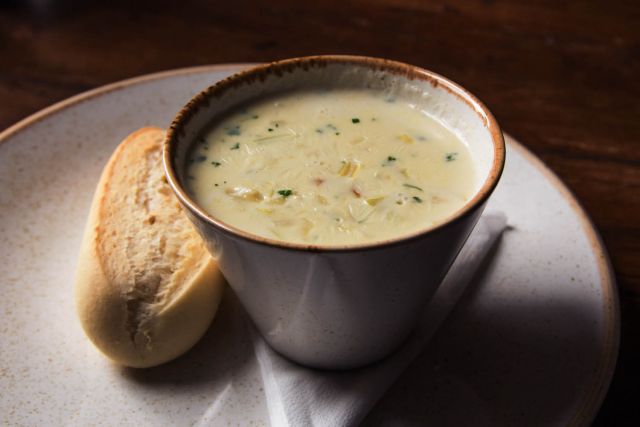
Cullen skink at the ready

Where to try it: If you can, head to Cullen, the fishing village in north-east Scotland where the soup originated.

Carb loading

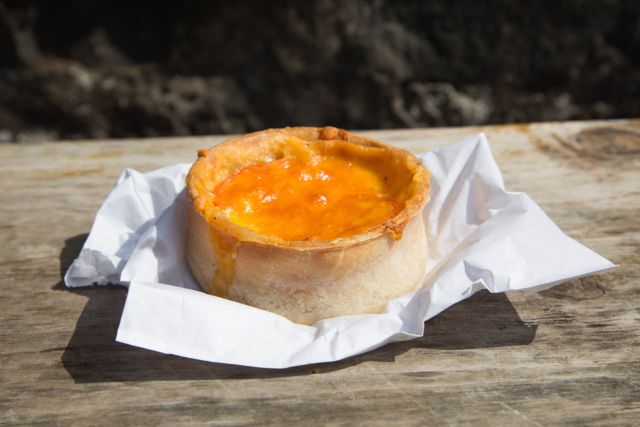
You’ll find macaroni and cheese on many Scottish menus. For the ultimate takeaway comfort food, though, try a macaroni pie – mac and cheese stuffed in an open savoury pastry crust with cheese melted on top. Note that fresh bakery versions are generally oodles better than pre-packaged ones; definitely heat before eating.

Where to try it: MacKenzie’s Bakery, in Portree on the Isle of Skye, sells macaroni pies for just £1.10 pounds each.

Poetic dessert

Cranachan, a traditional Scottish dessert, incorporates layers of whisky and honey-soaked fresh raspberries, toasted oats, and whipped double cream. If you’re in Scotland on 25 January (the late Scottish poet Robert Burns’ birthday), make sure to attend a Burns Supper. These events celebrate the poet’s life and work and include a hearty meal of haggis (often the veg version, too), whisky, and, usually, cranachan.
Where to try it: Ghillie Dhu in Edinburgh serves a boozy cranachan, which will give you plenty of energy for dancing at its Ceilidh club.

Perfect pairing

What’s better than a wee dram of Scotch whisky? Scotch single malt and fine chocolate, of course. At Dalwhinnie Distillery, in Cairngorm National Park in the Scottish Highlands, you can sample six single malt whiskies, each paired with a luxury chocolate from the Highland Chocolatier in Grandtully. Highlights include the creamy 25 year old, which comes with a passionfruit and mango truffle, and spicy Lizzie’s Dram (named for recently retired Lizzie Stewart, Scotland’s first female operator in malt distilling), which arrives with a velvet truffle caramel with liquorice. A decadent hot chocolate made from chocolate ganache is also available; spiking it with whisky adds to the indulgence.


Want to see more stories from International Traveller in your Google search results?

  1. Click here to set International Traveller as a preferred source.
  2. Tick the box next to "International Traveller". That's it.
hero media

What the European heatwave means for your summer travel plans

Temperatures are soaring this summer, breaking records across Europe and the UK. 

Euro summer is a feeling like no other. But when a heatwave hits? The dream trip quickly turns into a sweaty mess. Extreme heat is sweeping Europe and the UK this week, with record-high temperatures impacting travel plans across the continent.

And while Australian summers are typically hotter in absolute temperature, many European cities aren’t equipped for high temperatures, resulting in unbearable weather.

Why is it so hot in Europe?

Signs of a hot summer loomed in May, when the mercury hit unprecedented spring highs. Now, extreme high temperature warning alerts have been issued in countries such as Spain, Italy, France, England, the Netherlands and Germany.

France saw its hottest day on record on Wednesday, with an average temperature of 30°C across the day and night. This surpasses the average temperature for June, which is 15°C to 25°C. Dozens of people have died, including 40 from drowning.

In Spain, 212 deaths have been linked to the heatwave.

The UK recorded its hottest June day ever on Wednesday with temperatures soaring to 36.1°C. In an article published by the Met Office – the UK’s national meteorological service – Professor Stephen Belcher CBE, Met Office Chief Scientist, shared his concerns about June’s heat. “To see temperatures like this in the UK in June is sobering. Events like this bring home the implications of climate change, with very high temperatures and humidity bringing significant health implications from heat stress, as well as impacts to a range of sectors such as transport, energy and water supply,” he said.

Heatwaves are becoming increasingly common in Europe and the UK, neither of which is prepared for such extremes. The World Meteorological Organization reported that in 2025, at least 95% of Europe experienced above-average annual temperatures and that the continent was heating up twice as fast as the global average.

How travel is impacted

A pharmacy sign displaying 40 degrees Celcius
A pharmacy broadcasting local weather data. (Credit: Getty/Dragoncello)

During a heatwave, power grids, water systems and transport networks can be affected, resulting in disrupted itineraries for travellers. In France, power outages have left thousands without electricity and early closures have been implemented for two of Paris’s biggest attractions, the Eiffel Tower (early afternoon rather than late at night) and the Louvre (two hours early). Eurostar cancelled its London to Paris and Paris to London services from the 22nd to the 25th, and major UK rail companies have been advising travellers to avoid using trains where possible, or to travel during early hours.

If a heatwave is predicted, being flexible with your itinerary and having fully refundable/changeable tickets is key, as extreme heat can force the cancellation of outdoor activities, impact rail and flight services and change the opening hours of sites and eateries.

Why does summer in Europe often feel hotter than summer in Australia?

people swimming in the Canal Saint-Martin in Paris
People swimming in the Canal Saint-Martin in Paris to cool off. (Credit: Rachael Thompson)

With some of the highest UV levels in the world, Australians are no strangers to the heat, adapting well to intense weather. But our infrastructure is largely equipped to withstand soaring temperatures with climate-responsive passive design, refrigerated air conditioning or evaporative coolers, as well as swimming spots aplenty.

Buildings in Northern and Western Europe and the UK, however, are constructed to retain heat and handle frosty winters. The lack of universal air conditioning means it generally feels hotter even though the temperature on your app might not look it. During a heatwave, it can feel like you’re in a sauna as cities act like heat traps.

How to stay cool and prepare for another heatwave

Relief is expected across Europe and the UK later this week, but more heatwaves are still possible in the coming months. Summer heat typically peaks in July and August.

Public transport often doesn’t have air conditioning, and buses in particular can be swelteringly hot. If you’re heading outside or your accommodation has no air conditioning, it’s worth buying a spray bottle and a handheld fan from a pharmacy or tourist stand. Check ahead of time if restaurants and cafes have air conditioning and make a booking in advance. The highest temperatures typically hit between 3pm and 6pm, so aim to head outdoors outside of these hours.

Rising temperatures invite travellers to enter a more intentional era of seeing the world. Now more than ever is the time to embrace lower-impact “coolcations” and off-season getaways.

5 Foods Everyone Must Try In Scotland