hero media

These are the world’s best cities for street art

The artistic antidote to urban greyness, street art has become increasingly popular across the globe.

But for the best cities to see colourful and clever murals, we asked street art expert and author of new book ‘Street Art: International’

International Traveller’s pick: Los Angeles, USA

It may not seem the most obvious pick, but as it turns out, Los Angeles is bursting at the seams with incredible street art from local artists who adopt an unofficial way of life, battling against their common enemy; the Graffti Abatement. Here we meet the heroes and villains of the street art world…

London, England

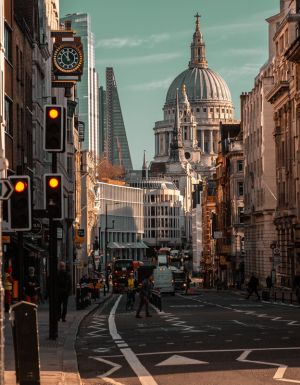
London is somewhat of an epicentre for street art; the streets of Camden and Shoreditch, especially Brick Lane, draw local and international artists as well as art-loving travellers.


Here you’ll find the unmissable portraits of David Walker, Stik’s simple and stylised figures, Dan Kitchener’s evocative and almost abstract images of lights on wet nights and of course, the odd Banksy.

Mural titled 'Burn' by UK street artist Irony, in Camden Market, London.
Mural titled ‘Burn’ by UK street artist Irony, in Camden Market, London.

One of my favourite artworks here is Irony’s aerosol can spraying flames, a clever reference to the fact that a masterpiece is known as a ‘burner’. One great local experience is getting up close and personal with the mini artworks of Ben Wilson (aka Chewing Gum Man). The best way to do this is to walk across Millennium Bridge with your eyes glued to the treads. If you look closely you won’t be disappointed.

Paris, France

Paris has a number of home-grown artists who create thought-provoking work on its streets.


Featuring the sensitively drawn paste ups of Levalet, clever works in response to France’s cultural heritage by Pejac, and the intricate titled mosaics by Invader.


Street art hunters should explore the Parisian neighbourhood of Belleville and the thirteenth arrondissement, both promising some of the city’s most impressive murals.


A short trip to Vitry-sur-Seine on Paris’s outskirts provides an opportunity to not only see an outdoor gallery of stenciled portraits by Christian Guemy (also known as C215), but also the work of his colleagues that were invited to add to the local walls.

Berlin, Germany

In Berlin, head straight for Schoneberg and Friedrichschain – the collection of art here is truly inspiring, especially on the Bülowstrasse. Here you will find the work of Brazilian twin brothers known as Os Gêmeos and Irish artist Fin DAC.
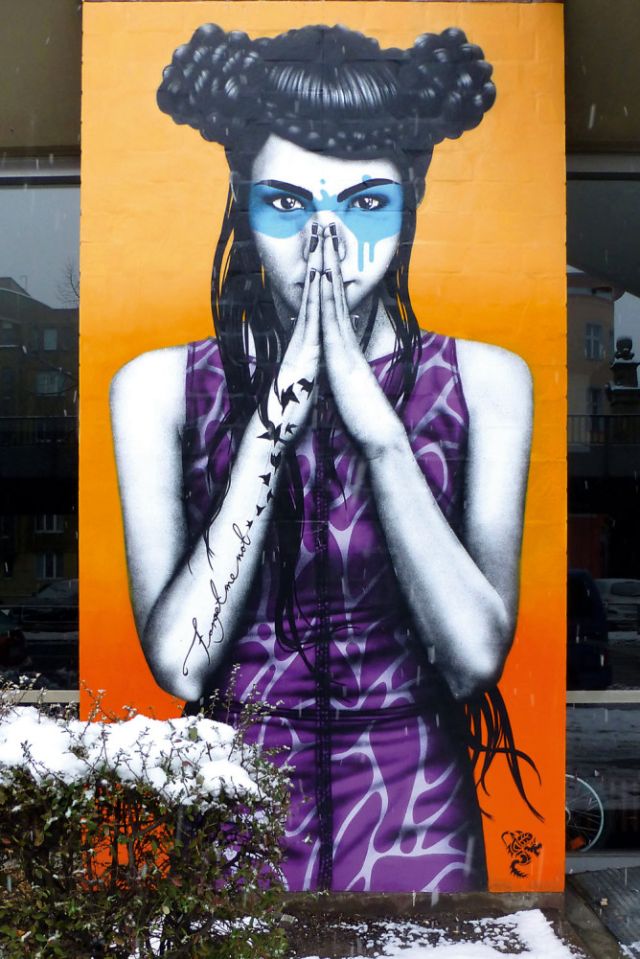
'Forget Me Not' mural by Fin DAC in Berlin, Germany.
‘Forget Me Not’ mural by Fin DAC in Berlin, Germany.

The East Side Gallery is another site worth visiting in Berlin – a publicly accessible remnant of the Berlin Wall, now home to street art.

Łódź, Poland

The quantity and quality of the street art in Łódź, surprises many. Due to the hard work and organisation of the local Urban Forms Gallery, an amazing collection of art can be seen enlivening the walls of this austere town.


While the work is often serious, much of it also bears a fairytale-like quality.


Perfect examples of this are the stunning walls painted by Sainer and Bezt, a duo who met here while studying in art school and are now known as Etam Cru.


This city is not to be missed by the serious street art hunter.

Valparaiso, Chile

Valparaiso, a close neighbour of Santiago, is made up of a series of hillside communities locally-known as cerros.


Many of them have been enhanced by the joyous street art across this vibrant Chilean city. Home to many wonderful artists, you will see beautiful works by La Robot de Madera and Charquipunk, as well as Valparaiso-born and internationally-renowned artist, INTI.  One of the city’s greatest works is by INTI, encompassing an enormous wall he painted against the backdrop of the busy local harbour.

Weekly travel news, experiences
insider tips, offers,
and more.

New York City, USA

Like London, New York City is a magnet for street artists. Everybody wants to paint here, although the mark they leave may not be long lasting.


Bushwick, Williamsburg and Welling Court are important centres, as is Little Italy in Manhattan with its LISA (Little Italy Street Art) Project.


The work here is enormously varied and rewards those who wander. It ranges from Olek’s guerrilla knitting to Dain’s paste ups, with everything imaginable in between.


There’s also Kobra’s iconic wall with its patterns and vibrant colours that can be seen from the High Line.

Christchurch, New Zealand

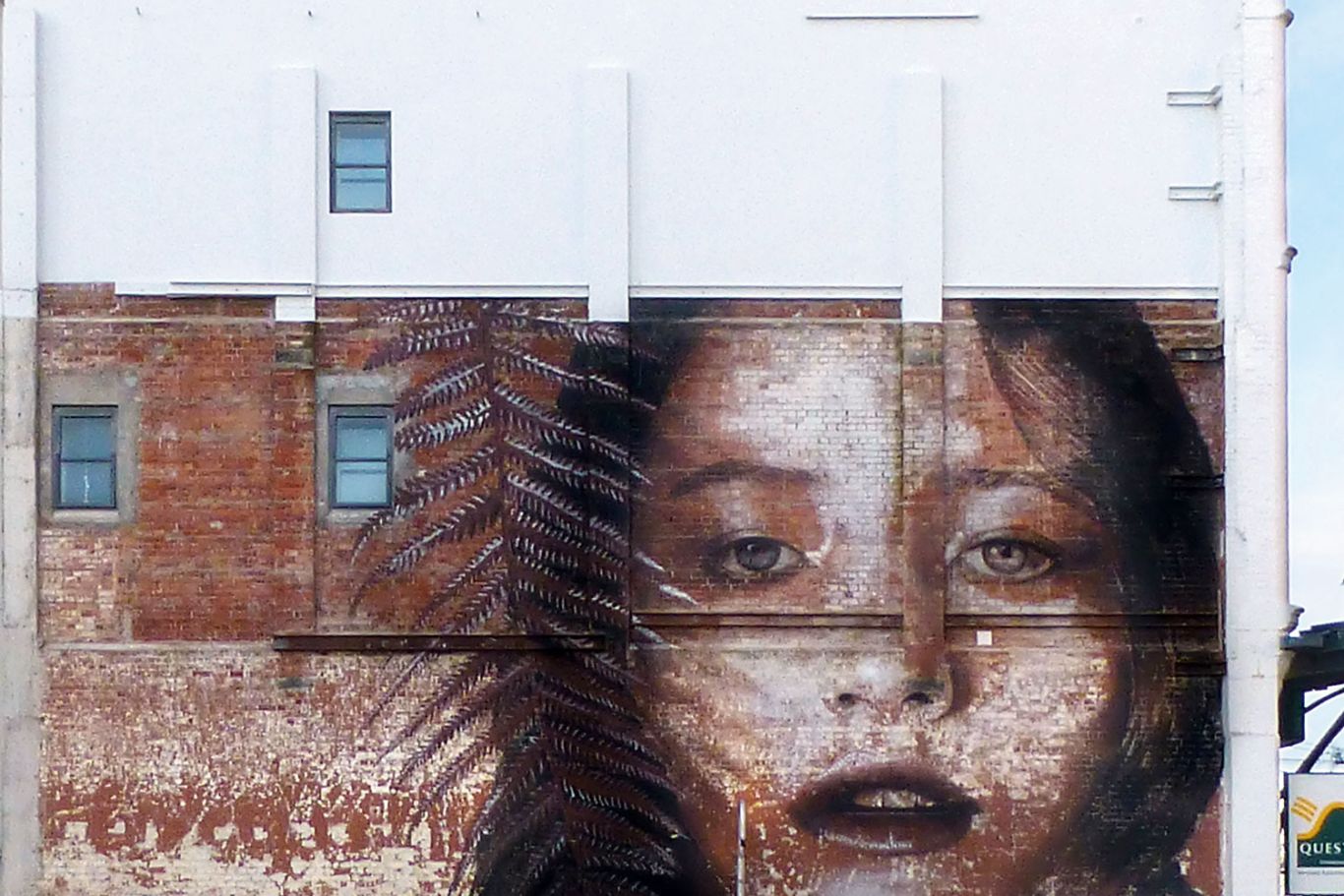
Christchurch has reinvented itself using street art, since earthquakes in 2011 devastated the city and much of its architecture. Now areas once cleared and sparse, are starting to come back to life with new buildings and newer street art providing a riot of colour to fill the space.


Much of the work is by local New Zealand artists such as Askew, Owen Dippie and Jacob Yikes, as well as some international artists including Melbourne’s Rone and Adnate.


Some of the most entertaining murals are painted by BMD.


Buy the book

For more on the world’s best street art destinations, Street Art: International by Lou Chamberlin is now available from $45 at exploreaustralia.net.au.

Want to see more stories from International Traveller in your Google search results?

  1. Click here to set International Traveller as a preferred source.
  2. Tick the box next to "International Traveller". That's it.
hero media

What the European heatwave means for your summer travel plans

Temperatures are soaring this summer, breaking records across Europe and the UK. 

Euro summer is a feeling like no other. But when a heatwave hits? The dream trip quickly turns into a sweaty mess. Extreme heat is sweeping Europe and the UK this week, with record-high temperatures impacting travel plans across the continent.

And while Australian summers are typically hotter in absolute temperature, many European cities aren’t equipped for high temperatures, resulting in unbearable weather.

Why is it so hot in Europe?

Signs of a hot summer loomed in May, when the mercury hit unprecedented spring highs. Now, extreme high temperature warning alerts have been issued in countries such as Spain, Italy, France, England, the Netherlands and Germany.

France saw its hottest day on record on Wednesday, with an average temperature of 30°C across the day and night. This surpasses the average temperature for June, which is 15°C to 25°C. Dozens of people have died, including 40 from drowning.

In Spain, 212 deaths have been linked to the heatwave.

The UK recorded its hottest June day ever on Wednesday with temperatures soaring to 36.1°C. In an article published by the Met Office – the UK’s national meteorological service – Professor Stephen Belcher CBE, Met Office Chief Scientist, shared his concerns about June’s heat. “To see temperatures like this in the UK in June is sobering. Events like this bring home the implications of climate change, with very high temperatures and humidity bringing significant health implications from heat stress, as well as impacts to a range of sectors such as transport, energy and water supply,” he said.

Heatwaves are becoming increasingly common in Europe and the UK, neither of which is prepared for such extremes. The World Meteorological Organization reported that in 2025, at least 95% of Europe experienced above-average annual temperatures and that the continent was heating up twice as fast as the global average.

How travel is impacted

A pharmacy sign displaying 40 degrees Celcius
A pharmacy broadcasting local weather data. (Credit: Getty/Dragoncello)

During a heatwave, power grids, water systems and transport networks can be affected, resulting in disrupted itineraries for travellers. In France, power outages have left thousands without electricity and early closures have been implemented for two of Paris’s biggest attractions, the Eiffel Tower (early afternoon rather than late at night) and the Louvre (two hours early). Eurostar cancelled its London to Paris and Paris to London services from the 22nd to the 25th, and major UK rail companies have been advising travellers to avoid using trains where possible, or to travel during early hours.

If a heatwave is predicted, being flexible with your itinerary and having fully refundable/changeable tickets is key, as extreme heat can force the cancellation of outdoor activities, impact rail and flight services and change the opening hours of sites and eateries.

Why does summer in Europe often feel hotter than summer in Australia?

people swimming in the Canal Saint-Martin in Paris
People swimming in the Canal Saint-Martin in Paris to cool off. (Credit: Rachael Thompson)

With some of the highest UV levels in the world, Australians are no strangers to the heat, adapting well to intense weather. But our infrastructure is largely equipped to withstand soaring temperatures with climate-responsive passive design, refrigerated air conditioning or evaporative coolers, as well as swimming spots aplenty.

Buildings in Northern and Western Europe and the UK, however, are constructed to retain heat and handle frosty winters. The lack of universal air conditioning means it generally feels hotter even though the temperature on your app might not look it. During a heatwave, it can feel like you’re in a sauna as cities act like heat traps.

How to stay cool and prepare for another heatwave

Relief is expected across Europe and the UK later this week, but more heatwaves are still possible in the coming months. Summer heat typically peaks in July and August.

Public transport often doesn’t have air conditioning, and buses in particular can be swelteringly hot. If you’re heading outside or your accommodation has no air conditioning, it’s worth buying a spray bottle and a handheld fan from a pharmacy or tourist stand. Check ahead of time if restaurants and cafes have air conditioning and make a booking in advance. The highest temperatures typically hit between 3pm and 6pm, so aim to head outdoors outside of these hours.

Rising temperatures invite travellers to enter a more intentional era of seeing the world. Now more than ever is the time to embrace lower-impact “coolcations” and off-season getaways.