hero media

Shoreditch’s criminally cool digs – Courthouse Hotel

An eclectic hotel in an old magistrates’ court is a chic addition to one of London’s coolest areas, Steve McKenna writes.

If you’re a first-timer in London and can’t wait to see all the sights – you know, Buckingham Palace, Big Ben, Harrods – there are far more (centrally) convenient places to stay than Shoreditch.

But if, like us, you’re a return visitor and fancy basing yourself in a hip and happening ’hood where Londoners far outnumber tourists, then this vibrant, artsy district – sandwiched between the financial skyscrapers of the City and the residential enclaves of north-east London – is ideal.
London hotel reviews quirky
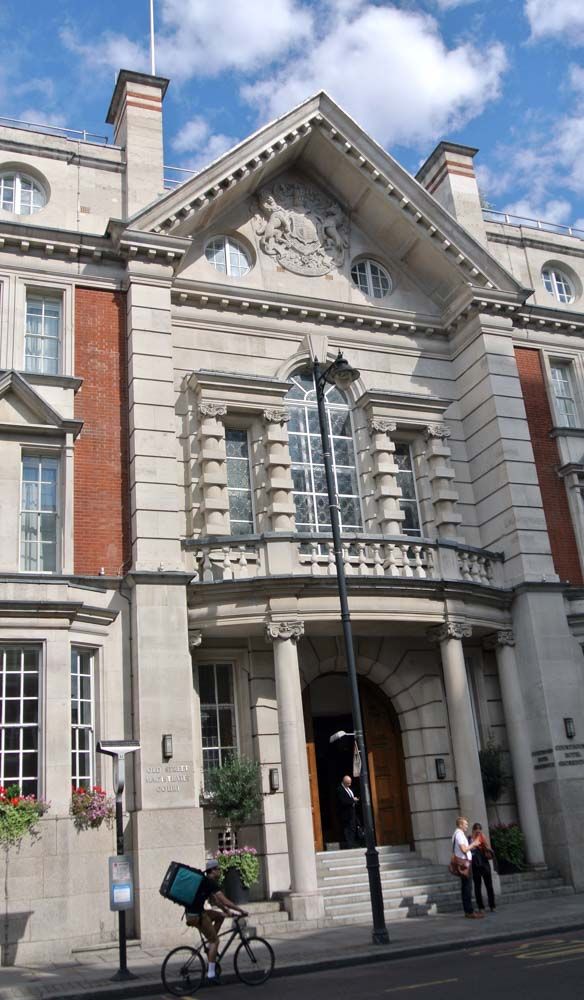
The grand entrance to the Grade II-listed building (photo: Steve Mckenna).


Especially now. While Shoreditch teems with trendy galleries, bars, cafes, eateries and boutiques, top-notch hotels have been a scarcity.

That is until the Courthouse was unveiled in mid-2016 in the former Old Street Magistrates’ Court and police station.

Attracting a varied clientele (think laptop-carrying creatives, suited corporates and photogenic couples on romantic breaks), it makes an imposing first impression with its grandiose Grade II-listed Edwardian setting.

Particularly because, architecturally, Shoreditch is more renowned for its renovated, graffiti-splashed Victorian brick warehouses, gritty ex-council flats and funky modern landmarks like Boxpark, a ‘pop-up mall’ cobbled together with shipping containers.’
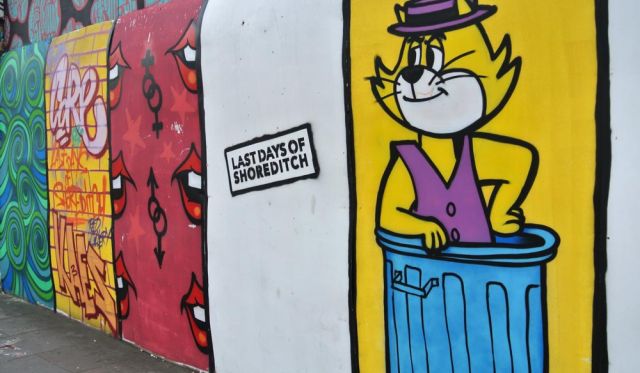
London hotel reviews quirky
Top Cat is just one of the shady persona who appears on murals in and around the hotel (photo: Steve Mckenna).


Beyond the hotel’s red brick and white Portland stone façade, we find a lobby with arresting period features: an original mosaic floor, decorative stained-glass windows, a double staircase, and painted dome.

Despite the Brexit vote, London remains reassuringly cosmopolitan, and the concierge – in her eastern European-accented English – ushers me and my partner to reception, where an affable New Zealander informs us that we’ve been upgraded.

There are 128 rooms and suites spanning the main building and a new annex, and a Spanish bellhop guides us to the latter and into our Hoxton Suite.
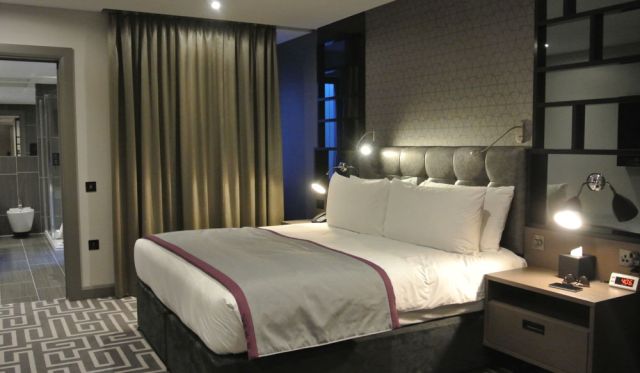
London hotel reviews quirky
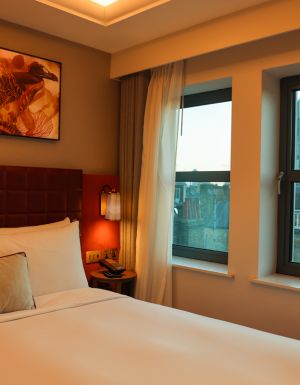
Stay in luxury in the Courthouse Shoreditch Hoxton suite (photo: Steve Mckenna).


What strikes us first, apart from the potentially dizzying maze-patterned carpet, is the generous size (44 square metres).

There’s a snug office-style area with a couch and desk, a comfy king-sized bed, and a spacious bathroom with a giant mirror, separate walk-in shower and deep tub with flat-screen TV above (one of three in the room).

The suite’s sober colour scheme – mostly grey, white and brown – is enlivened with flashes of velvet and quirky touches, reminding us we’re in London (there’s a little globe etched with the capital’s tourist icons).
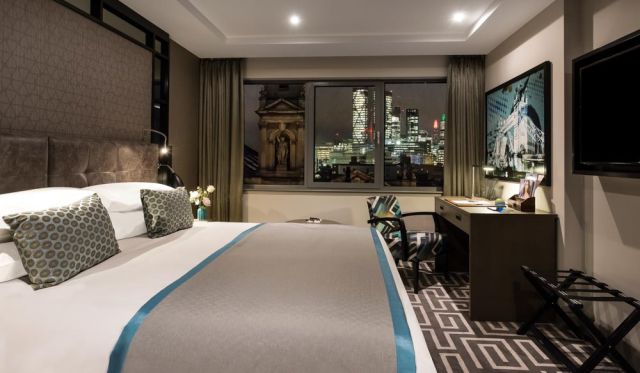
London hotel reviews quirky
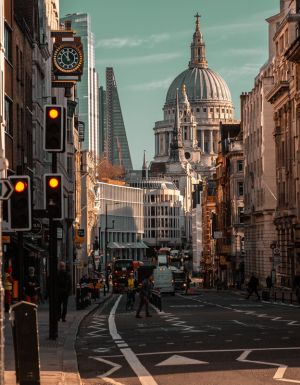
Some of the beautiful rooms offer a view of the London skyline.


Pity about the view, though: we stare, glumly, at a brick wall.

We while away an hour or so in the basement, relaxing in the Asian-style rattan chairs, the sauna and heated pool.

We peek in the sleek fitness centre and myriad conference and events rooms, including a two-lane bowling alley (reserve a lane from £45 ($75) per person).

And we admire the décor in the hotel’s main bar.
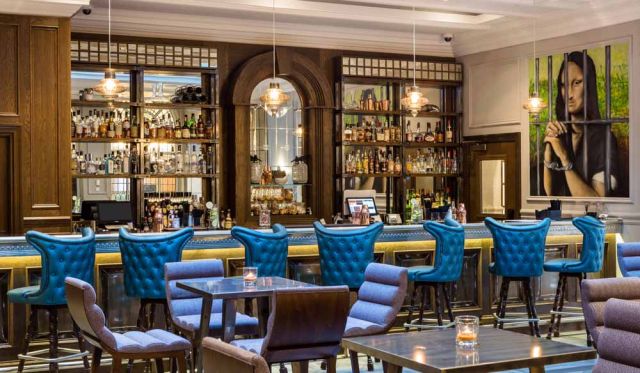
London hotel reviews quirky
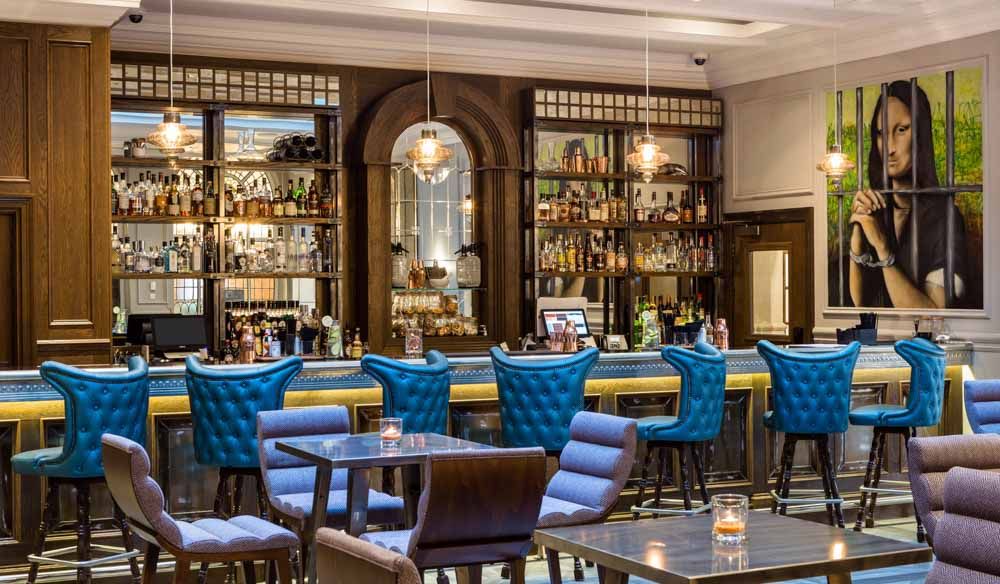
‘justice-themed’ cocktails are just some of the concoctions you can order at the bar.


A nod to the building’s past, paintings of a handcuffed Mona Lisa and Darth Vader framed behind bars grace the walls, while five former jail cells have been converted into semi-private booths with leather seats and murals of infamous figures like the Krays (the east London gangsters appeared at their first criminal hearing here on charges of ‘demanding money with menaces’ in 1965).

Armed with our ‘justice-themed’ cocktails – we recommend the ‘Solitary’ (Havana rum, lime, sugar, dark chocolate liqueur and chilli) – we snuggle up in the cell where Reggie Kray was held (his twin, Ronnie, was kept next door).

Later, peckish, we nose the menu at the hotel’s restaurant, which occupies the wood-panelled former courtroom.

Nothing overly appeals – ale-battered fish, steak frites, wild mushroom risotto – so decide, instead, to hit Shoreditch’s wonderfully diverse dining scene, which boasts everything from global street food and fiery curry houses to gourmet pub grub and innovative Michelin-star affairs such as the Clove Club (nestled opposite in Shoreditch Town Hall).

Indeed, considering the abundant charms on the hotel’s doorstep, it would be a shame (bordering on the criminal) to spend too much time locked up inside. IT
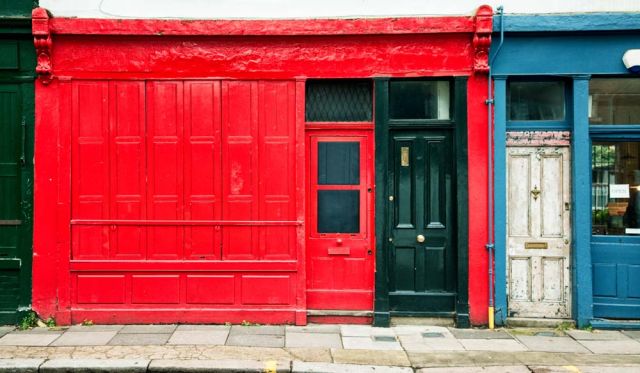
London hotel reviews quirky
Bright red closed store front on a London street (photo: Steve Mckenna).


The Details: Courthouse Hotel Shoreditch

335-337 Old Street, London

shoreditch.courthouse-hotel.com

The IT Verdict: A cool hotel for return visitors to the city; a perfect base for exploring London’s hippest locale.

Location: 8 / 10: East London’s trendiest spots are within walking distance and the bright lights of the West End are around 30 minutes away by Tube and bus.

Style / character: 8 / 10: An eclectic fusion of period and contemporary design; the public areas are especially well-crafted.

Service: 8 / 10: Great – the staff were attentive and friendly.

Rooms: 8 / 10: Our suite was comfy, cosy and blissfully quiet. We enjoyed our best night’s sleep for ages.

Food and drink: 7 / 10: Both hotel bars are ace. Breakfast – a Full Shoreditch for me (bacon, sausage, eggs etc), and smoked salmon, poached egg and smashed avocado for my partner – was good.

Value for money: 8 / 10: We paid $388 for the night, including breakfast, for a Dalston King (26 square metres), but were given a complimentary upgrade to the larger Hoxton Suite. Though, for a better view (we got a brick wall), I recommend requesting a room at the front of the building.


Want to know more about London? Check out our Five-minute guide to London.

Weekly travel news, experiences
insider tips, offers,
and more.

Want to see more stories from International Traveller in your Google search results?

  1. Click here to set International Traveller as a preferred source.
  2. Tick the box next to "International Traveller". That's it.
hero media

What the European heatwave means for your summer travel plans

Temperatures are soaring this summer, breaking records across Europe and the UK. 

Euro summer is a feeling like no other. But when a heatwave hits? The dream trip quickly turns into a sweaty mess. Extreme heat is sweeping Europe and the UK this week, with record-high temperatures impacting travel plans across the continent.

And while Australian summers are typically hotter in absolute temperature, many European cities aren’t equipped for high temperatures, resulting in unbearable weather.

Why is it so hot in Europe?

Signs of a hot summer loomed in May, when the mercury hit unprecedented spring highs. Now, extreme high temperature warning alerts have been issued in countries such as Spain, Italy, France, England, the Netherlands and Germany.

France saw its hottest day on record on Wednesday, with an average temperature of 30°C across the day and night. This surpasses the average temperature for June, which is 15°C to 25°C. Dozens of people have died, including 40 from drowning.

In Spain, 212 deaths have been linked to the heatwave.

The UK recorded its hottest June day ever on Wednesday with temperatures soaring to 36.1°C. In an article published by the Met Office – the UK’s national meteorological service – Professor Stephen Belcher CBE, Met Office Chief Scientist, shared his concerns about June’s heat. “To see temperatures like this in the UK in June is sobering. Events like this bring home the implications of climate change, with very high temperatures and humidity bringing significant health implications from heat stress, as well as impacts to a range of sectors such as transport, energy and water supply,” he said.

Heatwaves are becoming increasingly common in Europe and the UK, neither of which is prepared for such extremes. The World Meteorological Organization reported that in 2025, at least 95% of Europe experienced above-average annual temperatures and that the continent was heating up twice as fast as the global average.

How travel is impacted

A pharmacy sign displaying 40 degrees Celcius
A pharmacy broadcasting local weather data. (Credit: Getty/Dragoncello)

During a heatwave, power grids, water systems and transport networks can be affected, resulting in disrupted itineraries for travellers. In France, power outages have left thousands without electricity and early closures have been implemented for two of Paris’s biggest attractions, the Eiffel Tower (early afternoon rather than late at night) and the Louvre (two hours early). Eurostar cancelled its London to Paris and Paris to London services from the 22nd to the 25th, and major UK rail companies have been advising travellers to avoid using trains where possible, or to travel during early hours.

If a heatwave is predicted, being flexible with your itinerary and having fully refundable/changeable tickets is key, as extreme heat can force the cancellation of outdoor activities, impact rail and flight services and change the opening hours of sites and eateries.

Why does summer in Europe often feel hotter than summer in Australia?

people swimming in the Canal Saint-Martin in Paris
People swimming in the Canal Saint-Martin in Paris to cool off. (Credit: Rachael Thompson)

With some of the highest UV levels in the world, Australians are no strangers to the heat, adapting well to intense weather. But our infrastructure is largely equipped to withstand soaring temperatures with climate-responsive passive design, refrigerated air conditioning or evaporative coolers, as well as swimming spots aplenty.

Buildings in Northern and Western Europe and the UK, however, are constructed to retain heat and handle frosty winters. The lack of universal air conditioning means it generally feels hotter even though the temperature on your app might not look it. During a heatwave, it can feel like you’re in a sauna as cities act like heat traps.

How to stay cool and prepare for another heatwave

Relief is expected across Europe and the UK later this week, but more heatwaves are still possible in the coming months. Summer heat typically peaks in July and August.

Public transport often doesn’t have air conditioning, and buses in particular can be swelteringly hot. If you’re heading outside or your accommodation has no air conditioning, it’s worth buying a spray bottle and a handheld fan from a pharmacy or tourist stand. Check ahead of time if restaurants and cafes have air conditioning and make a booking in advance. The highest temperatures typically hit between 3pm and 6pm, so aim to head outdoors outside of these hours.

Rising temperatures invite travellers to enter a more intentional era of seeing the world. Now more than ever is the time to embrace lower-impact “coolcations” and off-season getaways.

East London's new criminally cool Courthouse Hotel | International Traveller