hero media

Hotel Review: Good Hotel, London

We test out Good Hotel: a new-breed, social-good hotel, lugged to London over water from Amsterdam.

Details

Good Hotel

Royal Victoria Dock, Western Gateway, London, UK

The history

A hotel with a cause is not something you come across every day. Especially not one that’s been designed in the Netherlands, before being barged along the North Sea Canal and over to the River Thames.


The eight-million-kilogram Good Hotel spent a year in Amsterdam where about 100 long-term unemployed were trained in hospitality, before it took its mission to the UK.
First impressions at The Good Hotel

I’m all for supporting those who work hard to climb the ladders of life, so I’m on board with the concept before I even see that the hotel fits into the quirky, design-oriented, boutique style I favour.


It turns out chic-budget digs asking under £100 per night are trending in London, and this one is part of the new wave. Plus £5 ($9) from every direct booking at the Good Hotel, per night, is donated to underprivileged kids – even better. I click ‘book’.

First impressions

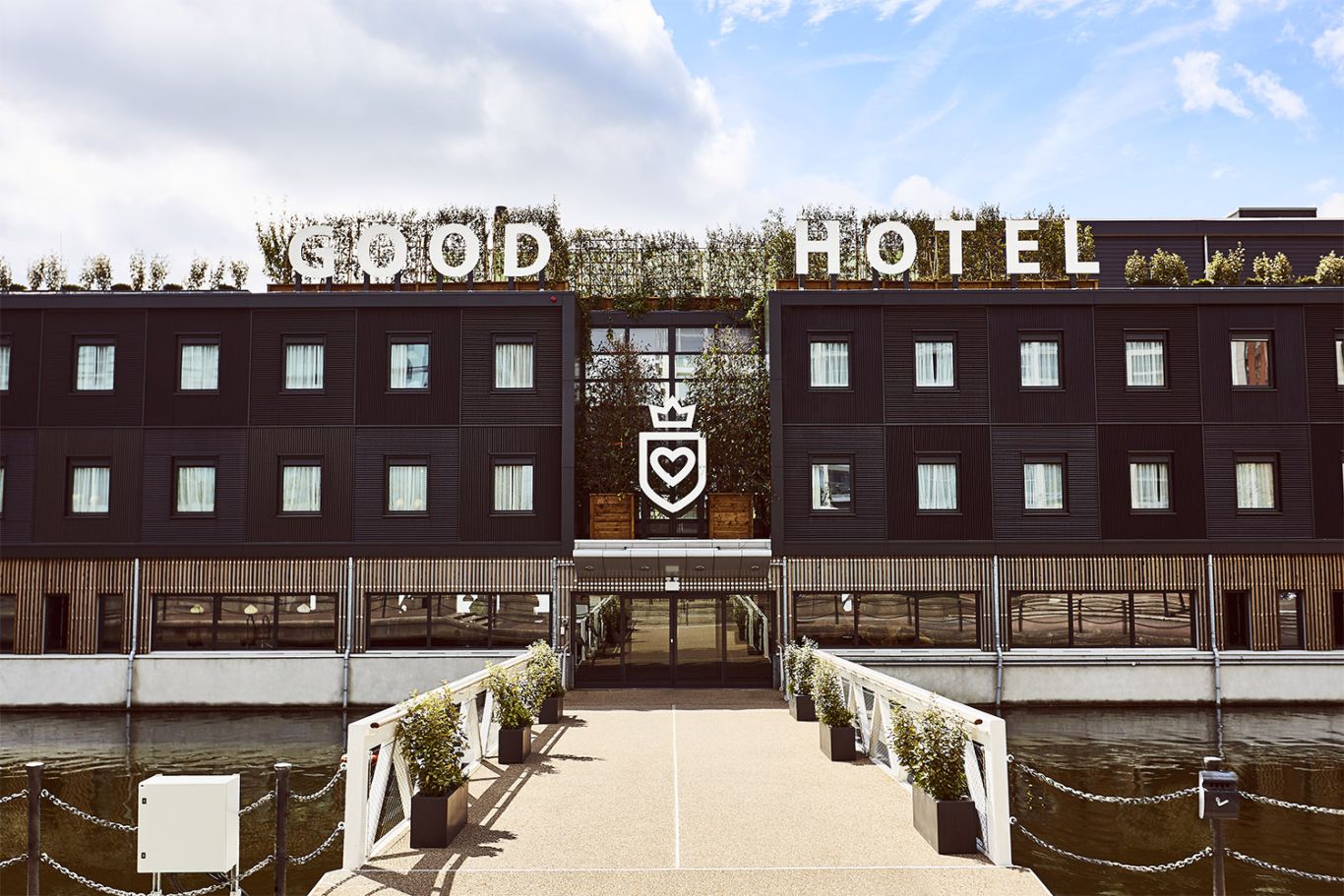
A moment’s walk from Royal Victoria DLR station, I’m greeted by what looks like a mass of grey sea containers stacked on a floating platform, linked to the docks by a drawbridge. Pulling my roller bag to the entrance, I feel like I’m boarding an ocean liner, only with large, square windows.
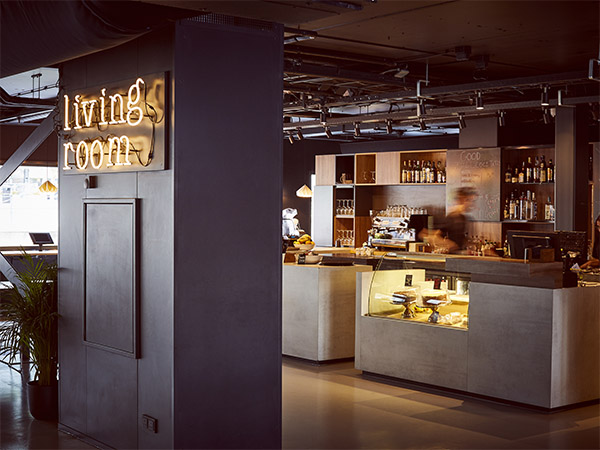
Explore the communal ‘living room’

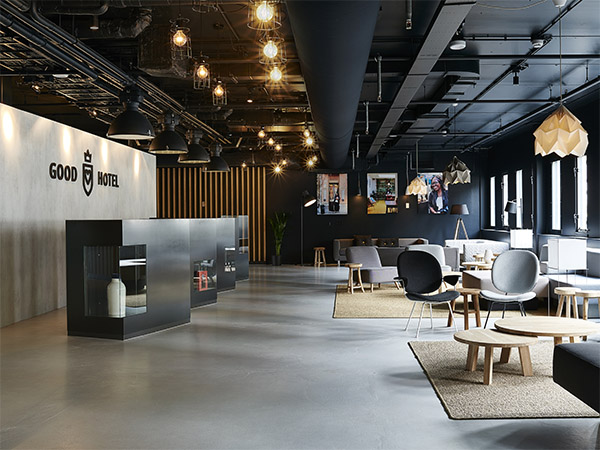
Inside, it’s a freelancer’s dream. Felt chairs mingle with pine stools on sand-hued mats, pastel ottomans and grey couches are strewn with cushions and a mix of statement light shades and Edison globes deliver a decidedly hip vibe to the painted black interiors.
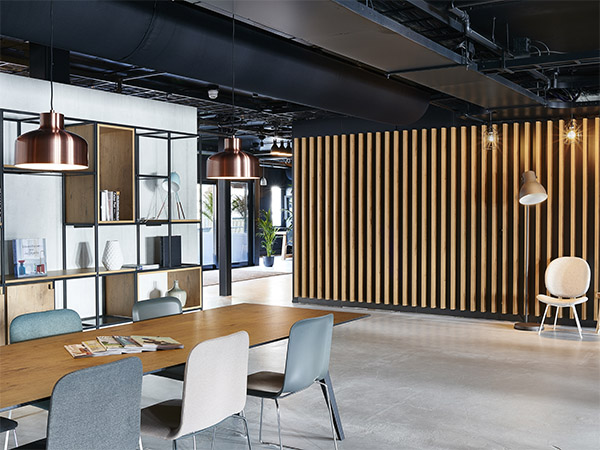
The shared spaces are a freelancers dream

Check-in is streamlined – I’ve pre-entered most things online – with the only disappointment being advice that the rooftop is closed for an event.

The room

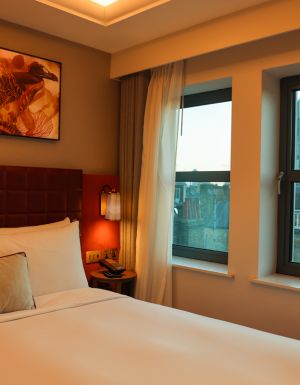
I’m soon in a rather industrial lift heading to my room – one of 148. Its pale grey walls are bare; there’s no TV or USB points but, for London, it’s huge – I wonder if I got upgraded and they forgot to mention it.


My king-size bed is dressed with crisp, clean linen, and there’s complimentary sparkling water and appropriately moral bathroom accessories by FAIR CosmEthics.
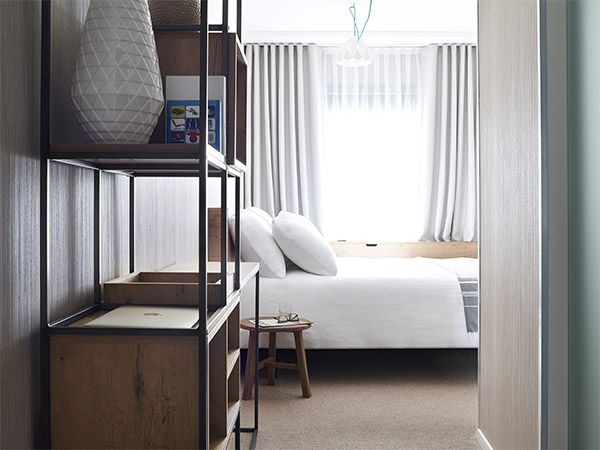
A deluxe room at The Good Hotel

It’s pin-drop quiet overnight. I’ve sprung for views and the scene of frigid Brits swimming in the crane-dotted docks the following morning is well worth it.


Before setting off for the nearby Emirates cable car (a cheap and sensational aerial adventure), I’m wowed by the high-end brekkie spread. Fresh blackberries, dried cranberries, mini Bonne Maman jars and French pastries are served among the usual suspects.


The floor is packed with people of all ages from all over the world, all looking as pleased as I am that we chose to be Good.
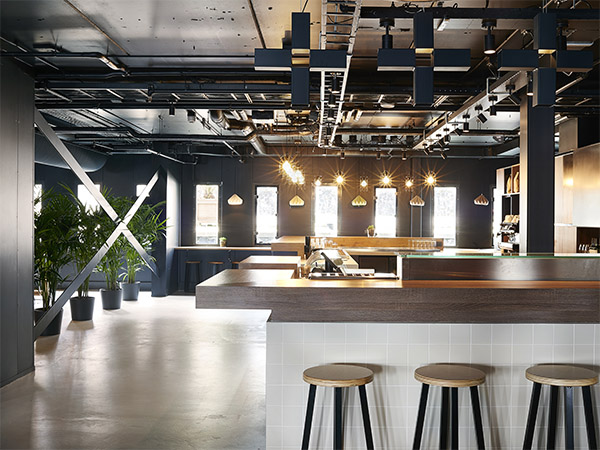
Have a drink at the Good Hotel bar

The verdict

A modern, industrial-chic hotel with double-barrel attractions: it engages in social good while offering some of the most affordable, quality rooms in London.

Weekly travel news, experiences
insider tips, offers,
and more.

Location: 6/10

It’s a 40-minute, two-tube ride to London’s heart – but the dockside views make up for it.

Style/character: 9/10

Budget doesn’t mean boring; trendy communal areas, free fruit and mags invite you to linger.

Service: 8/10

Service is impressively polished, and staff have good knowledge of the local area.

Rooms: 7/10

Minimalist with limited mod cons, yet my ‘deluxe water view room’ was spacious and the essentials well above average.

Food and drink: 10/10

This is one of the biggest and best brekkie smorgasbords I’ve seen, and for £13.50 ($25) it’s worth indulging.

The Good Hotel food is a definite highlight

Value for money: 9/10

London is an expensive city, so anything for £100 ($180) or less is regarded as a bargain
– I paid just over.

Want to see more stories from International Traveller in your Google search results?

  1. Click here to set International Traveller as a preferred source.
  2. Tick the box next to "International Traveller". That's it.
hero media

What the European heatwave means for your summer travel plans

Temperatures are soaring this summer, breaking records across Europe and the UK. 

Euro summer is a feeling like no other. But when a heatwave hits? The dream trip quickly turns into a sweaty mess. Extreme heat is sweeping Europe and the UK this week, with record-high temperatures impacting travel plans across the continent.

And while Australian summers are typically hotter in absolute temperature, many European cities aren’t equipped for high temperatures, resulting in unbearable weather.

Why is it so hot in Europe?

Signs of a hot summer loomed in May, when the mercury hit unprecedented spring highs. Now, extreme high temperature warning alerts have been issued in countries such as Spain, Italy, France, England, the Netherlands and Germany.

France saw its hottest day on record on Wednesday, with an average temperature of 30°C across the day and night. This surpasses the average temperature for June, which is 15°C to 25°C. Dozens of people have died, including 40 from drowning.

In Spain, 212 deaths have been linked to the heatwave.

The UK recorded its hottest June day ever on Wednesday with temperatures soaring to 36.1°C. In an article published by the Met Office – the UK’s national meteorological service – Professor Stephen Belcher CBE, Met Office Chief Scientist, shared his concerns about June’s heat. “To see temperatures like this in the UK in June is sobering. Events like this bring home the implications of climate change, with very high temperatures and humidity bringing significant health implications from heat stress, as well as impacts to a range of sectors such as transport, energy and water supply,” he said.

Heatwaves are becoming increasingly common in Europe and the UK, neither of which is prepared for such extremes. The World Meteorological Organization reported that in 2025, at least 95% of Europe experienced above-average annual temperatures and that the continent was heating up twice as fast as the global average.

How travel is impacted

A pharmacy sign displaying 40 degrees Celcius
A pharmacy broadcasting local weather data. (Credit: Getty/Dragoncello)

During a heatwave, power grids, water systems and transport networks can be affected, resulting in disrupted itineraries for travellers. In France, power outages have left thousands without electricity and early closures have been implemented for two of Paris’s biggest attractions, the Eiffel Tower (early afternoon rather than late at night) and the Louvre (two hours early). Eurostar cancelled its London to Paris and Paris to London services from the 22nd to the 25th, and major UK rail companies have been advising travellers to avoid using trains where possible, or to travel during early hours.

If a heatwave is predicted, being flexible with your itinerary and having fully refundable/changeable tickets is key, as extreme heat can force the cancellation of outdoor activities, impact rail and flight services and change the opening hours of sites and eateries.

Why does summer in Europe often feel hotter than summer in Australia?

people swimming in the Canal Saint-Martin in Paris
People swimming in the Canal Saint-Martin in Paris to cool off. (Credit: Rachael Thompson)

With some of the highest UV levels in the world, Australians are no strangers to the heat, adapting well to intense weather. But our infrastructure is largely equipped to withstand soaring temperatures with climate-responsive passive design, refrigerated air conditioning or evaporative coolers, as well as swimming spots aplenty.

Buildings in Northern and Western Europe and the UK, however, are constructed to retain heat and handle frosty winters. The lack of universal air conditioning means it generally feels hotter even though the temperature on your app might not look it. During a heatwave, it can feel like you’re in a sauna as cities act like heat traps.

How to stay cool and prepare for another heatwave

Relief is expected across Europe and the UK later this week, but more heatwaves are still possible in the coming months. Summer heat typically peaks in July and August.

Public transport often doesn’t have air conditioning, and buses in particular can be swelteringly hot. If you’re heading outside or your accommodation has no air conditioning, it’s worth buying a spray bottle and a handheld fan from a pharmacy or tourist stand. Check ahead of time if restaurants and cafes have air conditioning and make a booking in advance. The highest temperatures typically hit between 3pm and 6pm, so aim to head outdoors outside of these hours.

Rising temperatures invite travellers to enter a more intentional era of seeing the world. Now more than ever is the time to embrace lower-impact “coolcations” and off-season getaways.