hero media

Five of the world’s best beds for bookworms

Who doesn’t like curling up in bed with a good book? What about hotels, libraries and even universities that combine both cosy concepts?


Notting Hill, eat your heart out. From Canada, to Asia to Europe and the UK, we’ve scoured the globe and have found some of the quirkiest accommodation offerings in which you can sleep among the shelves, so to speak. Words by Christine Retschlag


1. Book and Bed, Japan

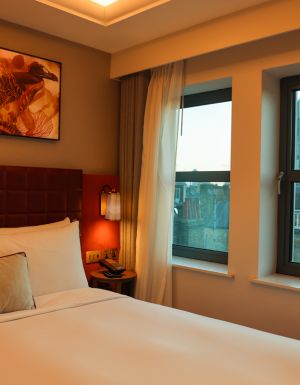
From the country that gave the world capsule hotels, Japan has now delivered another quirky concept: this time you sleep among bookshelves. At the original outpost of Book and Bed in Ikebukuro, one of Tokyo’s city centres, you can select one of 52 beds, in two sizes, either ‘standard’ or ‘compact size’ and two styles – Bookshelf, where you sleep behind a bookshelf; or Bunk, where you sleep in the Book Shop. There’s also shared toilet and bathroom facilities and free wi-fi. The weirdest bit, while you can read books in this ‘book store’ you can’t actually buy any, this is a concept hotel all about the sleep. There are also iterations in the Tokyo district of Asakusa, Fukuoka and Kyoto

2. Shakespeare and Company, France

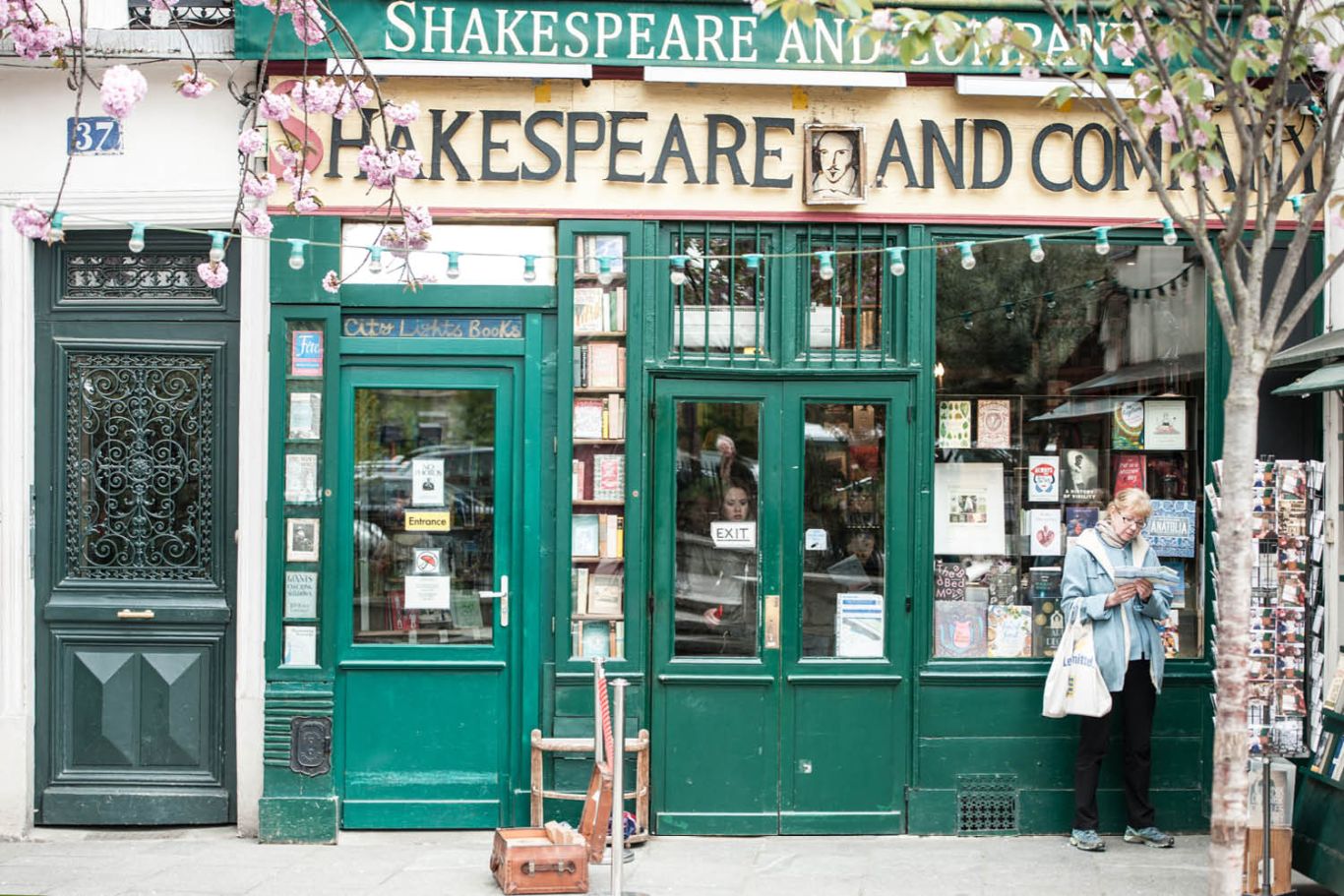
Located in the Paris’s Left Bank, on the banks of the Seine and opposite Notre-Dame, the legendary English-language bookstore Shakespeare and Company has been operating since 1951 when American proprietor George Whitman flung open the doors to writers, artists and intellectuals. Whitman passed away aged 98 in 2011, but his daughter Sylvia has been running the store and continuing his traditions since 2006.  Guests who stay here, under the Tumbleweeds program, are asked to read one book a day; assist in the store for a couple of hours; and write a one-page autobiography for the archives. With beautiful tomes adorning its shelves, regular events and story-telling plus its own cafe next door serving lemon pie made with Whitman’s recipe, it’s little wonder more than 30,000 ‘tumbleweeds’ have sought refuge on the mattresses and couches here over the year.
3. Gladstone’s Library, Wales

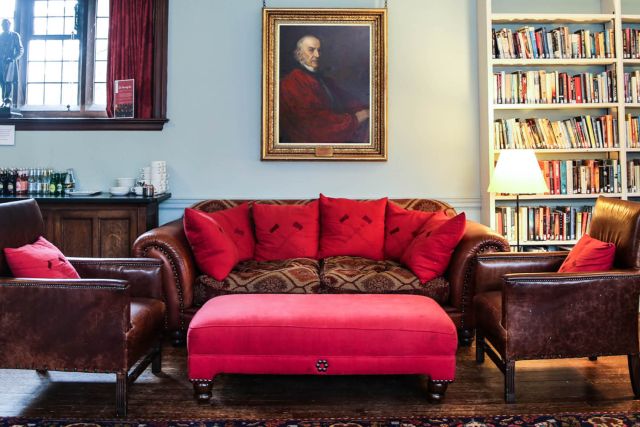
Touted as the only residential library in the United Kingdom, and with almost 150,000 printed items on offer, it’s little wonder guests wish to sleep a night or two at this warm Welsh accommodation. Offering 26 boutique bedrooms, most with ensuites, overnight guests at Gladstone’s Library can inhabit the reading rooms until 10pm, long after the general public has departed at 5pm. Or, they can retreat with a library book to their gorgeous rooms, all of which come with breakfast, wi-fi, tea and coffee-making facilities, and a radio. Gladstone’s boasts a world-renowned collection of books, journals and periodicals. This elegant accommodation, in the village of Hawarden, has a number of rooms in which to escape with a good book, including the Gladstone Room which has a roaring fire during winter.

4. The Open Book, Scotland

Regarded as Scotland’s National Book Town, stay in Wigtown in the lowlands of Galloway and check out The Open Book, a charming bookstore with an apartment for book lovers upstairs. The best bit, you even get to the run the shop, with the help of a few volunteers. Situated by the sea, this is a bookworm’s wildest dream come true. Not only this, but you are provided with a laptop, wi-fi and bicycles with which to explore the region. Sleeping a maximum of two people, with one bedroom, a bathroom, washer, kitchen and essentials, guests are encouraged to blog regularly about their experience and write themselves into Wigtown’s history. But like all good page-turners, this story comes with a catch. So popular is this accommodation, it’s currently booked up until 2021 (new dates open up at the start of each month; but you just need to be lightning fast).

5. British Columbia Institute of Technology (BCIT), Canada

Ever been so bored with your studies that you could just drop dead asleep? Well in one Vancouver institution, now you can. Smack bang in the library of the British Columbia Institute of Technology Burnaby campus, you’ll find two giant capsules, in which students are invited to take a break from the books. Measuring 120 centimetres, and similar to those you’ll find in some hi-tech hotels (NEXT Hotel in Brisbane comes to mind) and some airline lounges around the world (Finnair’s flagship Business Class lounge in Helsinki offers something similar) students simply climb into the sleep pod, slide the door shut, and hopefully dream up some fresh ideas to get through the rest of the university year.

Want to see more stories from International Traveller in your Google search results?

  1. Click here to set International Traveller as a preferred source.
  2. Tick the box next to "International Traveller". That's it.
hero media

What the European heatwave means for your summer travel plans

Temperatures are soaring this summer, breaking records across Europe and the UK. 

Euro summer is a feeling like no other. But when a heatwave hits? The dream trip quickly turns into a sweaty mess. Extreme heat is sweeping Europe and the UK this week, with record-high temperatures impacting travel plans across the continent.

And while Australian summers are typically hotter in absolute temperature, many European cities aren’t equipped for high temperatures, resulting in unbearable weather.

Why is it so hot in Europe?

Signs of a hot summer loomed in May, when the mercury hit unprecedented spring highs. Now, extreme high temperature warning alerts have been issued in countries such as Spain, Italy, France, England, the Netherlands and Germany.

France saw its hottest day on record on Wednesday, with an average temperature of 30°C across the day and night. This surpasses the average temperature for June, which is 15°C to 25°C. Dozens of people have died, including 40 from drowning.

In Spain, 212 deaths have been linked to the heatwave.

The UK recorded its hottest June day ever on Wednesday with temperatures soaring to 36.1°C. In an article published by the Met Office – the UK’s national meteorological service – Professor Stephen Belcher CBE, Met Office Chief Scientist, shared his concerns about June’s heat. “To see temperatures like this in the UK in June is sobering. Events like this bring home the implications of climate change, with very high temperatures and humidity bringing significant health implications from heat stress, as well as impacts to a range of sectors such as transport, energy and water supply,” he said.

Heatwaves are becoming increasingly common in Europe and the UK, neither of which is prepared for such extremes. The World Meteorological Organization reported that in 2025, at least 95% of Europe experienced above-average annual temperatures and that the continent was heating up twice as fast as the global average.

How travel is impacted

A pharmacy sign displaying 40 degrees Celcius
A pharmacy broadcasting local weather data. (Credit: Getty/Dragoncello)

During a heatwave, power grids, water systems and transport networks can be affected, resulting in disrupted itineraries for travellers. In France, power outages have left thousands without electricity and early closures have been implemented for two of Paris’s biggest attractions, the Eiffel Tower (early afternoon rather than late at night) and the Louvre (two hours early). Eurostar cancelled its London to Paris and Paris to London services from the 22nd to the 25th, and major UK rail companies have been advising travellers to avoid using trains where possible, or to travel during early hours.

If a heatwave is predicted, being flexible with your itinerary and having fully refundable/changeable tickets is key, as extreme heat can force the cancellation of outdoor activities, impact rail and flight services and change the opening hours of sites and eateries.

Why does summer in Europe often feel hotter than summer in Australia?

people swimming in the Canal Saint-Martin in Paris
People swimming in the Canal Saint-Martin in Paris to cool off. (Credit: Rachael Thompson)

With some of the highest UV levels in the world, Australians are no strangers to the heat, adapting well to intense weather. But our infrastructure is largely equipped to withstand soaring temperatures with climate-responsive passive design, refrigerated air conditioning or evaporative coolers, as well as swimming spots aplenty.

Buildings in Northern and Western Europe and the UK, however, are constructed to retain heat and handle frosty winters. The lack of universal air conditioning means it generally feels hotter even though the temperature on your app might not look it. During a heatwave, it can feel like you’re in a sauna as cities act like heat traps.

How to stay cool and prepare for another heatwave

Relief is expected across Europe and the UK later this week, but more heatwaves are still possible in the coming months. Summer heat typically peaks in July and August.

Public transport often doesn’t have air conditioning, and buses in particular can be swelteringly hot. If you’re heading outside or your accommodation has no air conditioning, it’s worth buying a spray bottle and a handheld fan from a pharmacy or tourist stand. Check ahead of time if restaurants and cafes have air conditioning and make a booking in advance. The highest temperatures typically hit between 3pm and 6pm, so aim to head outdoors outside of these hours.

Rising temperatures invite travellers to enter a more intentional era of seeing the world. Now more than ever is the time to embrace lower-impact “coolcations” and off-season getaways.

5 of the World's best beds for book lovers | International Traveller