hero media

This self-sustained Tuscan restaurant will be worth it

Freya Herring heads to northern Tuscany to find world-class food on a shoestring.

As a former restaurant critic, I’m often asked what the best meal of my life is. Ask this to anyone for whom food is a genuine, lifelong passion, and you’ll often get the same response: not the meals at Quay or Noma; not Attica or Jiro; it’s inevitably something simple, done well. It’s eating yielding, fatty, nutty jamón pata negra seated in a servo in Spain; it’s chewy tangles of late-night ramen, teeming with umami, on a Tokyo backstreet; or a wodge of incredible, dripping-off-your-fork-it’s-so-ripe cheese in France. It’s perfect bread, hot from the oven, slicked with salted butter. It’s humble food, and it’s restaurants like Antica Trattoria dell’Eremita in Northern Tuscany, Italy.
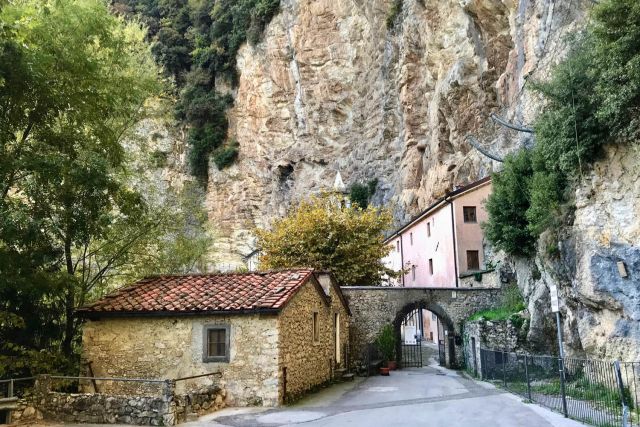
I thought this restaurant might just be a rumour – and given it’s so hard to find, it certainly feels that way. You need a car to get here; this is no public transport affair. But it is on Google Maps, so follow it to the letter. On this little road that loops around and around a mountain through thick forest, you’ll eventually see a sign for the restaurant. This is where you park.

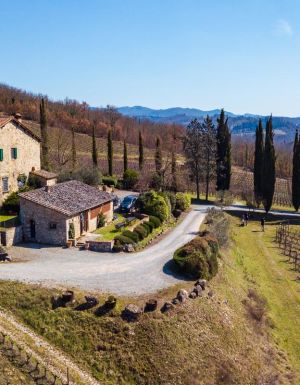
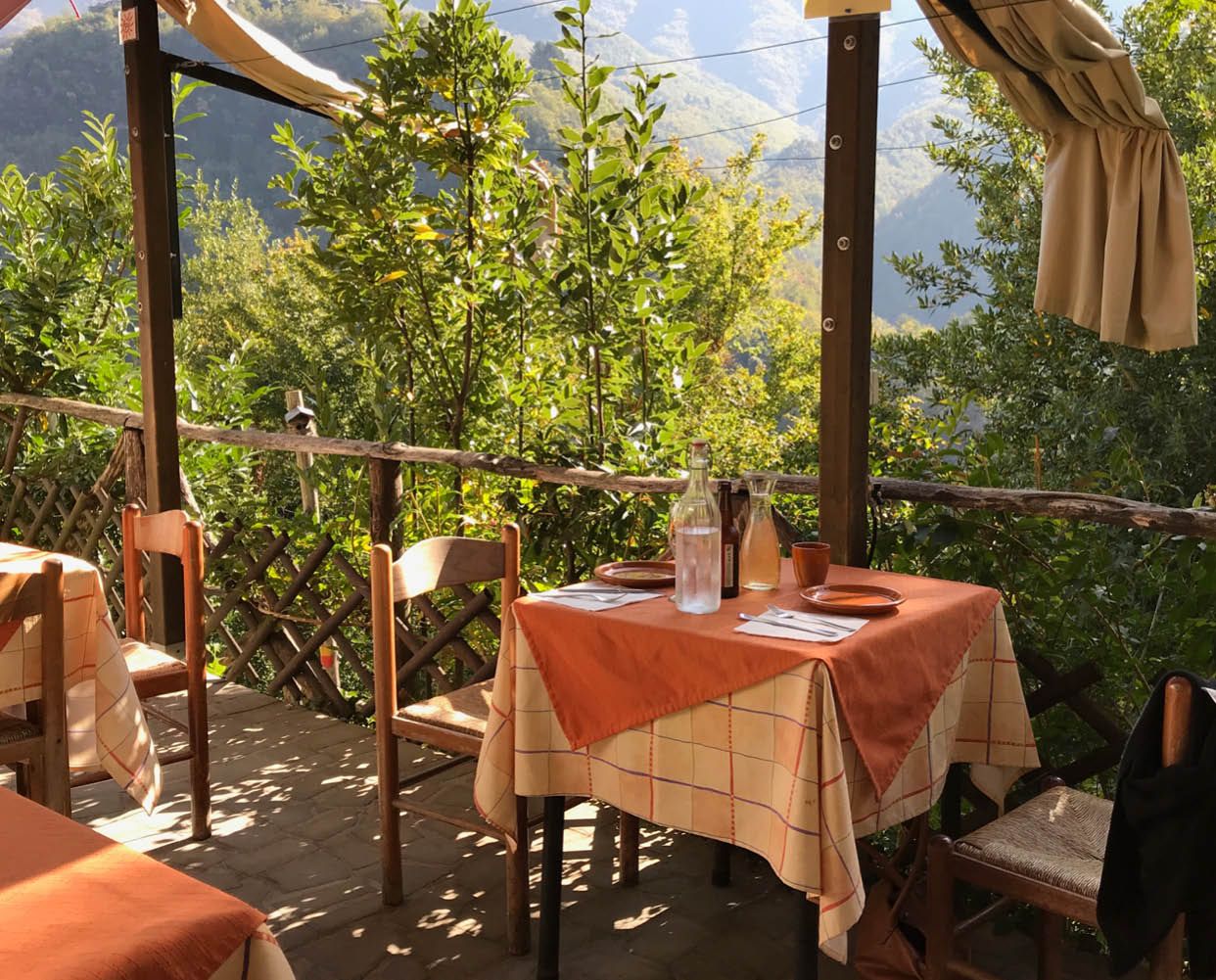
We get out of the van and walk onto a dirt path that leads us up the mountain and further into the forest, hoping we are going the right way. And then after a few minutes, the land opens up and we are standing outside a charming, traditional Tuscan home, with shaded outdoor tables dressed in terracotta-toned cloths to match the rustic clay cups on top. This is an agriturismo, meaning it’s a working farm that rents out rooms.
We order ‘Focaccia Leva’, and the minute it lands on the table is the moment we realise this is somewhere really special. Out comes plate after plate of perfect little expressions of place: local lardo – those fine swathes of fat so revered in this area – that melts on the tongue like butter; a pot of shaved raw pumpkin, sweet and hot with garlic and peppery olive oil; soft prosciutto and fat-flecked salami with sour, pickled onions. There is cheese and slices of trout caught in the river burbling below us. And then there is the bread: a hot, thick round of soft-crumbed but crisp-edged focaccia, still steaming from the wood-fired oven. We pair this with the white wine they make themselves, which is clean-tasting, almost like a Portuguese vinho verde, and which, by the way, is €7 per litre. The platter is €14.

How can they afford it? Well they make everything themselves here, including growing the vegetables. A few days later we scramble the goose eggs we picked up here and hands down, they are the best eggs of my life: so rich and deeply flavoured; it doesn’t feel possible for eggs to taste this good.

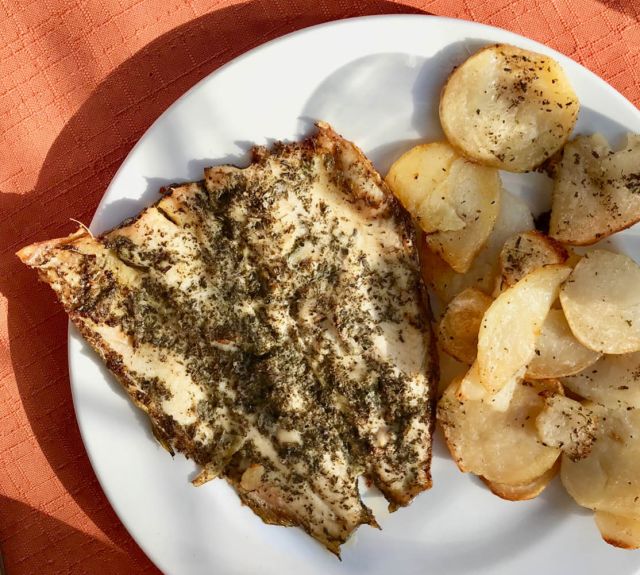
Next up is the fish: a butterflied piece of trout – so pale, it’s almost white – barbecued with thyme and olive oil and served with slices of fried potatoes that are so rich it’s like eating rounds of potato-flavoured butter.
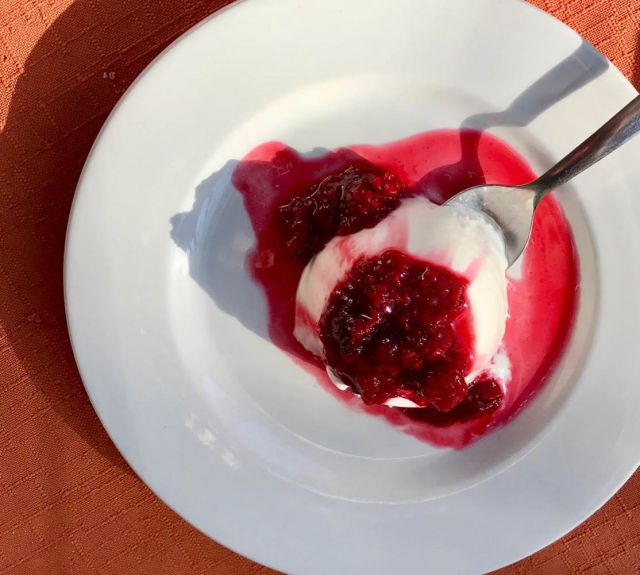
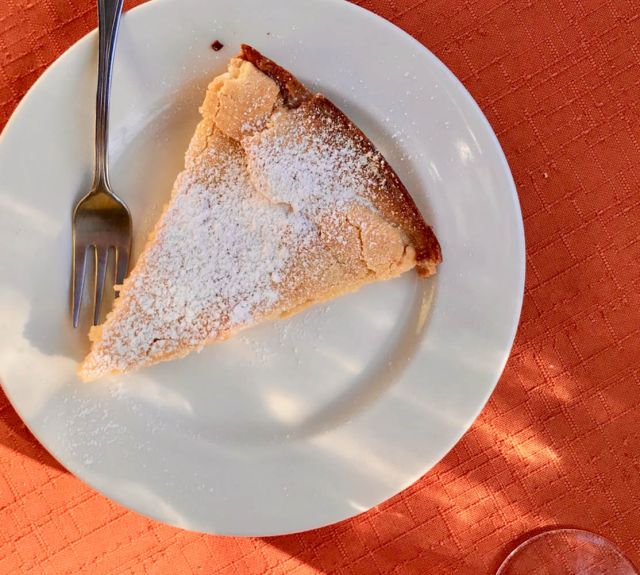
A jiggling, barely-held-together (which is how it should be) panna cotta comes topped with lightly poached raspberries, and ‘Ermita’s tart’ is a slice of the divine – crisp, butter-rich pastry encloses whipped ricotta cream. Desserts are €3 a piece, just quietly.

As we sit, locals come around and sit and play chess, drink wine and then go on with their day. Others play music and drink beer overlooking the spectacular mountain views. It feels like a real restaurant – somewhere that if you know it, you go a lot. We ask if we can park overnight and the friendly owners direct us to an empty, dusty area above the restaurant. We come back at sunset and eat traditional ribollita soup, and wake in the morning to some of the best views in the country: mountains of deep green forest, with little towns perched on top of them like stars picked out of a galaxy. (This isn’t the manicured Tuscany you see in pictures, it’s rugged like the Aussie bush.) The owners are already out working on the farm, tending to the vegetables that will soon be on the plates at their restaurant.
As we drive away we pass the monastery which links the car park to the restaurant. It’s built into the rocks; the monks living a quiet existence with rooms etched halfway into a mountain. They are so far away from everything out here. But they do have this restaurant just five minutes up the road – they might be onto something.

Need some more Italian inspo? Check out some more stories below:

Tuscany’s best villas

Is this Tuscany’s most idyllic stay? 

Want to see more stories from International Traveller in your Google search results?

  1. Click here to set International Traveller as a preferred source.
  2. Tick the box next to "International Traveller". That's it.
hero media

What the European heatwave means for your summer travel plans

Temperatures are soaring this summer, breaking records across Europe and the UK. 

Euro summer is a feeling like no other. But when a heatwave hits? The dream trip quickly turns into a sweaty mess. Extreme heat is sweeping Europe and the UK this week, with record-high temperatures impacting travel plans across the continent.

And while Australian summers are typically hotter in absolute temperature, many European cities aren’t equipped for high temperatures, resulting in unbearable weather.

Why is it so hot in Europe?

Signs of a hot summer loomed in May, when the mercury hit unprecedented spring highs. Now, extreme high temperature warning alerts have been issued in countries such as Spain, Italy, France, England, the Netherlands and Germany.

France saw its hottest day on record on Wednesday, with an average temperature of 30°C across the day and night. This surpasses the average temperature for June, which is 15°C to 25°C. Dozens of people have died, including 40 from drowning.

In Spain, 212 deaths have been linked to the heatwave.

The UK recorded its hottest June day ever on Wednesday with temperatures soaring to 36.1°C. In an article published by the Met Office – the UK’s national meteorological service – Professor Stephen Belcher CBE, Met Office Chief Scientist, shared his concerns about June’s heat. “To see temperatures like this in the UK in June is sobering. Events like this bring home the implications of climate change, with very high temperatures and humidity bringing significant health implications from heat stress, as well as impacts to a range of sectors such as transport, energy and water supply,” he said.

Heatwaves are becoming increasingly common in Europe and the UK, neither of which is prepared for such extremes. The World Meteorological Organization reported that in 2025, at least 95% of Europe experienced above-average annual temperatures and that the continent was heating up twice as fast as the global average.

How travel is impacted

A pharmacy sign displaying 40 degrees Celcius
A pharmacy broadcasting local weather data. (Credit: Getty/Dragoncello)

During a heatwave, power grids, water systems and transport networks can be affected, resulting in disrupted itineraries for travellers. In France, power outages have left thousands without electricity and early closures have been implemented for two of Paris’s biggest attractions, the Eiffel Tower (early afternoon rather than late at night) and the Louvre (two hours early). Eurostar cancelled its London to Paris and Paris to London services from the 22nd to the 25th, and major UK rail companies have been advising travellers to avoid using trains where possible, or to travel during early hours.

If a heatwave is predicted, being flexible with your itinerary and having fully refundable/changeable tickets is key, as extreme heat can force the cancellation of outdoor activities, impact rail and flight services and change the opening hours of sites and eateries.

Why does summer in Europe often feel hotter than summer in Australia?

people swimming in the Canal Saint-Martin in Paris
People swimming in the Canal Saint-Martin in Paris to cool off. (Credit: Rachael Thompson)

With some of the highest UV levels in the world, Australians are no strangers to the heat, adapting well to intense weather. But our infrastructure is largely equipped to withstand soaring temperatures with climate-responsive passive design, refrigerated air conditioning or evaporative coolers, as well as swimming spots aplenty.

Buildings in Northern and Western Europe and the UK, however, are constructed to retain heat and handle frosty winters. The lack of universal air conditioning means it generally feels hotter even though the temperature on your app might not look it. During a heatwave, it can feel like you’re in a sauna as cities act like heat traps.

How to stay cool and prepare for another heatwave

Relief is expected across Europe and the UK later this week, but more heatwaves are still possible in the coming months. Summer heat typically peaks in July and August.

Public transport often doesn’t have air conditioning, and buses in particular can be swelteringly hot. If you’re heading outside or your accommodation has no air conditioning, it’s worth buying a spray bottle and a handheld fan from a pharmacy or tourist stand. Check ahead of time if restaurants and cafes have air conditioning and make a booking in advance. The highest temperatures typically hit between 3pm and 6pm, so aim to head outdoors outside of these hours.

Rising temperatures invite travellers to enter a more intentional era of seeing the world. Now more than ever is the time to embrace lower-impact “coolcations” and off-season getaways.

This Tuscan restaurant will serve you the best meal of your life