If you needed any more convincing to visit this Mediterranean island, a new tourism initiative is sweetening the deal with three nights of free accommodation.
Ahh, Sardinia – the Italian isle that epitomises Mediterranean bliss. With its farm-to-table food culture, excellent wine and gorgeous white-sand beaches, it’s no wonder the island is one of the world’s five Blue Zones (regions with an unusually high population of centenarians).
Now, a little-visited pocket of Sardinia’s southwest is offering an irresistible incentive: three nights of free accommodation. But before you go packing your Gucci sunglasses and swimmers, there’s one catch.
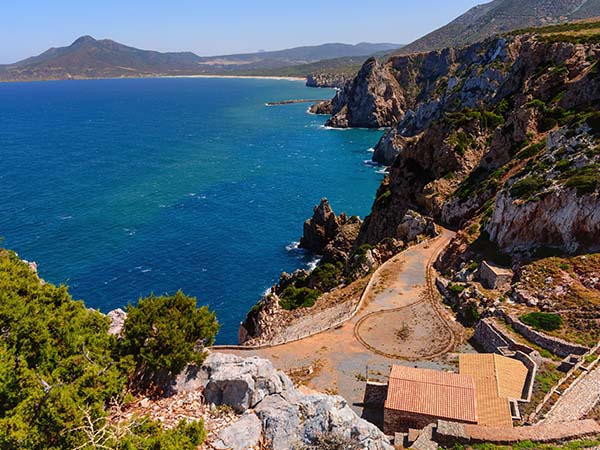
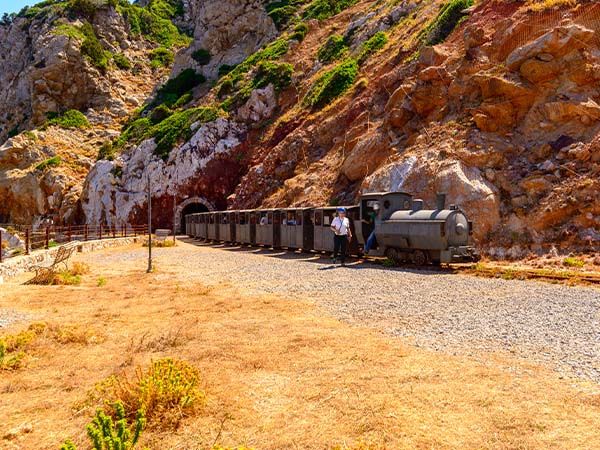
The trail is a combination of stunning landscapes and mining history, like the remains of a mine at Buggerru. (Image: patriziomartorana/Getty Images)
The initiative is led by the Cammino Minerario di Santa Barbara (Santa Barbara Mining Trail), a 500-kilometre route designed to lure hikers into the region. Those under 35 years of age can redeem vouchers for three nights of free stays at family-run inns (posadas) along the way. The full trail comprises roughly 30 stops, with budget-friendly lodging, with a typical night costing just €20.
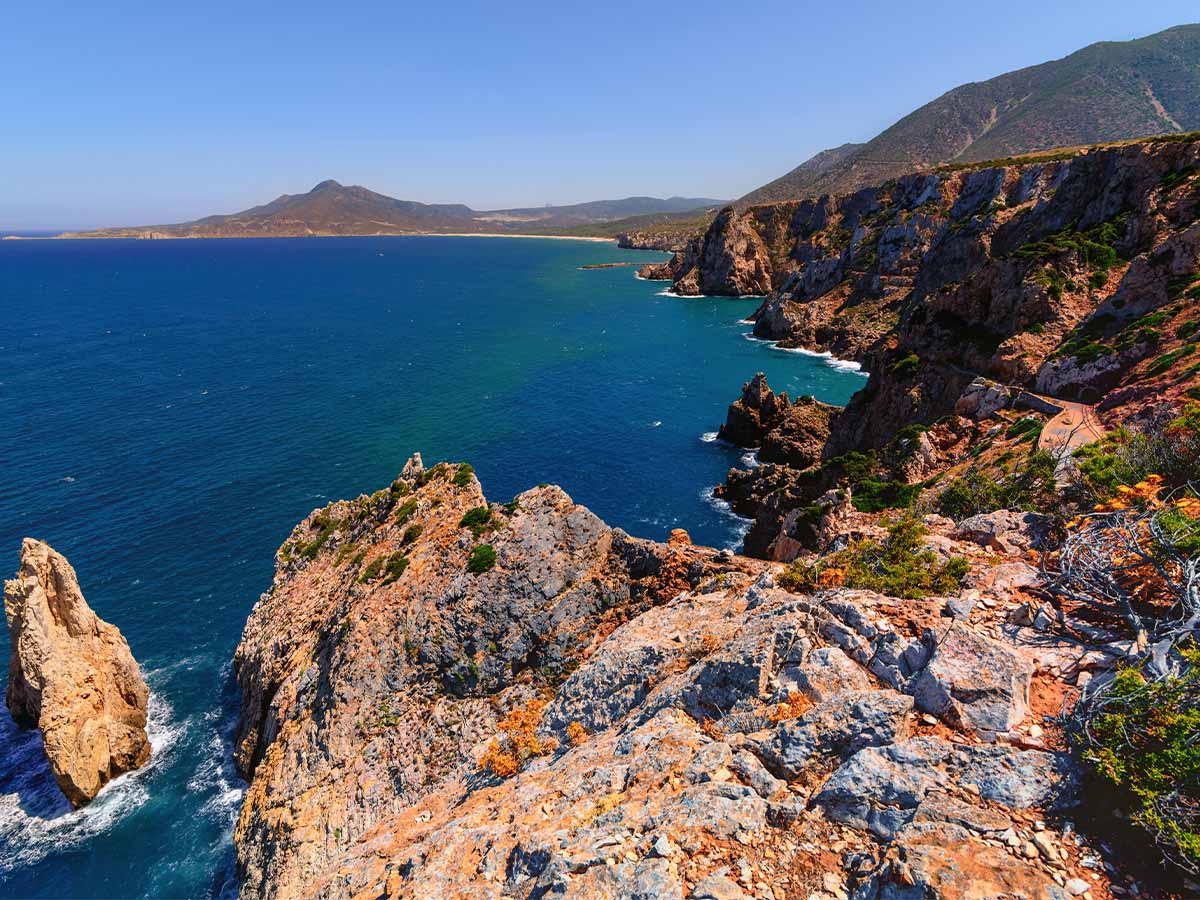
The path winds through Sardinia’s dramatic coastlines and hinterlands, weaving in the island’s mining heritage and abandoned industrial sites. It’s part of a broader effort to breathe life into Sardinia’s rural towns, many of which have been hollowed out by the decline of local industries.
The fall of industry in Sardinia has sadly left many towns abandoned. But a new hiking trail is breathing life back into communities. (Image: patriziomartorana/Getty Images)
Like Spain’s Lighthouse Way, the trail is a grassroots attempt to pivot to sustainable, slow tourism that celebrates local culture. You don’t have to complete the full trail to redeem the vouchers, but if you do, you’ll be following mule tracks dating to 800 BCE and crossing stone bridges made by the Romans, and encountering Nuraghe (mysterious stone structures) from the Bronze Age (1800 to 730 BC). There’s plenty to see that makes the trail a worthy investment, with or without a free stay.
Want to see more stories from International Traveller in your Google search results?
Temperatures are soaring this summer, breaking records across Europe and the UK.
Euro summer is a feeling like no other. But when a heatwave hits? The dream trip quickly turns into a sweaty mess. Extreme heat is sweeping Europe and the UK this week, with record-high temperatures impacting travel plans across the continent.
And while Australian summers are typically hotter in absolute temperature, many European cities aren’t equipped for high temperatures, resulting in unbearable weather.
Why is it so hot in Europe?
Signs of a hot summer loomed in May, when the mercury hit unprecedented spring highs. Now, extreme high temperature warning alerts have been issued in countries such as Spain, Italy, France, England, the Netherlands and Germany.
France saw its hottest day on record on Wednesday, with an average temperature of 30°C across the day and night. This surpasses the average temperature for June, which is 15°C to 25°C. Dozens of people have died, including 40 from drowning.
In Spain, 212 deaths have been linked to the heatwave.
The UK recorded its hottest June day ever on Wednesday with temperatures soaring to 36.1°C. In an article published by the Met Office – the UK’s national meteorological service – Professor Stephen Belcher CBE, Met Office Chief Scientist, shared his concerns about June’s heat. “To see temperatures like this in the UK in June is sobering. Events like this bring home the implications of climate change, with very high temperatures and humidity bringing significant health implications from heat stress, as well as impacts to a range of sectors such as transport, energy and water supply,” he said.
Heatwaves are becoming increasingly common in Europe and the UK, neither of which is prepared for such extremes. The World Meteorological Organization reported that in 2025, at least 95% of Europe experienced above-average annual temperatures and that the continent was heating up twice as fast as the global average.
How travel is impacted
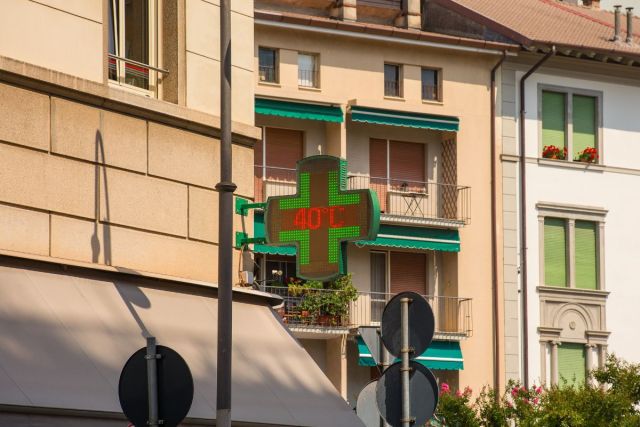
A pharmacy broadcasting local weather data. (Credit: Getty/Dragoncello)
During a heatwave, power grids, water systems and transport networks can be affected, resulting in disrupted itineraries for travellers. In France, power outages have left thousands without electricity and early closures have been implemented for two of Paris’s biggest attractions, the Eiffel Tower (early afternoon rather than late at night) and the Louvre (two hours early). Eurostar cancelled its London to Paris and Paris to London services from the 22nd to the 25th, and major UK rail companies have been advising travellers to avoid using trains where possible, or to travel during early hours.
If a heatwave is predicted, being flexible with your itinerary and having fully refundable/changeable tickets is key, as extreme heat can force the cancellation of outdoor activities, impact rail and flight services and change the opening hours of sites and eateries.
Why does summer in Europe often feel hotter than summer in Australia?
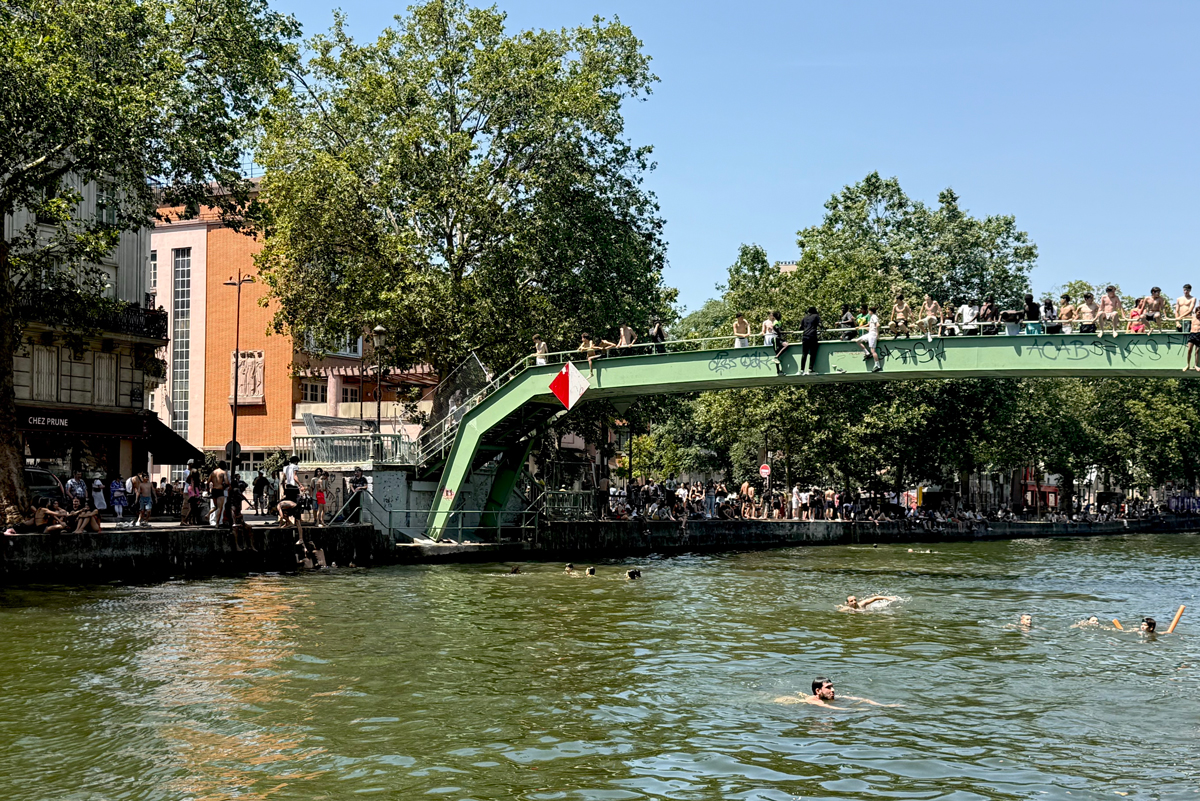
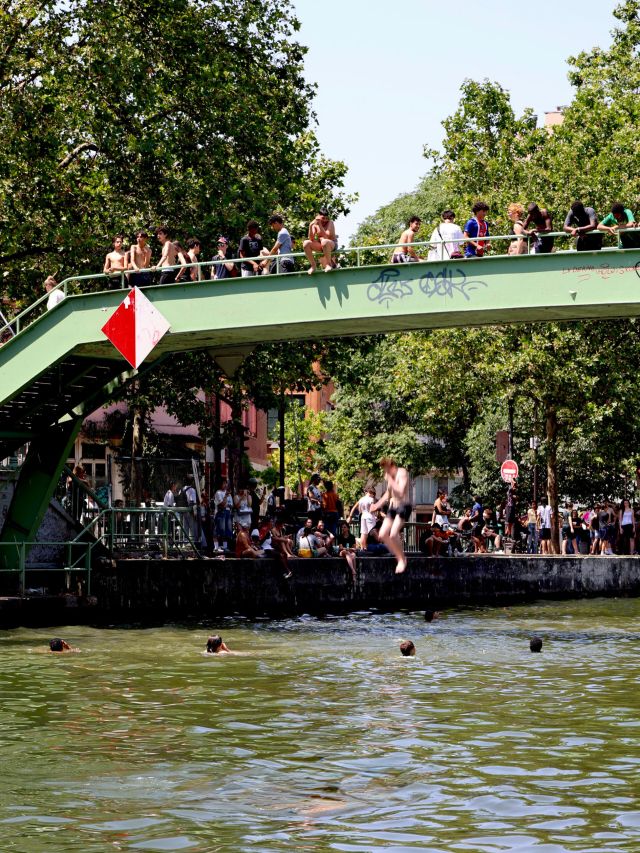
People swimming in the Canal Saint-Martin in Paris to cool off. (Credit: Rachael Thompson)
With some of the highest UV levels in the world, Australians are no strangers to the heat, adapting well to intense weather. But our infrastructure is largely equipped to withstand soaring temperatures with climate-responsive passive design, refrigerated air conditioning or evaporative coolers, as well as swimming spots aplenty.
Buildings in Northern and Western Europe and the UK, however, are constructed to retain heat and handle frosty winters. The lack of universal air conditioning means it generally feels hotter even though the temperature on your app might not look it. During a heatwave, it can feel like you’re in a sauna as cities act like heat traps.
How to stay cool and prepare for another heatwave
Relief is expected across Europe and the UK later this week, but more heatwaves are still possible in the coming months. Summer heat typically peaks in July and August.
Public transport often doesn’t have air conditioning, and buses in particular can be swelteringly hot. If you’re heading outside or your accommodation has no air conditioning, it’s worth buying a spray bottle and a handheld fan from a pharmacy or tourist stand. Check ahead of time if restaurants and cafes have air conditioning and make a booking in advance. The highest temperatures typically hit between 3pm and 6pm, so aim to head outdoors outside of these hours.
Rising temperatures invite travellers to enter a more intentional era of seeing the world. Now more than ever is the time to embrace lower-impact “coolcations” and off-season getaways.