hero media

Virgin Voyages’ Resilient Lady spa, gym and beauty options

Launched in 2021, Virgin Voyages has embraced wellness as a key differentiator in its mission to disrupt the cruising industry.

Quentin Long reviewed Resilient Lady on her inaugural (Virgin Voyages like to call them ‘MerMaiden’) sailing across the Greek Islands. Now he reviews the wellness experiences including the spa, gym and beauty offerings.

Redemption Spa

The Redemption Spa onboard the Resilient Lady (and all three other Virgin Voyages ships) is in the bowels of the ship on deck five.

The location is unusual, as spas aren’t often mid-ship and low on the decks. It’s also a small space when compared to other larger ships – but then again, Resilient Lady is carrying a maximum of just under 3000 people, compared to the more common crowds of 4000 to 4500 people.

A spa pass is US$39 ($57) on port days and US$59 ($86) for sea days; this gives you three hours of access to the thermal pools, saunas and steam rooms.
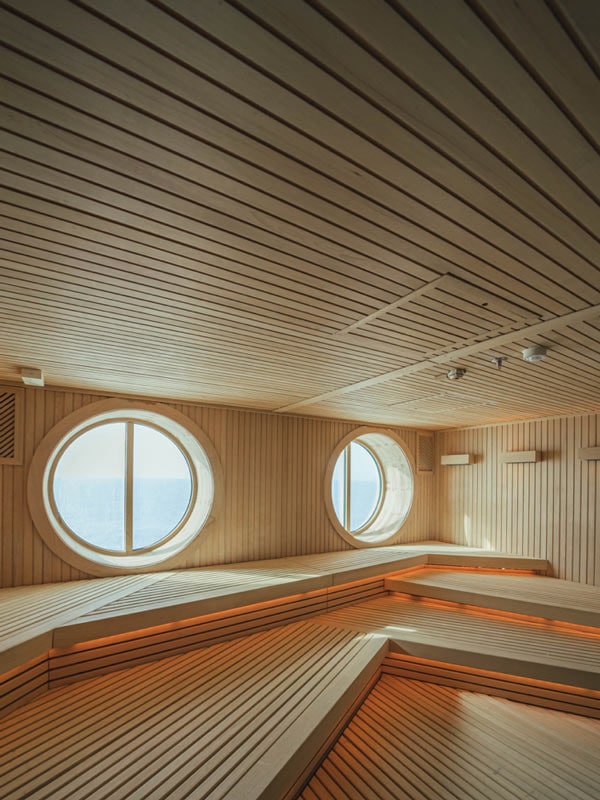
the redemption spa, Virgin Voyages’ Resilient Lady
Get steamy at the Redemption Spa. (Image: Gina Joy Photo)

Move from the salt room to the steam room. Once the steam has opened your pores, grab your mud and head to the mud room to get the skin really glowing.

One feature that’s atypical and will perhaps disappoint regular cruisers is the lack of heated sun beds. In their place is an enormous heated slab of marble, which can accommodate around eight adults. It’s a bit of an occupational health and safety risk if you have wet feet and are trying to step onto it for a lie-down. Marble is also a very hard surface, so a multitude of towels are needed to arrange a makeshift lounge for a more comfortable spot to relax and snooze.
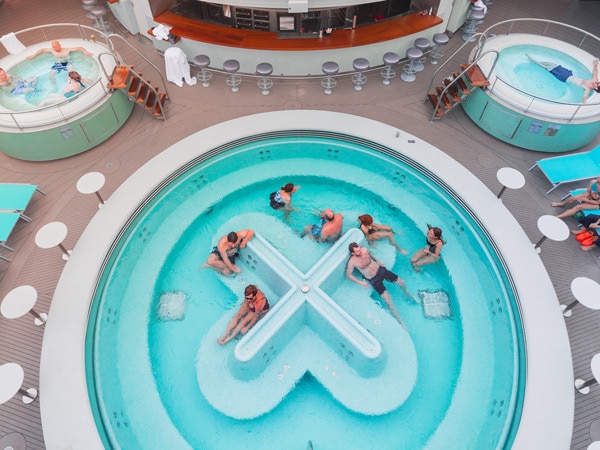
an overhead shot of the jacuzzi onboard Virgin Voyages’ Resilient Lady
Lounge by the biggest jacuzzi at sea. (Image: The Fraser James)

The spa menu is comprehensive enough without an overwhelming array of esoteric mumbo-jumbo offerings. The treatments are in increments of 50, 75 and 100 minutes, with six types of massages and several body and facial therapies. The 50-minute massages cost between US$199 ($292) and US$229 ($336).

One massage uses bamboo sticks to roll you out like thin-crust pizza, and this reviewer loved it. It was the best thing I could do after five relentless days of exploring and energetic nightly entertainment.
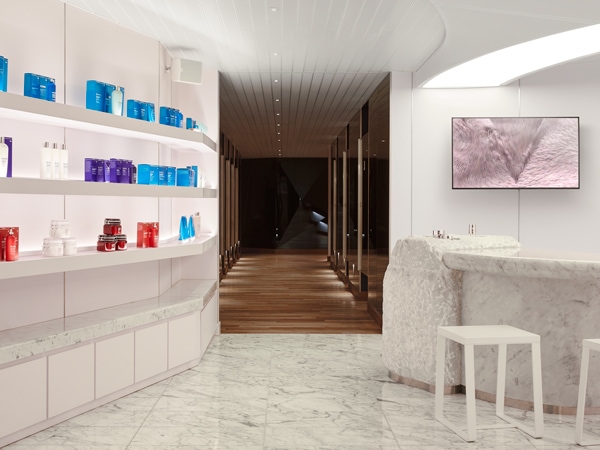
the Redemption Spa, Virgin Voyages’ Resilient Lady
Head to the Redemption Spa for your self-care day.

B-Complex

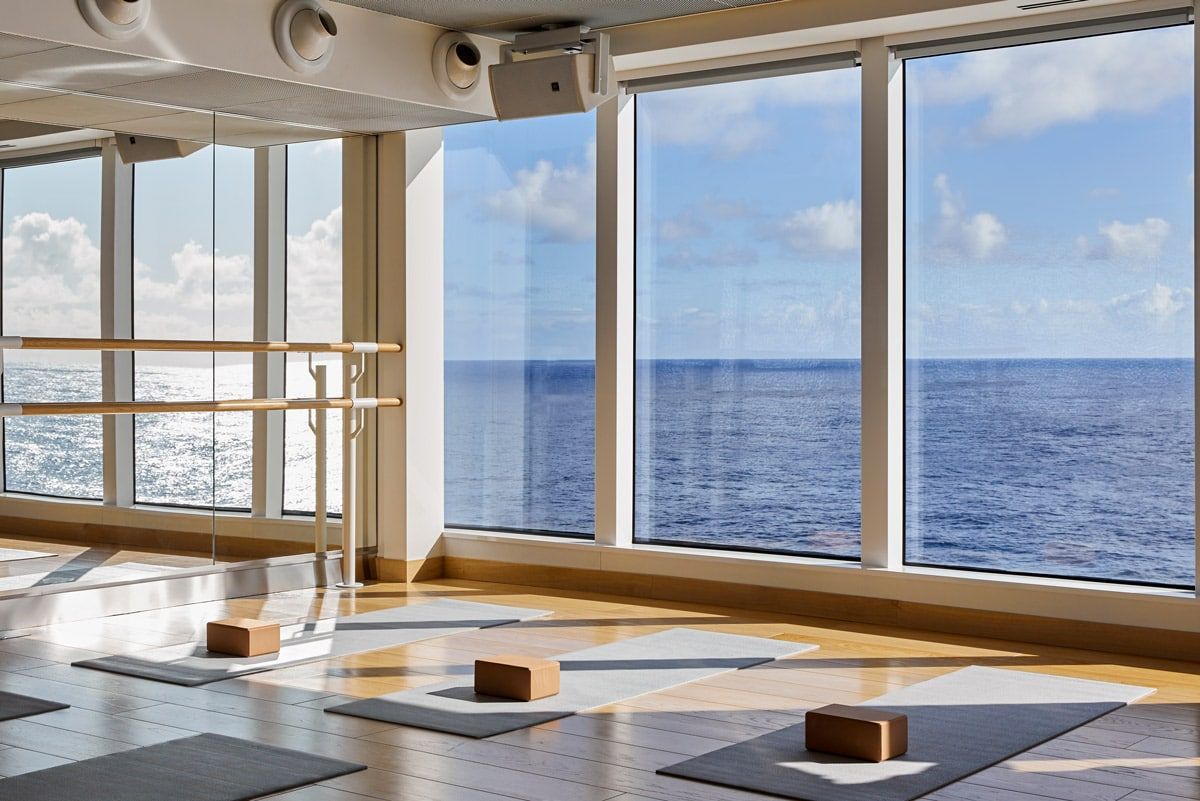
The gym space is split into two spaces. Burn & Bike is made up of treadmills and rowing machines with a spin room, while the Build & Balance area is where you’ll find traditional weights and floor space for mat work and roll-out sessions. Sunrise and sunset yoga is offered at The Perch outdoors on deck 17.

The wellness program is comprehensive with a huge variety of sessions, like gut health talks, horizontal bungee and HIIT classes.

Perhaps the most popular and fun part of it all – although not technically held in B-Complex – is the VHS Workout (videos, headbands and Simmons). Held in The Manor, the nightclub on deck six (with a balcony on deck seven), the class is a return to the ’80s aerobics workouts led by Richard Simmons. Replete in full fluoro leg warmers and lycra, this is a camp workout for the ages.
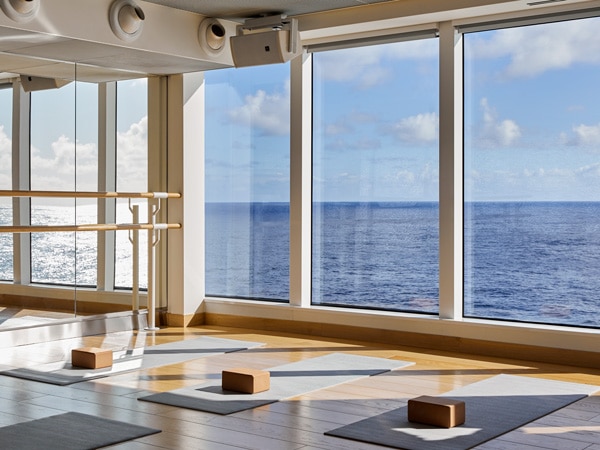
health and wellness b-complex at sea, Virgin Voyages’ Resilient Lady
Bask in transformational wellness at sea.

Stubble and Groom

The upscale barbershop offers a full menu of men’s grooming, including haircuts, hot lather shaves, beard trims and pedicures. It can be hard to get a booking and isn’t priced like your local barber shop; a 30-minute express shave is US$89 ($130).

Dry Dock

The options in Dry Dock on deck six vary from a 15-minute organic Kerastase hair treatment to a 45-minute scalp massage with a hair mask and blowout. The Dry Dock is also home to the brow bar.
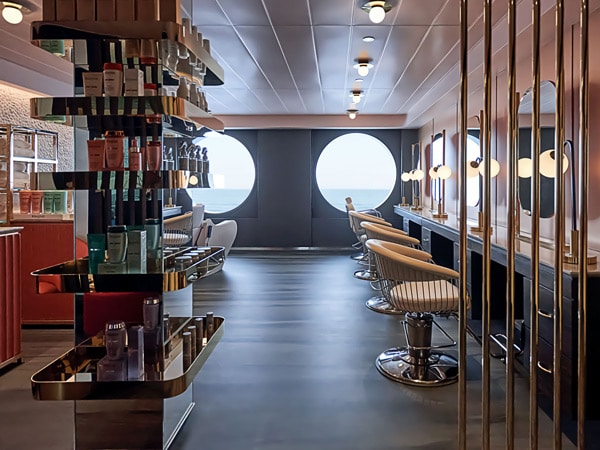
the dry dock, Virgin Voyages’ Resilient Lady
Pamper yourself at the Dry Dock.

Weekly travel news, experiences
insider tips, offers,
and more.

The Tune Up

The Tune Up on deck 15 is the manicure/pedicure spa and medi spa. Manis and pedis range from US$69 ($101) to US$109 for 25–60 minute treatments.

For more intensive treatments, The Tune Up offers Dysport injections and Restylane fillers.
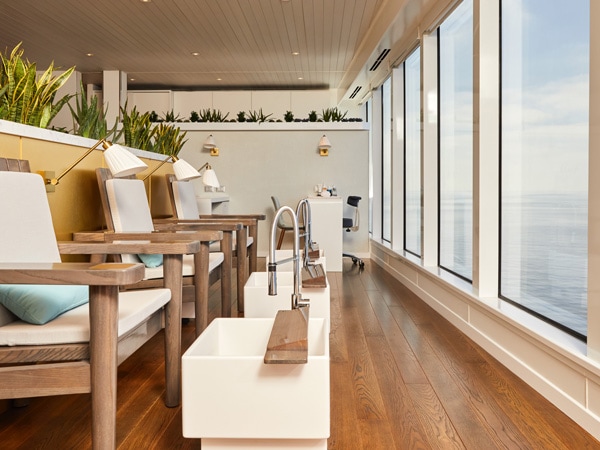
chairs facing the sea at The Tune Up, Virgin Voyages’ Resilient Lady
Treat yourself to an all-out mani-pedi experience at The Tune Up.

Squid Ink

Squid Ink is the only tattoo parlour at sea. I had my doubts about its popularity – for one thing, you’re not meant to swim for five days after being inked, but the studio manager informed me they have appropriate bandages (used for burn units) that allow more freedom. And I was proved wrong, as the studio was pretty much fully booked for my trip.

Every sailing has a different tattoo artist and their bonafides are presented in the studio. One woman in her early 30s with a few tattoos of her own did admit to it being expensive.
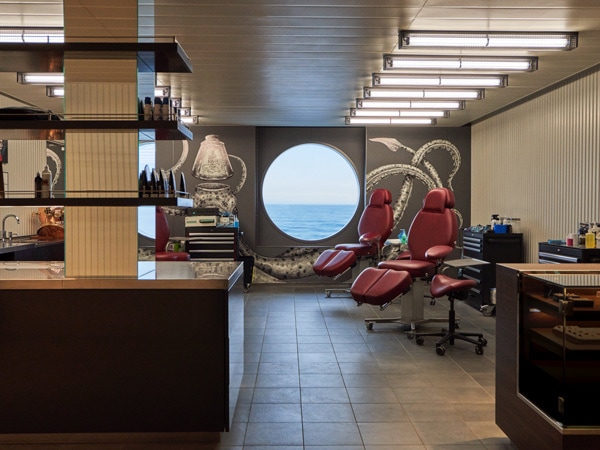
the first tattoo parlour at sea, Squid Ink
Pop into Squid Ink, the first tattoo parlour at sea.

Want to see more stories from International Traveller in your Google search results?

  1. Click here to set International Traveller as a preferred source.
  2. Tick the box next to "International Traveller". That's it.
hero media

What the European heatwave means for your summer travel plans

Temperatures are soaring this summer, breaking records across Europe and the UK. 

Euro summer is a feeling like no other. But when a heatwave hits? The dream trip quickly turns into a sweaty mess. Extreme heat is sweeping Europe and the UK this week, with record-high temperatures impacting travel plans across the continent.

And while Australian summers are typically hotter in absolute temperature, many European cities aren’t equipped for high temperatures, resulting in unbearable weather.

Why is it so hot in Europe?

Signs of a hot summer loomed in May, when the mercury hit unprecedented spring highs. Now, extreme high temperature warning alerts have been issued in countries such as Spain, Italy, France, England, the Netherlands and Germany.

France saw its hottest day on record on Wednesday, with an average temperature of 30°C across the day and night. This surpasses the average temperature for June, which is 15°C to 25°C. Dozens of people have died, including 40 from drowning.

In Spain, 212 deaths have been linked to the heatwave.

The UK recorded its hottest June day ever on Wednesday with temperatures soaring to 36.1°C. In an article published by the Met Office – the UK’s national meteorological service – Professor Stephen Belcher CBE, Met Office Chief Scientist, shared his concerns about June’s heat. “To see temperatures like this in the UK in June is sobering. Events like this bring home the implications of climate change, with very high temperatures and humidity bringing significant health implications from heat stress, as well as impacts to a range of sectors such as transport, energy and water supply,” he said.

Heatwaves are becoming increasingly common in Europe and the UK, neither of which is prepared for such extremes. The World Meteorological Organization reported that in 2025, at least 95% of Europe experienced above-average annual temperatures and that the continent was heating up twice as fast as the global average.

How travel is impacted

A pharmacy sign displaying 40 degrees Celcius
A pharmacy broadcasting local weather data. (Credit: Getty/Dragoncello)

During a heatwave, power grids, water systems and transport networks can be affected, resulting in disrupted itineraries for travellers. In France, power outages have left thousands without electricity and early closures have been implemented for two of Paris’s biggest attractions, the Eiffel Tower (early afternoon rather than late at night) and the Louvre (two hours early). Eurostar cancelled its London to Paris and Paris to London services from the 22nd to the 25th, and major UK rail companies have been advising travellers to avoid using trains where possible, or to travel during early hours.

If a heatwave is predicted, being flexible with your itinerary and having fully refundable/changeable tickets is key, as extreme heat can force the cancellation of outdoor activities, impact rail and flight services and change the opening hours of sites and eateries.

Why does summer in Europe often feel hotter than summer in Australia?

people swimming in the Canal Saint-Martin in Paris
People swimming in the Canal Saint-Martin in Paris to cool off. (Credit: Rachael Thompson)

With some of the highest UV levels in the world, Australians are no strangers to the heat, adapting well to intense weather. But our infrastructure is largely equipped to withstand soaring temperatures with climate-responsive passive design, refrigerated air conditioning or evaporative coolers, as well as swimming spots aplenty.

Buildings in Northern and Western Europe and the UK, however, are constructed to retain heat and handle frosty winters. The lack of universal air conditioning means it generally feels hotter even though the temperature on your app might not look it. During a heatwave, it can feel like you’re in a sauna as cities act like heat traps.

How to stay cool and prepare for another heatwave

Relief is expected across Europe and the UK later this week, but more heatwaves are still possible in the coming months. Summer heat typically peaks in July and August.

Public transport often doesn’t have air conditioning, and buses in particular can be swelteringly hot. If you’re heading outside or your accommodation has no air conditioning, it’s worth buying a spray bottle and a handheld fan from a pharmacy or tourist stand. Check ahead of time if restaurants and cafes have air conditioning and make a booking in advance. The highest temperatures typically hit between 3pm and 6pm, so aim to head outdoors outside of these hours.

Rising temperatures invite travellers to enter a more intentional era of seeing the world. Now more than ever is the time to embrace lower-impact “coolcations” and off-season getaways.