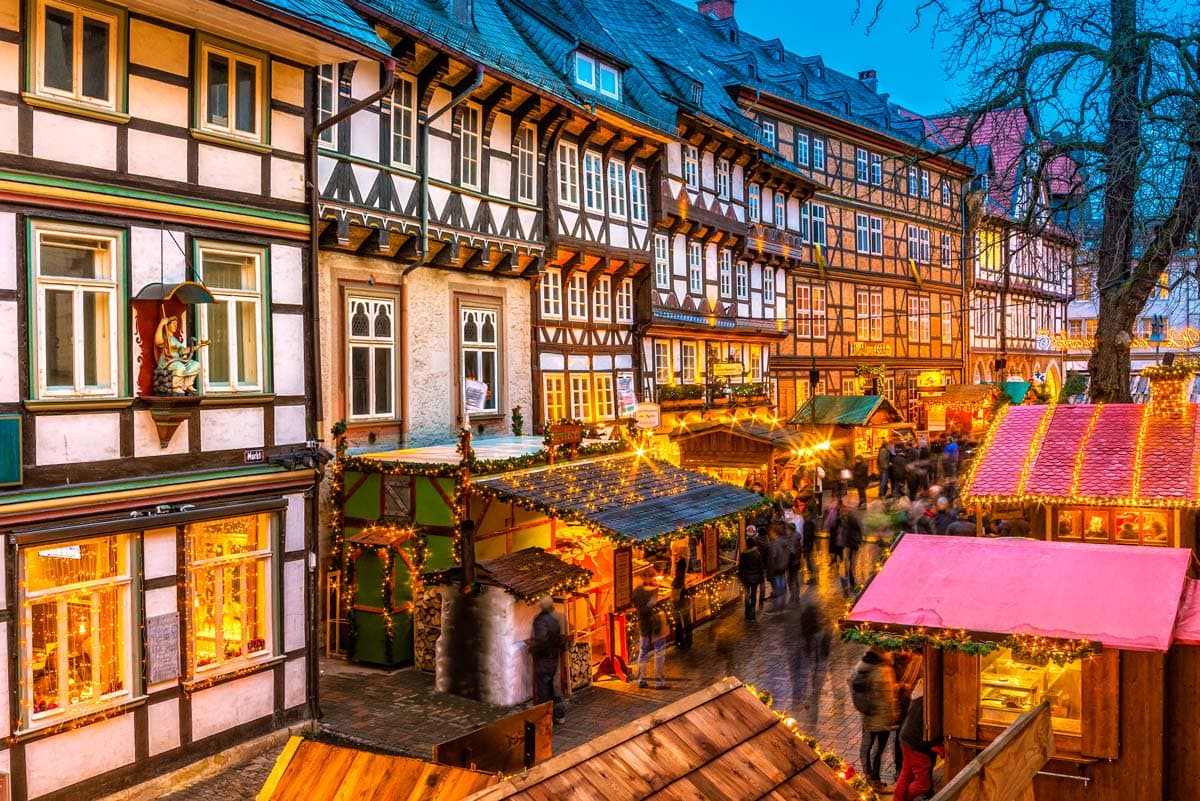

If you’re looking for a magical winter getaway in Europe, it’s hard to find a better option than these festive German towns.
While the avalanche of Instagram posts of Aperol spritzes and glistening dishes of cacio e pepe might have given you serious envy Europe trip envy this summer, there is still time to gift yourself a seasonal treat and head there this Christmas. And no one – I mean absolutely no one – does festive cheer better than Germans.
With a Weihnachtsmarkt (Christmas market) in almost every town, the ever-present whiff of lebkuchen (gingerbread-like bars) and the chance to sip glühwein (mulled wine) while watching the snowfall outside, Germany has the whole of December down pat.
Ready to pack up that sleigh? Here are the top German towns to get you inspired for your White Christmas.
1. Quedlinburg
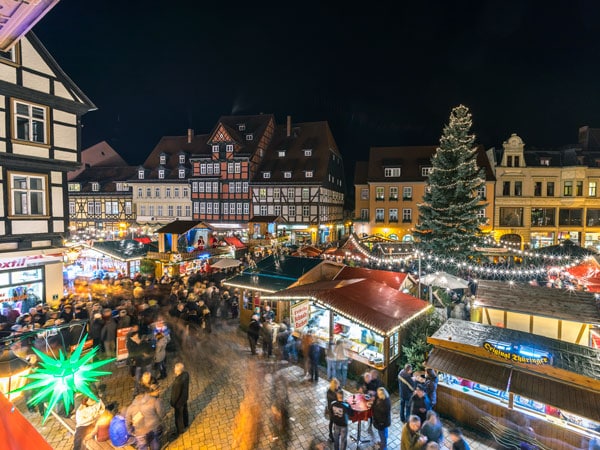
Simply walking the snow-covered streets of the medieval German town of Quedlinburg will be enough to get you and the family in the Christmas spirit. And that’s before you even get to their famous Christmas markets at the old market square. Afterwards, check out the real-life Advent Calendar at the Quedlinburg town hall: where a new festive scene is unveiled each day.
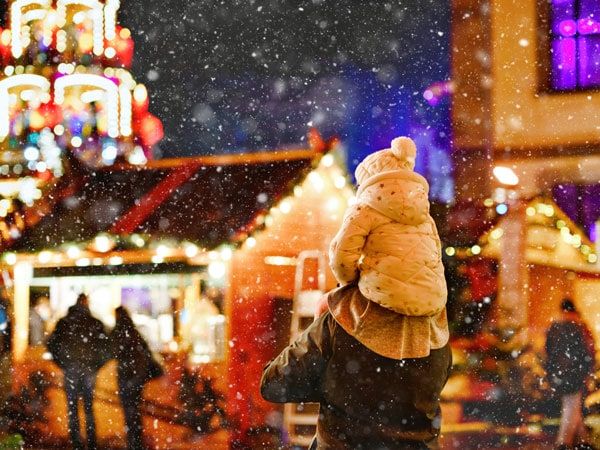
To get away from the crowds, take a walk through Altstadt (Old Town) to see the town decked out like a season’s greetings card, before heading back down for a mulled wine.
How to get there: Quedlinburg is in the centre of Germany and is connected by train to other major cities. For example, Berlin can be reached by train in approximately three-and-a-half hours. Alternatively, if you are coming from there, Hannover or Leipzig, it’s around a two to three-hour drive to Quedlinberg.
Want to explore more nearby? Go hiking in the wider Harz Mountains region or visit other towns of the area. A good starting point is the medieval town of Goslar.
2. Goslar
The under-the-radar town of Goslar receives far less attention from international travellers, while still being beloved by Germans for its gorgeous Old Town (a UNESCO World Heritage site), half-timbered houses and long history as a major seat of power in the Holy Roman Empire era.
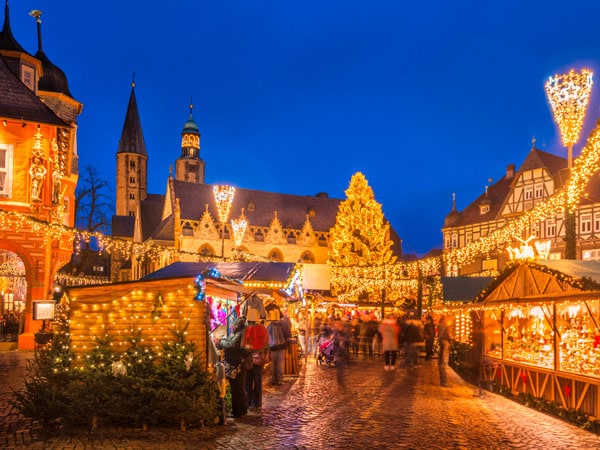
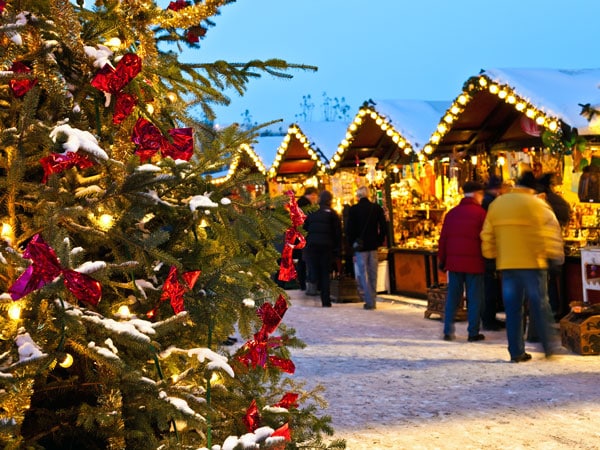
But come December, it is the Christmas stalls in Marktplatz and the enchanting Advent Calendar House that are the centre of attention.
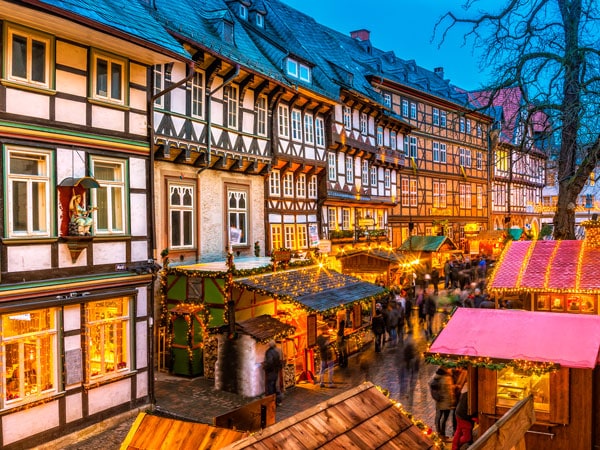
How to get there: Goslar is approximately one hour by train from the town of Hannover and just under one-and-a-half hours by car – making it well worth tacking a day or two onto your trip to visit it.
3. Hamburg
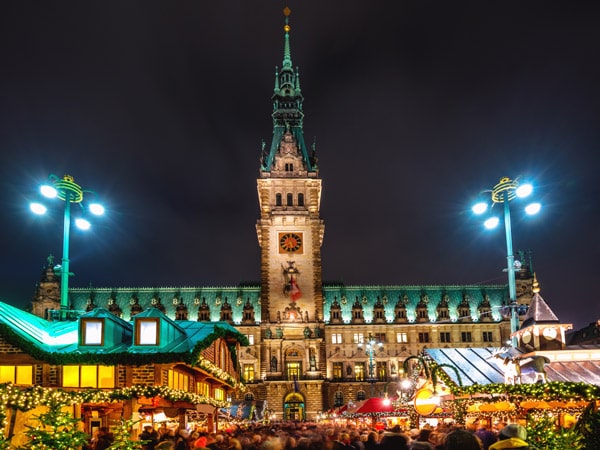
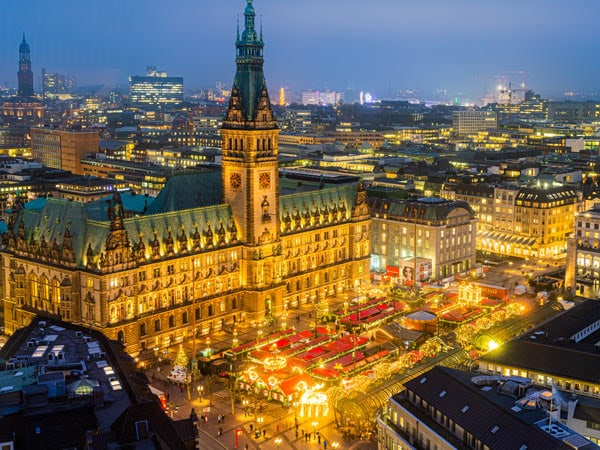
While not a town, as one of Germany’s major cities, Hamburg goes all out for choice come the festive season.
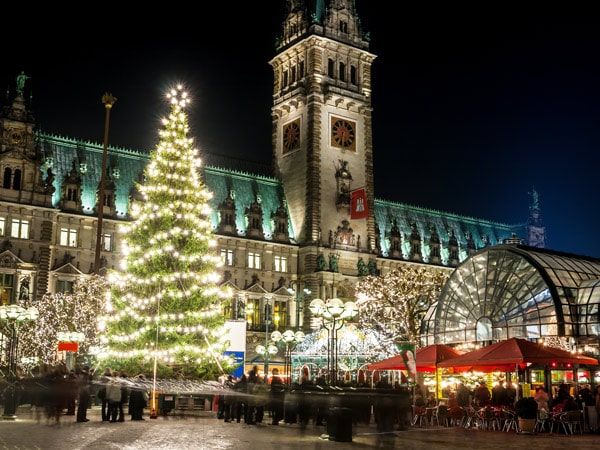
Not only does it have a more traditional Christmas Market at Rathausmarkt (complete with ice-skating and an enormous Christmas tree), but it also has a Winter Pride Hamburg LGBTQ+ Christmas market, as well as at least half a dozen others. Elsewhere in the city, families should check out ‘Winterdom’: a seasonal amusement park filled with rides.
How to get there: Hamburg is extremely well connected by train and by road. By train, it is under two hours to Berlin, and four-and-a-half hours to Frankfurt.
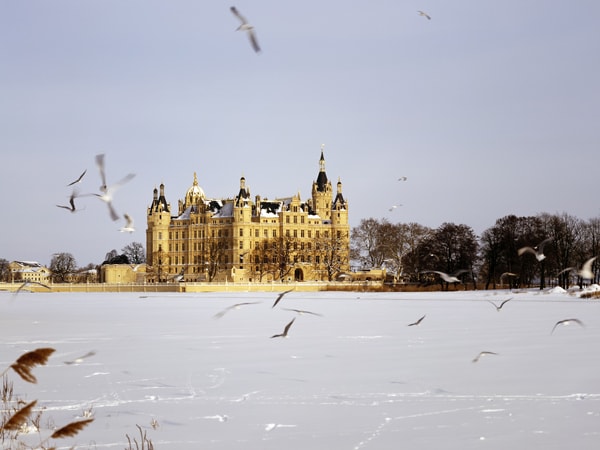
If you want to see more wintery sites while here, seeing the romantic castle of Schwerin Schloss dusted in white snow like a Christmas cake ticks every box. It can be reached from Hamberg in just over one-and-a-half hours by train or car.
4. Rothenburg ob der Tauber
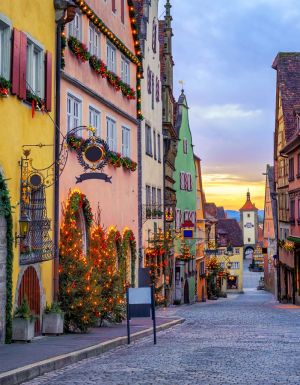
When it comes to Christmas, it is hard to beat Bavarians for enthusiasm. Case in point: Rothenburg ob der Tauber in southern Germany.
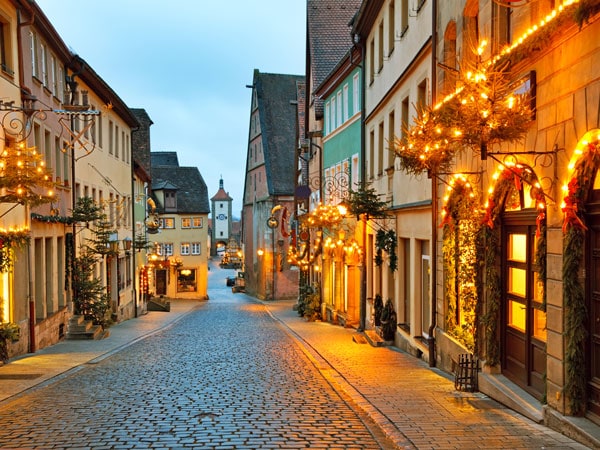
Not only might you spot a capering Krampus here, known as the dark twin of Saint Nicholas who gives out punishment to ‘naughty’ kids, instead of presents; but at Christmas time, the medieval town also gets a visit from the Rothenburg Reiterle in a nightly procession.
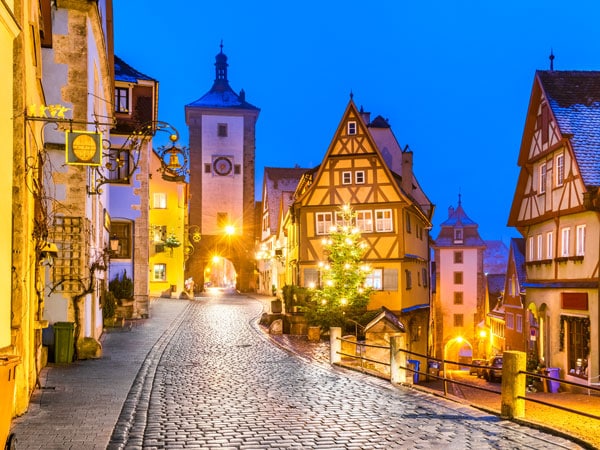
Thought to be originally based on the ancient Germanic god Wotan, who would collect deceased souls each winter, today the hooded and cloaked horseback rider known as the Rothenburg Reiterle has been re-branded to a charming traditional gift giver. Still, when he has passed on by, you might need to calm your nerves with a sweet schneeball pastry and a strong glass of glühwein from the Reiterlesmarkt.
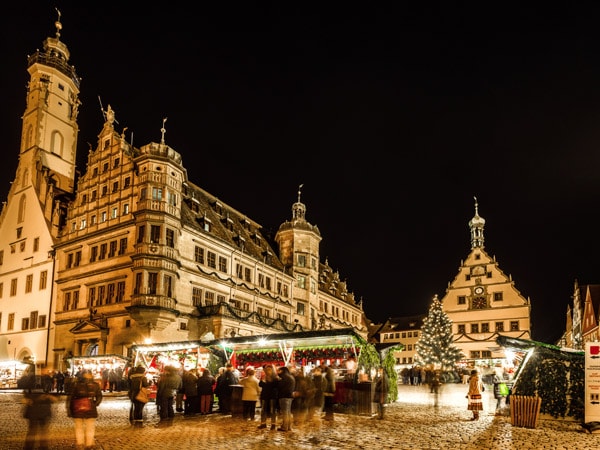
How to get there: Rothenberg is a three-hour journey by train and bus from Munich. Alternatively, a car trip from Munich will take just under three hours (but this option has the added potential of side trips).
Haven’t made it to the city of Nuremberg yet? It could be worth adding some days in Bavaria’s second-largest city, being just over an hour’s drive away (or just under two hours by public transport).
5. Nuremberg
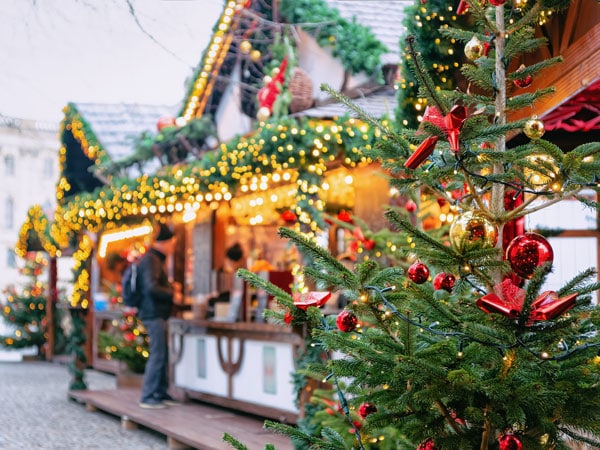
It might be known for its wartime history and medieval architecture most of the year. But come December, Nuremberg also attracts visitors from around the world for its Christkindlesmarkt.
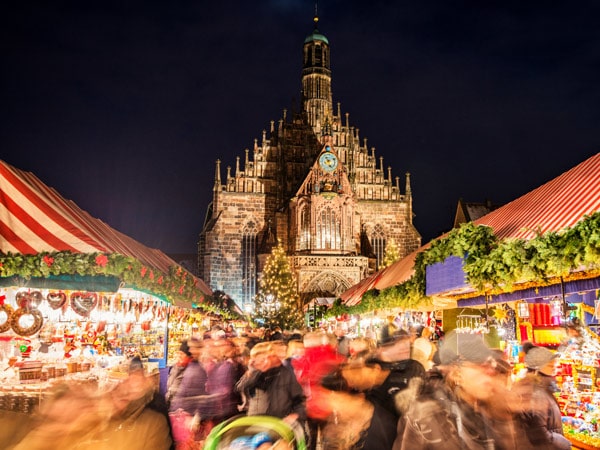
The crowned ‘Christkind’ gift-bringer leads the opening festivities of the market, appearing every night afterwards. Make sure you buy a piping hot Nürnberger Rostbratwurst or a slice of local lebkuchen to try from one of the stalls.
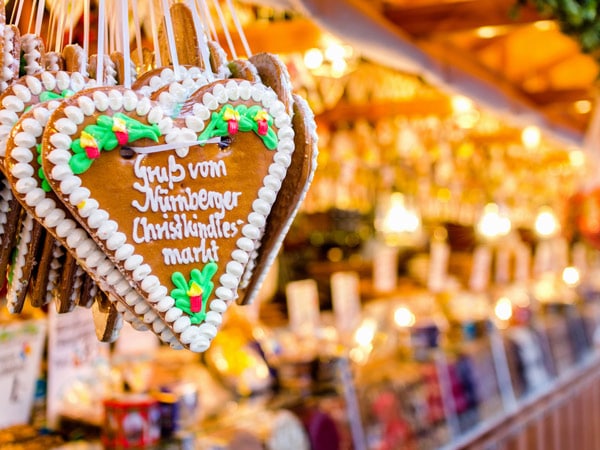
Did you think we were done? There is plenty else to do in Nuremberg for Christmas addicts. There is the Handwerkerhof craft village, the enchanting Toy Museum and a ride on the Christmas Tram to embark on. Cap it off by dropping a few euros to climb up the spire of St. Sebaldus Church. Up there, you will discover a marvellous view of the city lights.
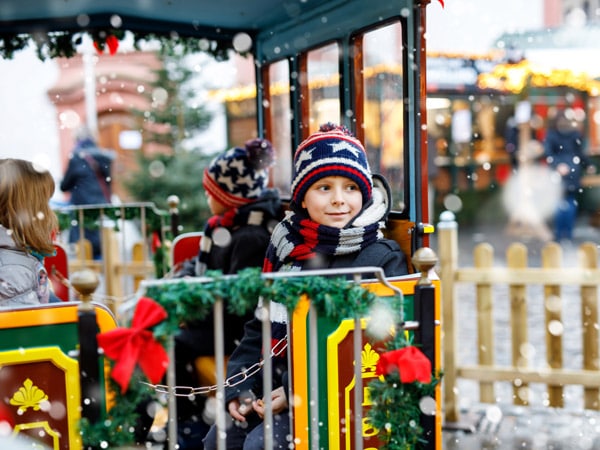
How to get there: As a major city, Nuremberg is connected to many of Germany’s other towns. From Munich, it is only a one-hour train or two-hour drive.
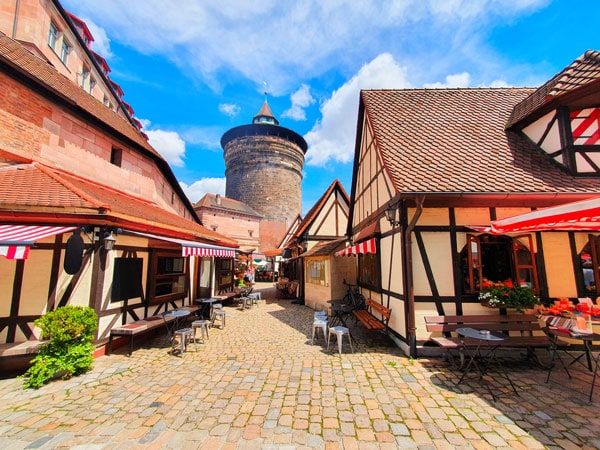
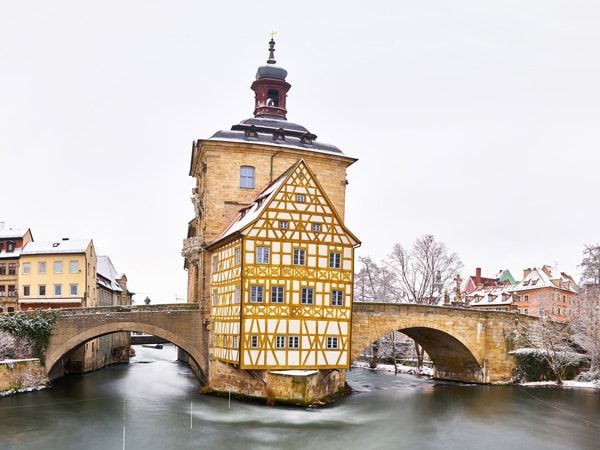
If you can’t get enough of the half-timbered houses that lend so much charm to the older villages in the region, take a trip to Bamberg. It’s famous for its early Medieval architecture, while still being considered less ‘touristy’ than other towns of its type and is only 35 minutes by train.
Weekly travel news, experiences
insider tips, offers, and more.
6. Munich
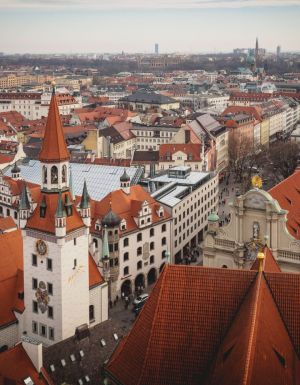
Again, not a town, but grab the chance to shop both the old and the new in the Bavarian capital of Munich. The ‘new’ can be found in the districts of Kaufingerstrasse and Maximilianstrasse, with festive displays lighting up the faces of shoppers. Fill up your bag with holiday produce from the Viktualienmarkt food hall, or at least take a break from the Christmas madness in its beer garden.
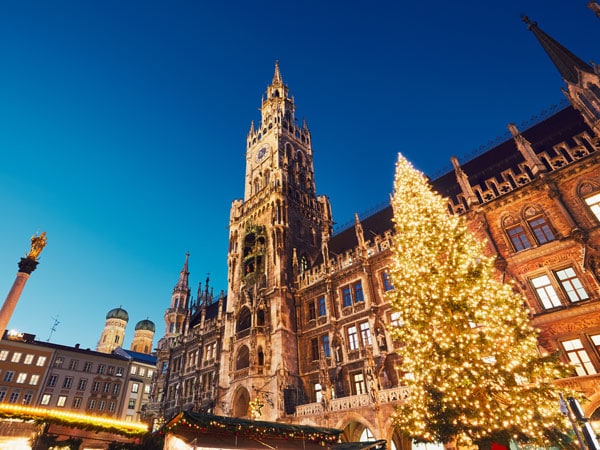
There are still plenty of Christmas markets here, with some of the most popular being Christkindlmarkt at Marienplatz, as well as the Christmas Village in the Kaiserhof of the Residenz city palace.
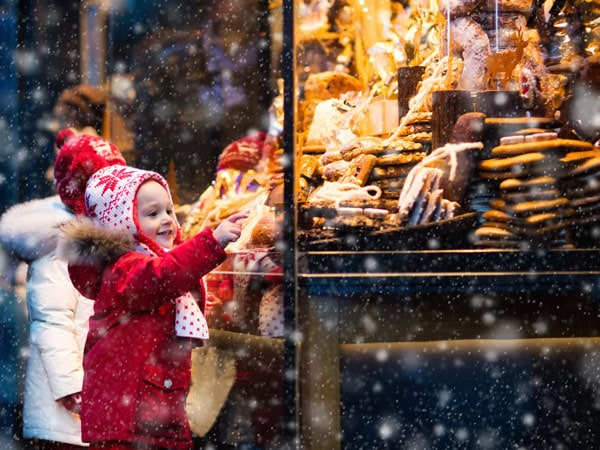
Warm up with a touch of ice-skating (or ice-slipping) at Karlsplatz/Stachus, or, if you prefer, with a heavy plate of traditional Bavarian roast goose and potato dumplings (kartoffelknödel).
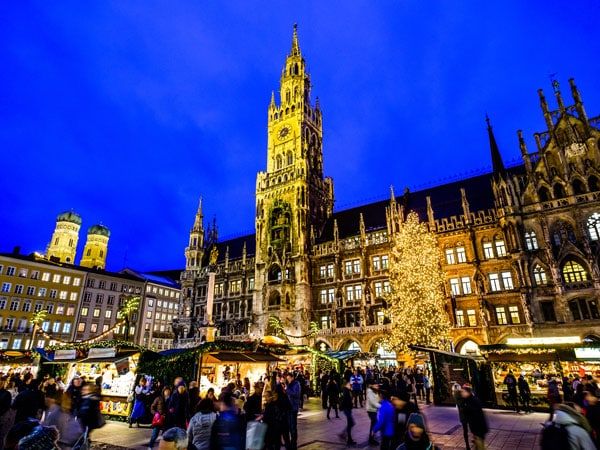
How to get there: Munich is accessible by air to countries all over Europe, making it a handy starting point. From here, you can take trains and buses to many of the cities across Germany, with Nuremberg being one of the closest.
7. Baden-Baden
Take a break from the hustle and bustle of the markets. Instead, give yourself a ‘Christmas present for me’ and book a treatment at the southwestern town of Baden-Baden. Located in the Black Forest region, Baden-Baden has long been famous for its thermal baths, with Caracalla and Friedrichsbad both top options.
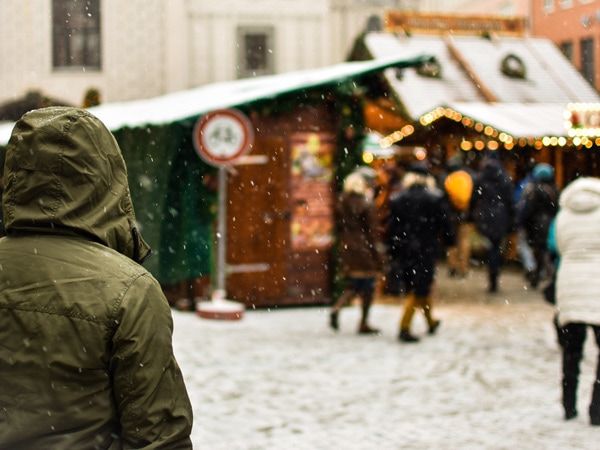
Refreshed? Time to go to the Christmas market at Baden-Baden’s Kurhaus or to take a stroll in the pretty nearby park of Lichtentaler Allee.
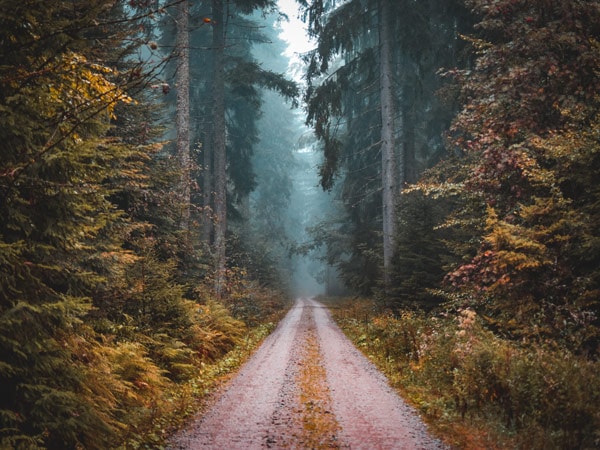
How to get there: Don’t miss the chance to explore the Black Forest. Perhaps best known for being the set of the dark fairy tales of the Brothers Grimm, this ethereal place is best explored by car.
Want to see more stories from International Traveller in your Google search results?
- Click here to set International Traveller as a preferred source.
- Tick the box next to "International Traveller". That's it.