hero media

White Magic in Val d’Isere in the French Alps

IT reader Cindy Bingley-Pullin falls under the spell of Val d’Isere in the French Alps.


“Those who don’t believe in magic will never find it," wrote renowned children’s fiction author Roald Dahl shortly before he died.

Dahl may well be right but it is hard to imagine anyone – believers and sceptics alike – not falling under the spell of the scene that greets my husband and I on arrival at Val d’Isère, France: a winter wonderland straight out of a fairytale.

Sugar-dusted Christmas trees, roads of toffee ribbons and gingerbread chalets topped with thick layers of vanilla icing – all smeared against a backdrop of towering meringue peaks.

Val d’Isère may look like it belongs in the pages of a children’s storybook but its real-life location in the French Alps, near the border of Switzerland, means that it is only three hours by road from Geneva or an overnight rail ride from Paris.

Whilst it has the look and feel of a quaint alpine village, Val d’Isère is actually one of the biggest ski resorts in Europe; spanning a total area of 10,000 hectares, a base elevation of 1850 metres and providing access to over 300 kilometres of marked ski runs.

The wide choice of easy, intermediate and advanced runs means that skiers at all levels of ability are catered for.

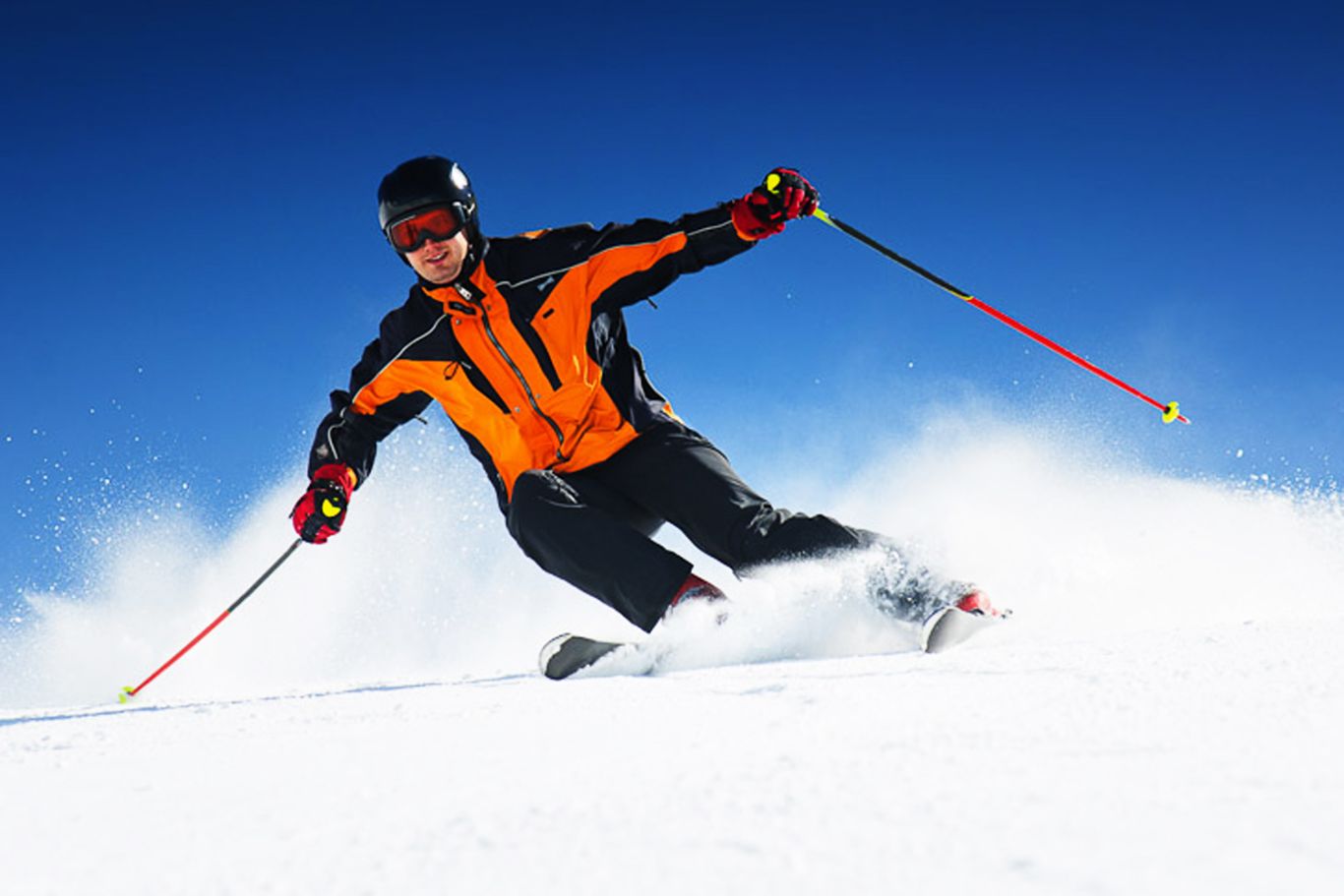
Seasoned skiers (like my husband) can choose to schuss down The Face, the 2.9-kilometre black run used in competition during the 1992 Winter Olympics, leaving scaredy-cat skiers (like me) to stick to the gentle green runs.
In between our solo sessions, we cruise together on broad groomed trails of powder, stopping for an alfresco lunch at one of the many mountain-top eateries along the way.

We flop into crimson-coloured deck chairs under the sun, slurping piping hot bowls of French onion soup and mugs of creamy hot cocoa.

On clear days, we enjoy breathtaking views of Mont Blanc, the tallest mountain in western Europe, before heading back down the mountain.

Partaking in these activities is more than enough to work up hearty appetites. Fortunately, we could have our cake and eat it too: not only is Val d’Isère a snowy playground for adrenalin addicts, it is also an epicentre of culinary delights.

There are over 70 restaurants in the resort, ranging from sophisticated Michelin-starred venues to more humble cafés and crêperies.

At Ferme de I’Adroit – a rustic restaurant cum working Savoyard farmhouse – we tuck into country-sized portions of steak and crozet (a pasta dish) washed down with glasses of Bordeaux wine, in a cavernous space of thick stone walls, exposed timber beams and a giant glass window looking into the cow barn.

Elsewhere, at traditional eateries Les Clochetons and L’Auberge Saint Hubert, we fill our bellies on regional specialties such as casseroles, fondues and raclette (a meal of melted cheese served with boiled potatoes and gherkins), whilst the cheerful and casual Le Bananas bistro serves us everything from Tex Mex and curries to garlic snails.

Most mornings we head out for supplies and come back with frosty breath, a long slab of bread tucked under one arm and mittened hands nursing cardboard cups of steaming café au lait.

At the weekly farmers markets, we stock up at cheese stalls laden with giant discs of reblochon, tomette and chevre, and buy saucissons (sausages) stuffed with everything from duck and pistachio to wild boar.

This being France, we can never resist the desserts of Wonka-esque proportions displayed in patisserie windows: delicate pastel macarons, mouth-watering chocolate éclairs and tarte tatin in glossy, golden caramel.

It feels like we have won the golden ticket to gastronomic heaven!

As combined foodies and ski fanatics, Val d’Isère really is the perfect destination for us to overindulge in two of our favourite pleasures.

One night we walk to dinner along the trail that leads to and from our ski-in/ski-out chalet – but this time, in après ski boots instead of poles and planks.

Under an inky black canopy of twinkling stars and surrounded by silence except for the soft crunching of snow underfoot, the shadow of a fox slips past.

Magic, indeed.

Want to see more stories from International Traveller in your Google search results?

  1. Click here to set International Traveller as a preferred source.
  2. Tick the box next to "International Traveller". That's it.
hero media

What the European heatwave means for your summer travel plans

Temperatures are soaring this summer, breaking records across Europe and the UK. 

Euro summer is a feeling like no other. But when a heatwave hits? The dream trip quickly turns into a sweaty mess. Extreme heat is sweeping Europe and the UK this week, with record-high temperatures impacting travel plans across the continent.

And while Australian summers are typically hotter in absolute temperature, many European cities aren’t equipped for high temperatures, resulting in unbearable weather.

Why is it so hot in Europe?

Signs of a hot summer loomed in May, when the mercury hit unprecedented spring highs. Now, extreme high temperature warning alerts have been issued in countries such as Spain, Italy, France, England, the Netherlands and Germany.

France saw its hottest day on record on Wednesday, with an average temperature of 30°C across the day and night. This surpasses the average temperature for June, which is 15°C to 25°C. Dozens of people have died, including 40 from drowning.

In Spain, 212 deaths have been linked to the heatwave.

The UK recorded its hottest June day ever on Wednesday with temperatures soaring to 36.1°C. In an article published by the Met Office – the UK’s national meteorological service – Professor Stephen Belcher CBE, Met Office Chief Scientist, shared his concerns about June’s heat. “To see temperatures like this in the UK in June is sobering. Events like this bring home the implications of climate change, with very high temperatures and humidity bringing significant health implications from heat stress, as well as impacts to a range of sectors such as transport, energy and water supply,” he said.

Heatwaves are becoming increasingly common in Europe and the UK, neither of which is prepared for such extremes. The World Meteorological Organization reported that in 2025, at least 95% of Europe experienced above-average annual temperatures and that the continent was heating up twice as fast as the global average.

How travel is impacted

A pharmacy sign displaying 40 degrees Celcius
A pharmacy broadcasting local weather data. (Credit: Getty/Dragoncello)

During a heatwave, power grids, water systems and transport networks can be affected, resulting in disrupted itineraries for travellers. In France, power outages have left thousands without electricity and early closures have been implemented for two of Paris’s biggest attractions, the Eiffel Tower (early afternoon rather than late at night) and the Louvre (two hours early). Eurostar cancelled its London to Paris and Paris to London services from the 22nd to the 25th, and major UK rail companies have been advising travellers to avoid using trains where possible, or to travel during early hours.

If a heatwave is predicted, being flexible with your itinerary and having fully refundable/changeable tickets is key, as extreme heat can force the cancellation of outdoor activities, impact rail and flight services and change the opening hours of sites and eateries.

Why does summer in Europe often feel hotter than summer in Australia?

people swimming in the Canal Saint-Martin in Paris
People swimming in the Canal Saint-Martin in Paris to cool off. (Credit: Rachael Thompson)

With some of the highest UV levels in the world, Australians are no strangers to the heat, adapting well to intense weather. But our infrastructure is largely equipped to withstand soaring temperatures with climate-responsive passive design, refrigerated air conditioning or evaporative coolers, as well as swimming spots aplenty.

Buildings in Northern and Western Europe and the UK, however, are constructed to retain heat and handle frosty winters. The lack of universal air conditioning means it generally feels hotter even though the temperature on your app might not look it. During a heatwave, it can feel like you’re in a sauna as cities act like heat traps.

How to stay cool and prepare for another heatwave

Relief is expected across Europe and the UK later this week, but more heatwaves are still possible in the coming months. Summer heat typically peaks in July and August.

Public transport often doesn’t have air conditioning, and buses in particular can be swelteringly hot. If you’re heading outside or your accommodation has no air conditioning, it’s worth buying a spray bottle and a handheld fan from a pharmacy or tourist stand. Check ahead of time if restaurants and cafes have air conditioning and make a booking in advance. The highest temperatures typically hit between 3pm and 6pm, so aim to head outdoors outside of these hours.

Rising temperatures invite travellers to enter a more intentional era of seeing the world. Now more than ever is the time to embrace lower-impact “coolcations” and off-season getaways.