hero media

Track leopards, elephants and pick tea at Sri Lanka’s most immersive stay

Long touted as a destination on the rise, Sri Lanka is stepping into its well-deserved moment in the sun.

Pawprints on the Pekoe Trail

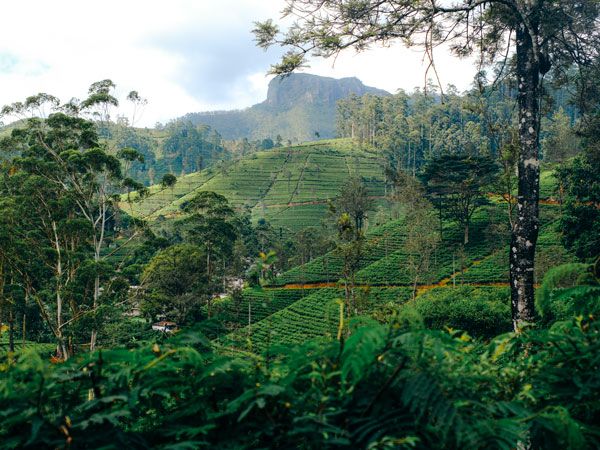
If you were looking at our small group from above, we’d resemble a trail of ants moving slowly through a lime-green carpet. Squint your eyes and you’ll see the sky is blue and the sun is flooding the landscape in halogen-bright light, making the occasional passing trishaws twinkle like toy cars.

It’s around the five-kilometre mark on stage seven of the Pekoe Trail in Sri Lanka’s Hill Country that you’ll notice three of the five members of our group pull to a stop. Zoom in close and you’ll see Uga resorts guide Ruban Rathnasingham drawing circles in the dirt with a stick.

“Look here," says Ruban, squatting on his haunches. “These are fresh leopard tracks. The leopard must have walked along this track last night," he says.

All this just a short drive from our accommodation at the recently restored Uga Halloowella, in the quiet hills behind Hatton, overlooking Castlereagh Reservoir. We have spent the better part of the morning hiking a secluded stretch of the 300-kilometre trail, the first stage of which was officially opened by longtime Sri Lankan resident and sustainable tourism pioneer Miguel Cunat in late 2023.
the Uga Halloowella, Pekoe Trail, Sri Lanka Hill Country
Uga Halloowella is tucked away in the quiet hills of Hatton in the heart of Sri Lanka’s tea country, near to the start of Stage 7 of the Pekoe Trail. (Image: Uga Resorts)

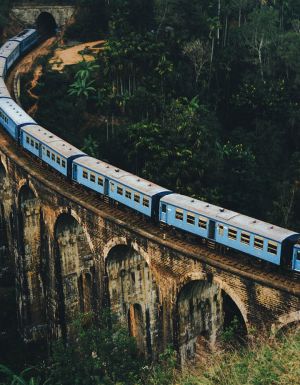
“This is the longest walking path in Sri Lanka. This section of the path was used during the British colonial period to transport the tea leaves to the factories and then onto Colombo for export. Miguel took some old maps and used them to connect the roads and paths with beautiful places like rivers, reservoirs and temples," says Ruban, whose grandparents worked in the plantations.

“The Pekoe Trail immerses visitors in the region’s tea history. It crosses train lines and circles tea factories, passes churches and shrines and leads to viewpoints that look out over the valley," he says.

While the vision for the multi-stage, multi-day hike – which starts in Kandy and ends in the hill town of Nuwara Eliya – was to promote Sri Lanka as a world-class hiking destination, the Pekoe Trail also provides opportunities for the villagers who live in the heart of Hill Country.
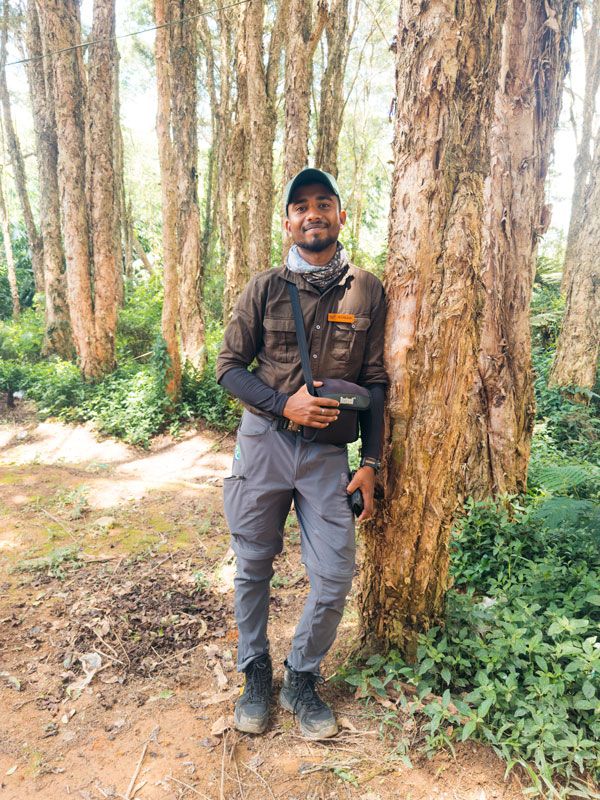
guide Ruban Rathnasingham in Uga Halloowella, Sri Lanka Hill Country
Ruban Rathnasingham guides guests of Uga Halloowella. (Image: Carla Grossetti)

“When I started, I was just one person. Now our team has 13 members. Four of them are from the Sri Lanka Girls Guide Association and that’s very good news. It means the walk is providing a future for the next generation of women who don’t want to pick tea. There are also opportunities for local people to make business selling fresh coconuts or homemade snacks along the trail," he says.

Our visit to Sri Lanka coincides with the annual full-moon festival of Vesak Poya, where we observe locals praying for the rain the country’s booming tea industry relies on at the colourful Maanica Pillayaar Hindu temple in Hatton. Near the entrance are two women fluttering about in green and pink saris and, deep inside, Hindu priests dressed in white dhoti chanting in front of the different deities.

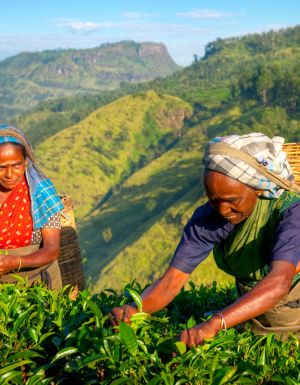
The humidity is high as we leave the temple and wind our way through the hills, where we gain an even greater appreciation for the women working in the fields that ripple like an emerald sea. During the hike, we pass children holding hands, who happily pose for photographs. We also pause in front of a garish statue of Sudalai Madan, a Hindu border guide, wielding a scythe. And stop to admire the colonial-era Chrysler’s Farm Tea Factory, built in 1870.
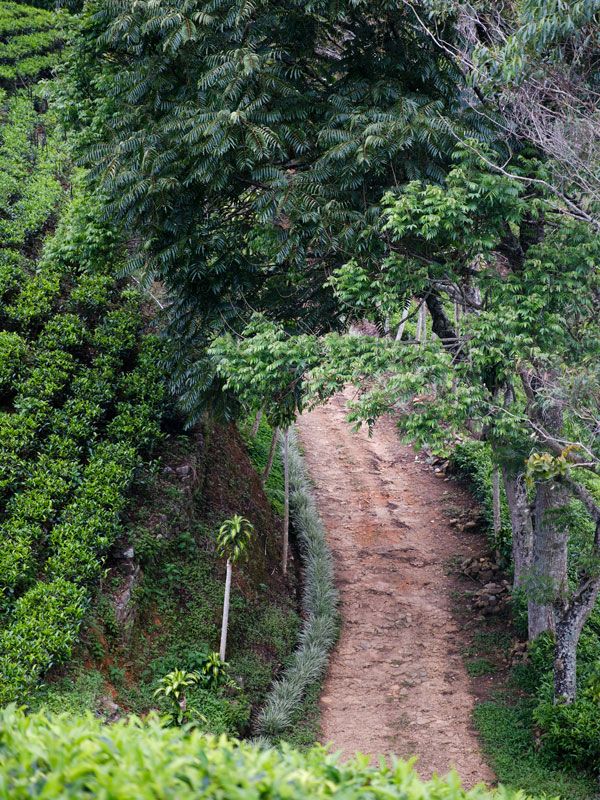
the Pekoe Trail in Sri Lanka Hill Country
The Pekoe Trail corkscrews around Sri Lanka’s Hill Country. (Image: Carla Grossetti)

The Pekoe Trail also threads past plantations dotted with female tea pickers wearing brightly coloured burlap sacks. And through a village with homes made of mud bricks, plywood and tin where loud music fills the air, joyful and raucous. In addition to the thrill of seeing fresh leopard tracks, we see the odd squirrel scuttling from tree to tree. And share Ruban’s joy at spotting his favourite birds “the red-vented bulbul and scimitar babbler" in the branches of grevillea trees.

Uga Halloowella also curates an immersive field-to-factory tour of the Norwood Tea Estate in the Central Province. After learning about the plucking, weighing, drying and packing process – which is all completed within 24 hours – we head back to Uga Halloowella where the ritual of enjoying afternoon tea feels more significant than ever.

A luxurious stay in Sri Lankan Hill Country

The leisure arm of the Finco Group attained Uga Halloowella in 2024 and, after an extensive refresh in collaboration with renowned Sri Lankan architect Channa Daswatte, reopened the 1912 bungalow for business in December 2024.
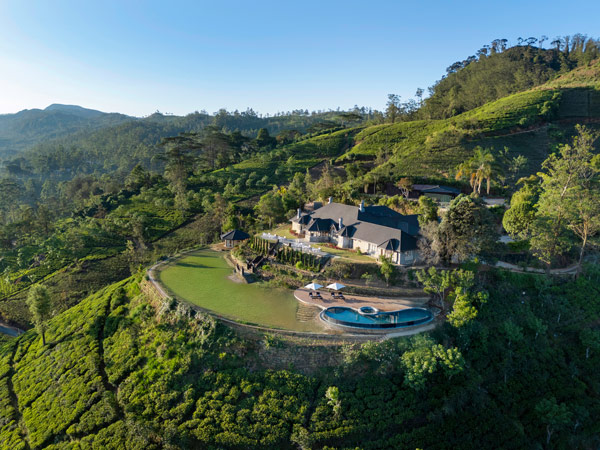
the Uga Halloowella surrounded by tea plantations, Sri Lanka Hill Country
The luxury five-star resort is surrounded by a patchwork of tea plantations. (Image: Uga Resorts)

There are just six bedrooms in the colonial-era lodge, which is filled with heirlooms, antiques, leatherbound chairs and chandeliers. The living room features the original pinewood panelling, teak furniture and soaring glass windows that give it the look of a ship’s cabin. And the dining room is adorned with a fanciful mural of endemic trees and flora painted by local university students that depicts the property’s proximity to the greenery that stretches towards forever.
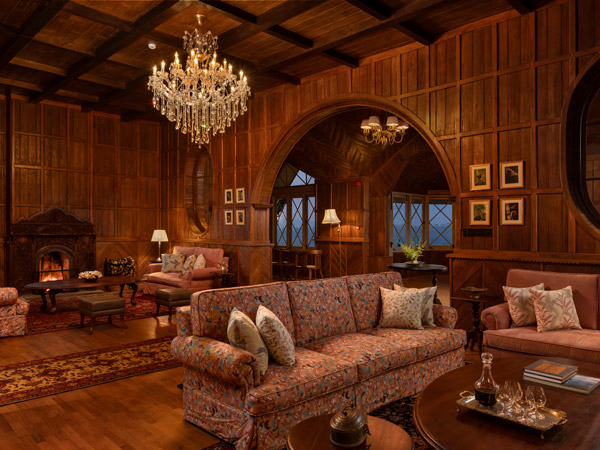
the rustic and elegant interior of Uga Halloowella, Sri Lanka
Uga Halloowella dates back to 1880. (Image: Uga)

General manager Seshaya Ranasinghe agrees the acquisition and subsequent transformation of Uga Halloowella is emblematic of the brand’s evolution, which has become a benchmark for conscious hospitality in Sri Lanka. Seshaya’s ascent from hospitality student to the role of general manager also exemplifies Uga’s commitment to fostering female leadership.
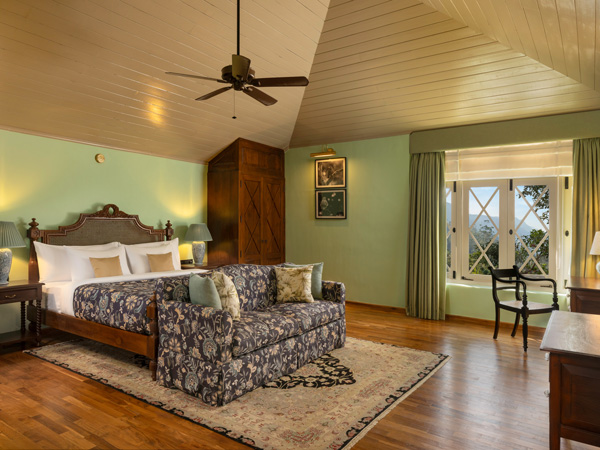
Planter’s Suites at Uga Halloowella, Sri Lanka Hill Country
The Planter’s Suites at Uga Halloowella are all old-world elegance. (Image: Pradeep Gamage)

“Uga’s commitment to sustainability has created meaningful opportunities for women, not only by opening doors to work in the industry, but also by nurturing their growth into leadership roles. I am proud to say I am one of the women who was identified as a future leader. Uga has made remarkable progress in gender balance. We now have women holding positions in all our key properties," she says.

The property’s commitment to leopard conservation also deserves special attention and is at the heart of a stay at Uga Halloowella. While the chance of sighting a leopard in Hill Country is rare, naturalist Nisal Herath does invite guests on bush walks through their territory. Nisal also presents a slideshow that demonstrates his efforts to track and monitor the leopard’s movements, which has become his “passion and purpose".
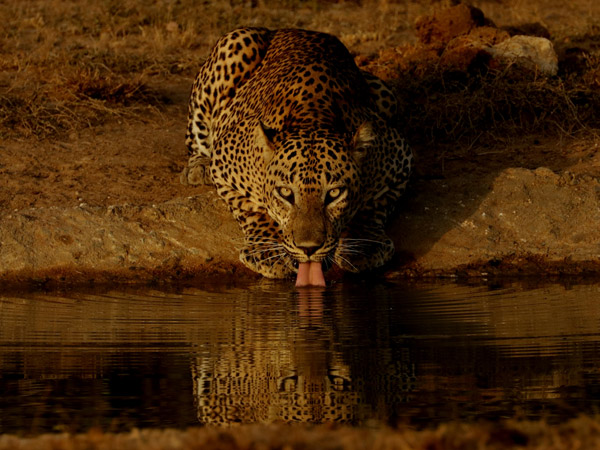
a leopard drinking water, Sri Lanka
Yala National Park is leopard country. (Image: Dhanushke Halwathura)

“The leopard in the Hill Country is one of the largest and most colourful leopards in the world. It’s quite special because it’s an endemic subspecies and found nowhere else in the world," says Nisal, while playing footage captured by his camera as part of his Leopard Conservation Presentation.

“I like to take guests through a section of jungle that is a wildlife corridor for the leopard. It’s their territory. The tracking data I’m gathering here helps researchers understand leopard social structures, movement patterns and behaviour, which is crucial for conservation and avoiding human-leopard conflict," he says.

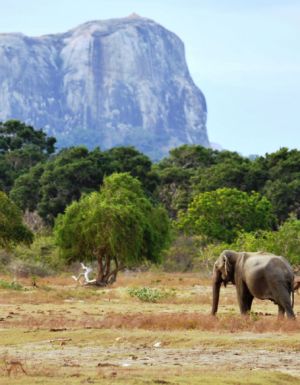
The chances of seeing a leopard in the wild increase dramatically at Uga Chena Huts on the fringes of Yala National Park, which is also home to herds of elephants. The country’s relatively small size also makes it feasible to go on a scenic drive to see wild elephants and bird life from Uga Ulagalla in Anuradhapura to a surfing safari from Uga Prāva in Tangalle on the South Coast within a few days. Guests of Uga Ulagalla are also treated to a talk led by head naturalist Katharina Raaben about the advancements made by the onsite Elephant Research Center.
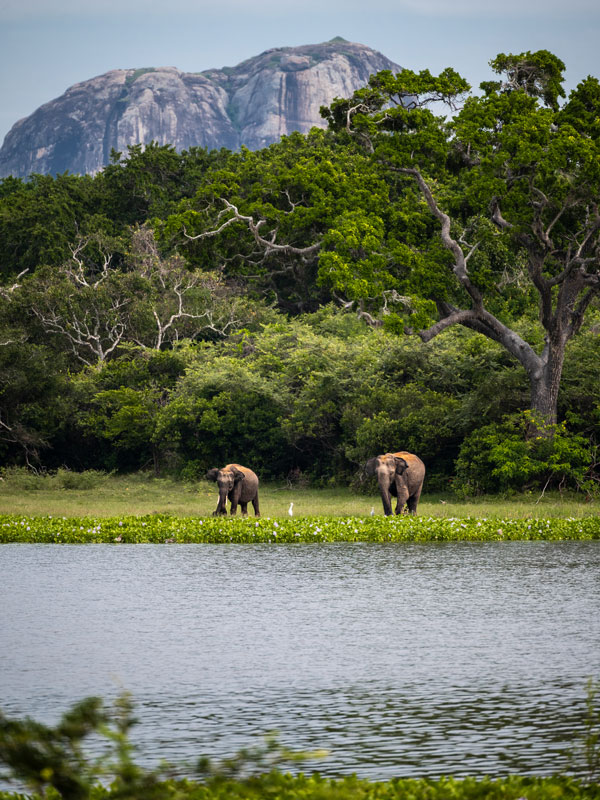
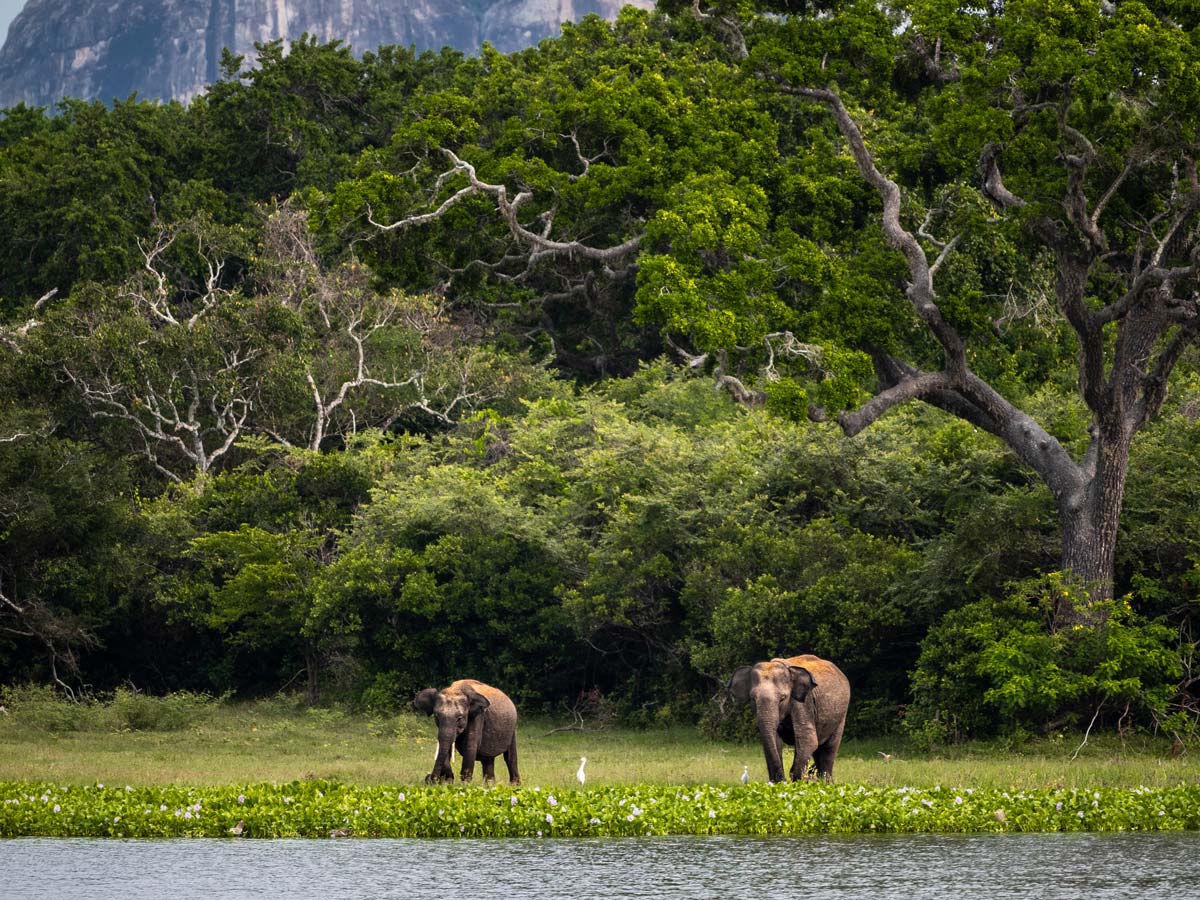
two elephants by the water, Sri Lanka
Uga Chena Huts borders Yala National Park, which is teeming with wildlife. (Image: Getty/Tharindu De Silva)

The art of meaningful travel

Since its first luxe retreat opened in 2010, Uga has opened six more properties that capitalise on the country’s natural assets. In addition to the aforementioned properties, there’s Uga Jungle Beach in Trincomalee, Uga Bay in Pasikuda and Uga Riva in Negombo, just a half-hour drive from the airport.

Uga’s vice president Marcelline Paul says the Sri Lankan-owned hospitality group is redefining what meaningful travel looks like by offering guests luxury with a deep respect for nature, culture and heritage. “We’re not just selling rooms. We’re offering a window into the heart of Sri Lanka," he says.

“Uga aims to put Sri Lanka on the map by showcasing different destinations through its properties. For instance, Uga Riva is on a two-hectare coconut plantation and serves as an incredible luxe alternative to an airport hotel in a pristine setting. Uga Ulagalla in the Cultural Triangle offers activities like horseback riding and kayaking on 24 hectares. And we’ve just opened the brand-new Uga Prāva on the pristine shores of Tangalle," he says.

Marcelline shares that Uga resorts also has plans to give Uga Jungle Beach a contemporary refresh while maintaining “its meaningful connection to the destination".
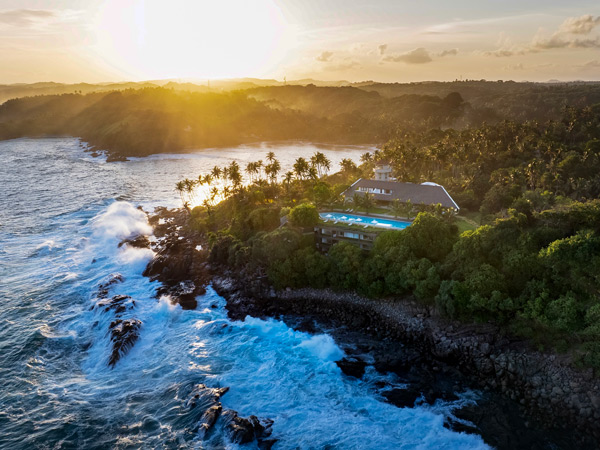
Uga Prāva as seen from above
Uga Prāva is perched along the cliffs at Tangalle. (Image: Uga)

In addition to offering ease of access to wildlife and nature experiences, Uga reflects Sri Lanka’s emergence as a world-class culinary destination. Uga’s group chef Rasika Weeraratne says 90 per cent of the ingredients he sources are sustainable and provide employment opportunities for local growers and producers. Giving back to the community is something he is very proud of at Uga.

“Jackfruit, banana blossom, curry leaves, lemongrass and lime leaves are just some of the ingredients we source for the restaurant at Uga Prāva. I like to create dishes that are traditional to each region. I also love the freedom to develop recipes that break with tradition and introduce new techniques," he says.
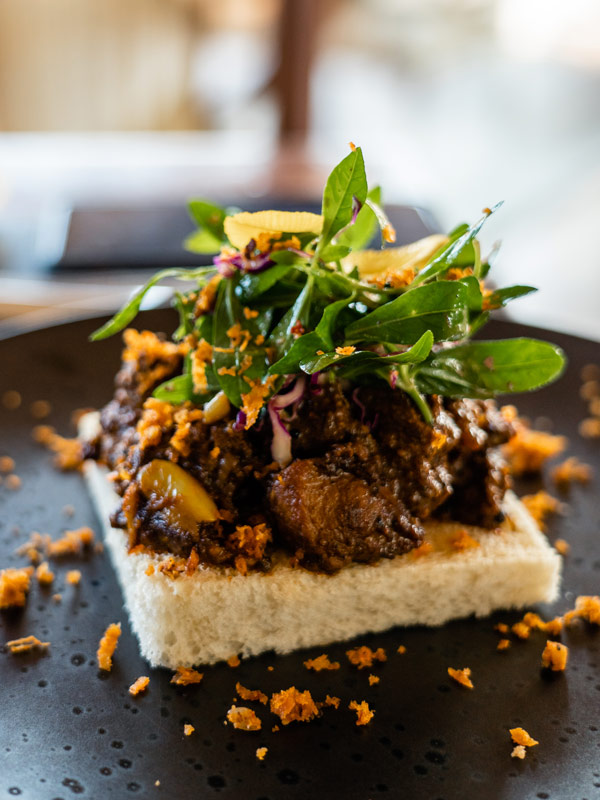
cuisine at Uga Chena Huts
Culinary excellence is a core pillar at Uga resorts. (Image: Eyeris Private Limited)

This approach is evident at Uga Prāva, which features seafood signatures such as Sri Lankan-spiced sesame tuna tataki, lagoon prawns with yellowfin tuna steak and desserts such as a jaggery coconut and cashew spiced pudding.

Reflecting on what’s changed and remained

Several new highways and a rail line have been built since I first came to Sri Lanka 25 years ago. But what impressed me back then, impresses me still. Kilometres of palm-fringed beaches, ancient ruins, hills terraced by tea plantations, wildlife parks, UNESCO sites and colourful festivals.

While the island nation remains known for its tea plantations, the soul of Sri Lanka lies in its diversity. After three decades of war, the devastating aftermath of the tsunami, the Easter Sunday attacks, impact of Covid-19 and subsequent economic downturn, it feels like the country is finally poised to embrace prosperity.

Now more than ever, Sri Lanka seems ready to capitalise on opportunities in the global tourism landscape, with companies such as Uga promoting a considered approach that enhances the appeal of a stay for discerning travellers.
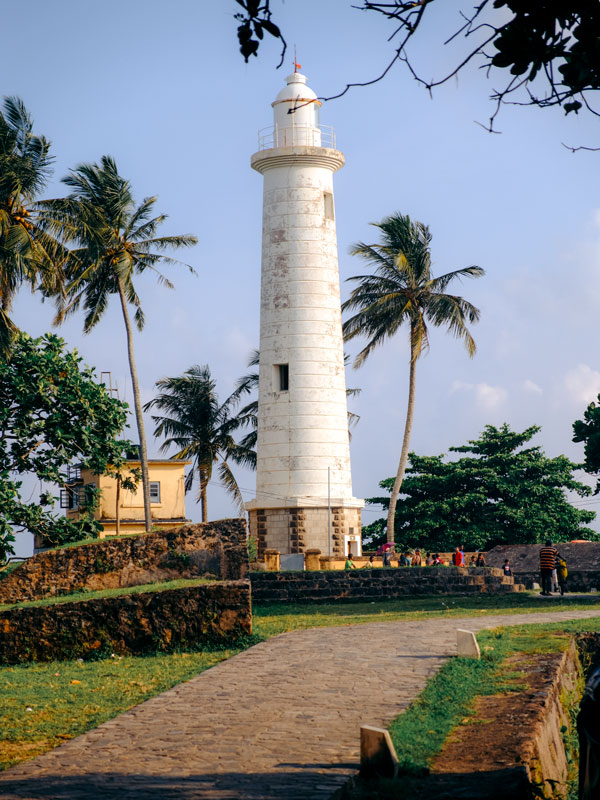
the Galle Lighthouse, Sri Lanka
Visit Galle Lighthouse, built by the British in 1848. (Image: Carla Grossetti)

While I could stay glued to the sun lounger beside the pool at Uga Prāva, there are immersive options that beckon. There’s a boat ride around Kalametiya Bird Sanctuary during the hush of sunset, where we spot water buffaloes and shore birds. A two-wheel tour around the rice paddies and wetlands spangled with water lilies with local adventure company, Sensory Indulgences. And a side trip to Galle to take happy snaps of the lighthouse and heritage architecture and shop for souvenirs.
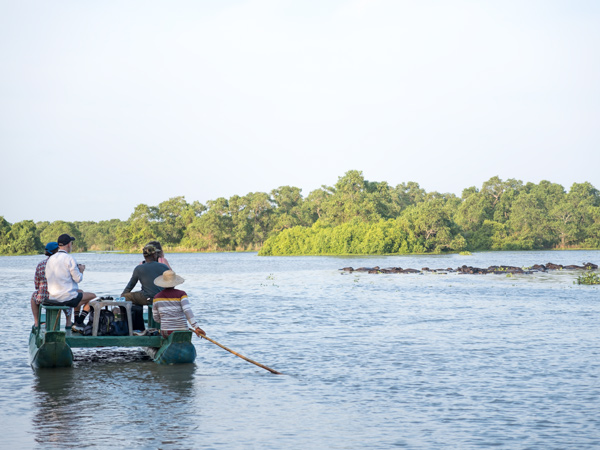
boat ride at Kalametiya Bird Sanctuary
Spot water buffaloes at Kalametiya Bird Sanctuary. (Image: Carla Grossetti)

I was expecting Sri Lanka might have changed beyond recognition when I returned all these years later. But although the luxury accommodation market has grown, the jungle still claws at the coastline, and it still feels rugged and raw.

My beach-chic suite at Uga Prāva is just a few hours away from the homestay in Midigama where I spent a month of my honeymoon. Although the two properties could not be more different, the whooshing sound of the ocean lulling me to sleep is familiar, and it’s equidistant from the sea.

Apart from the endless ebb and flow of the Indian Ocean, the other constant that remains is the warmth of the Sri Lankan people. And it’s their enduring spirit of kindness that will stay with me once again as my personal story and the greater story of Sri Lanka intersect.

Weekly travel news, experiences
insider tips, offers,
and more.

A traveller’s checklist

Getting there

SriLankan Airlines offers direct flights from Sydney and Melbourne to Colombo, travelling between Sydney and Sri Lanka four times a week and daily from Melbourne.

Staying there
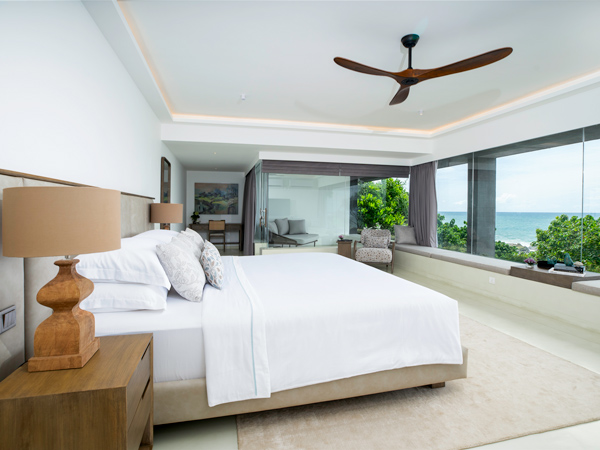
a bed with sea view at Uga Prāva
Uga Prāva embraces a more modern, minimalist design. (Image: L.S Amal Prasad)

Uga Riva is far from the agitated honking that fills the air in Colombo and the best option for a stay relatively close to the airport. Tick off the trifecta of tea, sea and safari with a stay at Uga Halloowella, Uga Prāva and Uga Chena Huts. Uga offers an all-inclusive package that includes a butler service.

Eating there
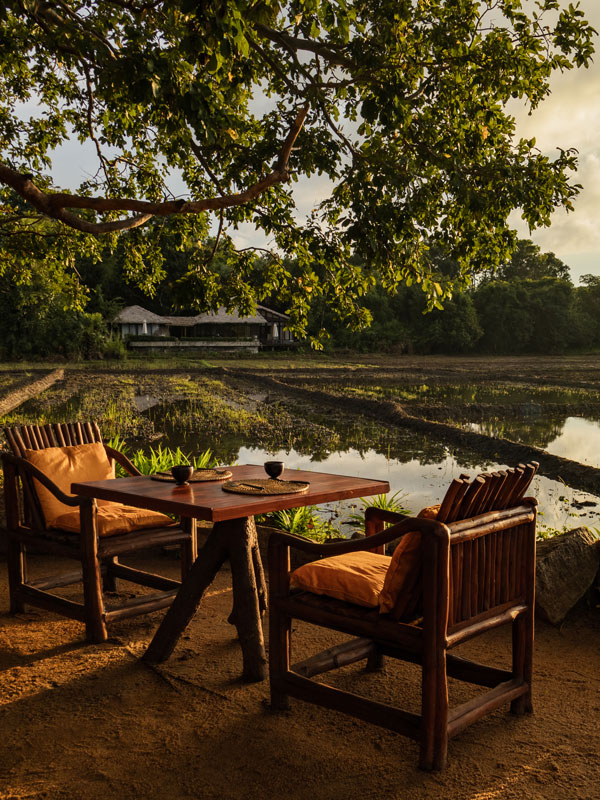
Kamatha dining experience at Uga Ulagalla, Sri Lanka
Dine amid rice fields at Uga Ulagalla. (Image: Uga)

Kamatha is a dining experience set in the centre of a working rice paddy that is integral to a stay at Uga Ulagalla. Led by local village women who cook 25 dishes over a wood fire using recipes that have been passed on from generation to generation, the banquet is what Sri Lankan royalty would eat every day. Enjoy afternoon tea by the infinity pool at Uga Halloowella, a contemporary take on Sri Lankan seafood at beachfront Uga Prāva and a bonfire dinner at Uga Chena Huts.
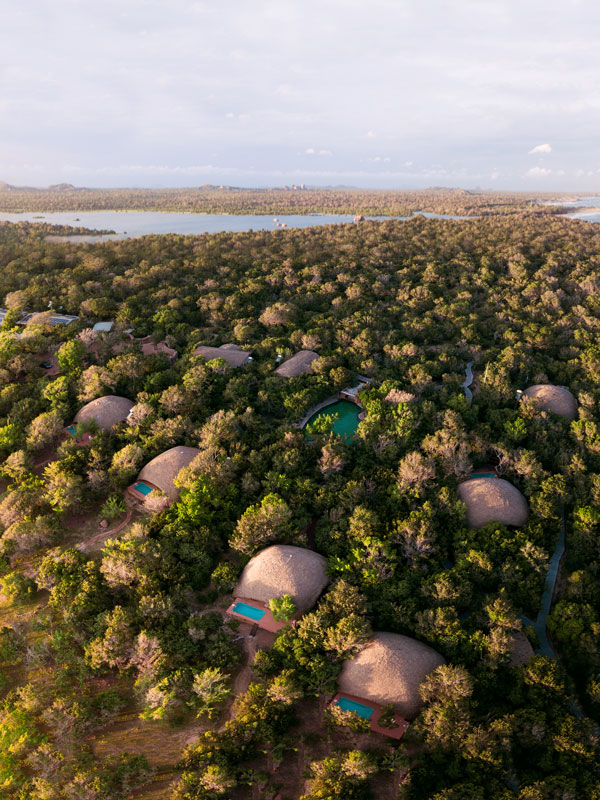
an aerial view of Uga Chena Huts, Sri Lanka
Palm-thatched Uga Chena Huts are dotted through the jungle. (Image: Uga)

Playing there

Take a tour of the tea plantations with an Uga Halloowella guide. Spot birds at the Kalametiya Bird Sanctuary or cycle around the wetlands with Sensory Indulgences from Uga Prāva. Spot blue whales from Uga Jungle Beach on the north-east coast and take a cooking class in Uga Ulagalla.

Want to see more stories from International Traveller in your Google search results?

  1. Click here to set International Traveller as a preferred source.
  2. Tick the box next to "International Traveller". That's it.
hero media

These community homestays are changing how travellers experience Nepal

    After youth-led protests in 2025, this year Nepal elected a 35-year-old former rapper as Prime Minister. In a country where tourism is its biggest industry, what’s next for travellers? 

    In 1986, Nepal changed its clock. It had used India Standard Time since 1920 so, to differentiate, it wound its clock 15 minutes ahead of, not behind, its big-brother neighbour. Boss move. “Nepal is strongly opposed to the idea that our identity is connected to India,” says Community Homestay Network (CHN) guide Bikal Khanal.  

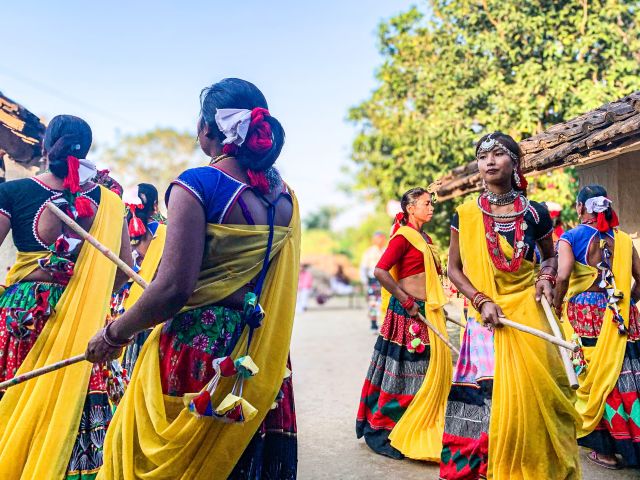
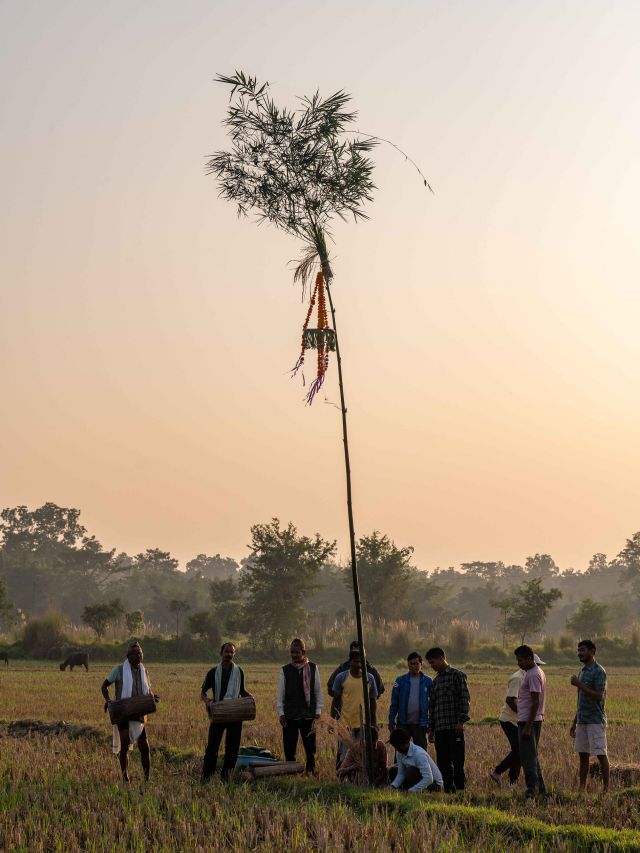
    Tharu dance
    Tharu dance is traditionally set to hand drums. (Credit: Kate Lewis)

    Today, Nepal is the only independent country with a 45-minute deviation to universal time; an oddity that’s become a symbol of national pride. The quirk is nearly as endearing as Kathmandu’s Tribhuvan airport where carved varnished wood and shiny red bricks rule. One sign points to a ‘Travelator’ and another to a ‘Grievance Handling Desk’ while visas are noisily stamped at customs for US dollars, cash only. When am I?  

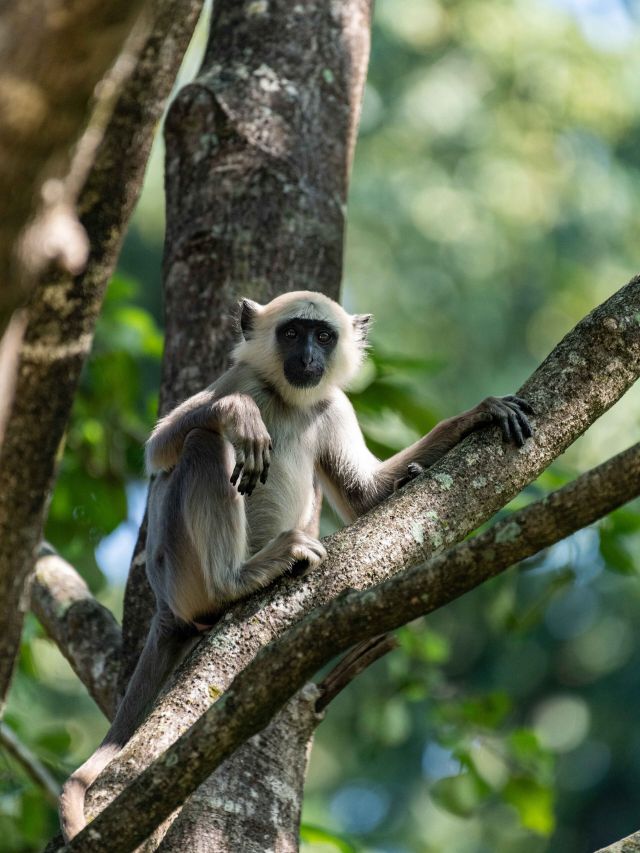
    Nepal gray langur
    Spot the endemic Nepal gray langur. (Credit: Simon Urwin)

    The 15 or 45 minute anomaly sees me tap out completely on timezone calculations. Why bend my brain calculating if it’s quarter to or quarter past elsewhere when I’m in the honking here and now of Kathmandu where the air is high-altitude crisp, the prayer flags flutter and the street dogs howl?  

    How tourism is changing in Nepal

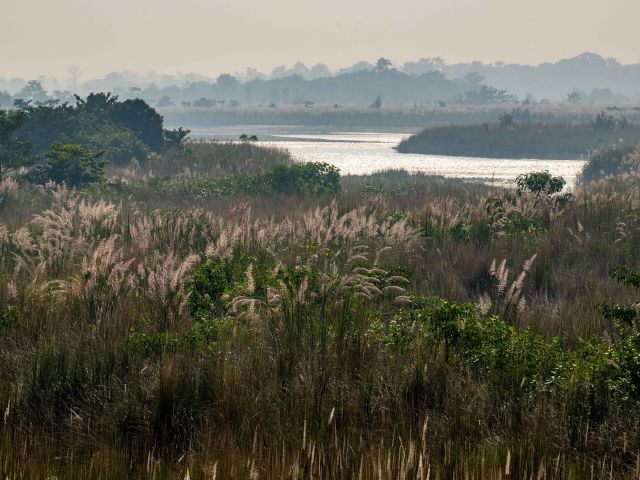
    Bardiya National Park
    Bardiya National Park is rich with wildlife. (Credit: Simon Urwin)

    India is not the only association many Nepalis would like to shake. With eight of the world’s 10 tallest mountains, including Mount Everest and Annapurna, Nepal has long attracted mountaineers and trekkers, and expedition numbers are continuing to rise.  

    Tourism is one of the country’s biggest sources of foreign currency, so this growth is not negative, per se. But according to Ang Tshering Lama, who co-founded Phaplu Mountain Bike Club, being reduced to a mere trekking destination is limiting.  

    “Trekking is just one layer of our identity,” says Ang. “When it becomes the dominant narrative, it limits how we’re seen and how we see ourselves.” Nepal’s recent success, however, in diverting trekkers to less-trafficked areas such as Manaslu mofuntain, where visitor numbers rose by 117 per cent last year, offers hope that tourism can diversify even more radically.   

    Local men in Bhada village
    Local men in Bhada village. (Credit: Simon Urwin)

    The founder of CHN, Shiva Dhakal, wants that change. “The whole idea of the Community Homestay Network is to promote experiences outside of trekking,” he says. “Community tourism changes lives and helps kids stay home instead of coming to the city or migrating to the Middle East.”  

    Ang grew up seeing people leave, “not because they wanted to but because there weren’t enough opportunities to stay”, he states. Yet from remote villages to living traditions; food, art, music and emerging subcultures, “there’s so much that’s not being seen.” 

    CHN is opening some of those doors. It doesn’t own, or fund, any homes. Rather, it promotes homestays to travellers on a single, slick platform, while fostering entrepreneurship in places where women, marginalised castes, Indigenous people and the youth stand to benefit the most.  

    A new generation demanding more

    Dalla Town Hall
    Dalla Town Hall, where volunteers discuss anti-poaching tactics. (Credit: Bheem Thapa)

    The future prospects of next-gen Nepalis can no longer be ignored. On a Kathmandu tour with 33-year-old guide Monica K.C, we pass buildings torched in the September 2025 ‘Gen Z protests’, including the Supreme Court and Parliament House. Seventy-two people died. “They were anti-corruption protests,” says Monica. “Politicians’ children are living a lavish life but the airports are crowded with youngsters leaving to find work.”  

    We stop in ‘little Tibet’ at the wondrous sixth-century Boudha Stupa. “The wheel of life is Buddhism in a nutshell,” says Monica. “Things such as hate, ignorance and anger keep you rotating around the wheel, so you must follow the principles of Buddhism to detach. If you can’t, there’s no nirvana for you.”  

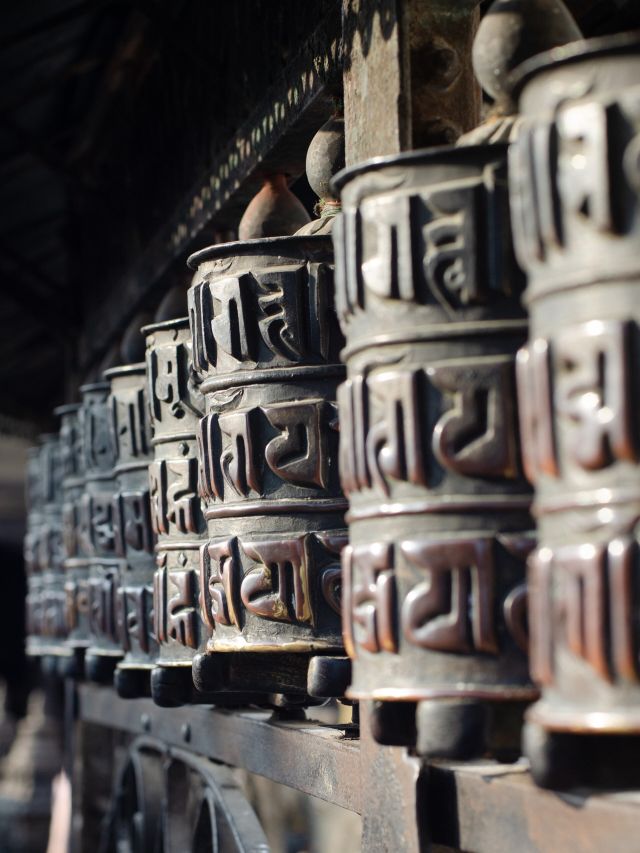
    Boudha Stupa's prayer wheels
    Boudha Stupa’s prayer wheels are used to recite Buddhist prayers. (Credit: Kate Lewis)

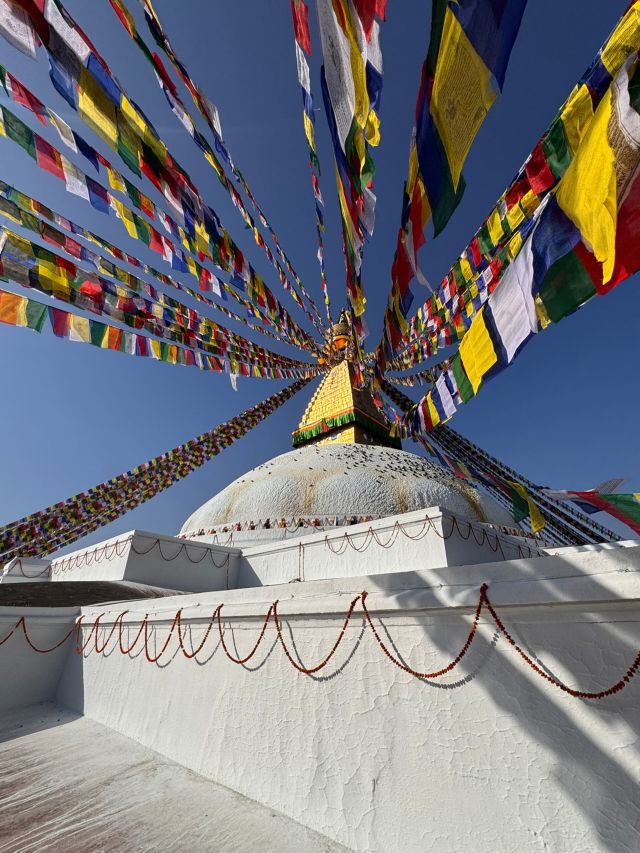
    In a sun-drenched twist to the usual temple visit, we ascend the stupa’s sloping plinth and roam its whitewashed dome. Tendrils of diaphanous prayer flags stream from a steeple-like structure where the Buddha’s unblinking eyes stare out. No nirvana for you… 

    bouda stupa prayer flags
    Tibetan-style prayer flags embellish the whitewashed dome of Bouda Stupa, a Buddhist temple. (Credit: Kate Hennessy)

    The dome is delightfully free of guard rails or chiding from security. There is, however, a stern ‘No TikTok’ sign, perhaps in response to the youth’s newly flexed power. The booted-out Prime Minister, K.P. Sharma Oli, was replaced in a resounding election victory in March by 35-year-old Balendra Shah of the Rastriya Swatantra Party (RSP) – a former rapper and mayor of Kathmandu. The RSP’s manifesto indicates tourism is a priority, and that Nepal’s cultural identity in areas such as gastronomy will be strengthened.  

    Boudha Stupa vendors
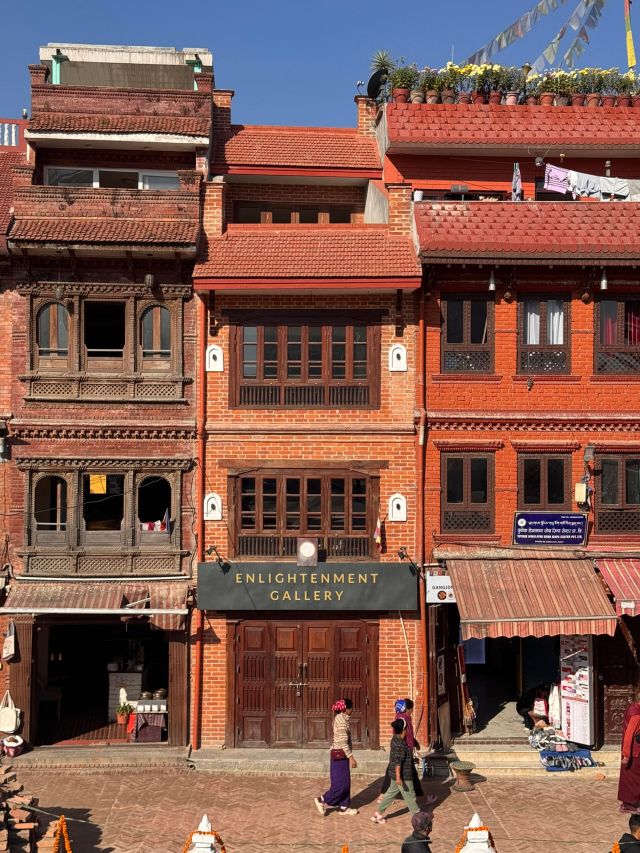
    Vibrant souvenir shops and cafes around Boudha Stupa. (Credit: Kate Hennessy)

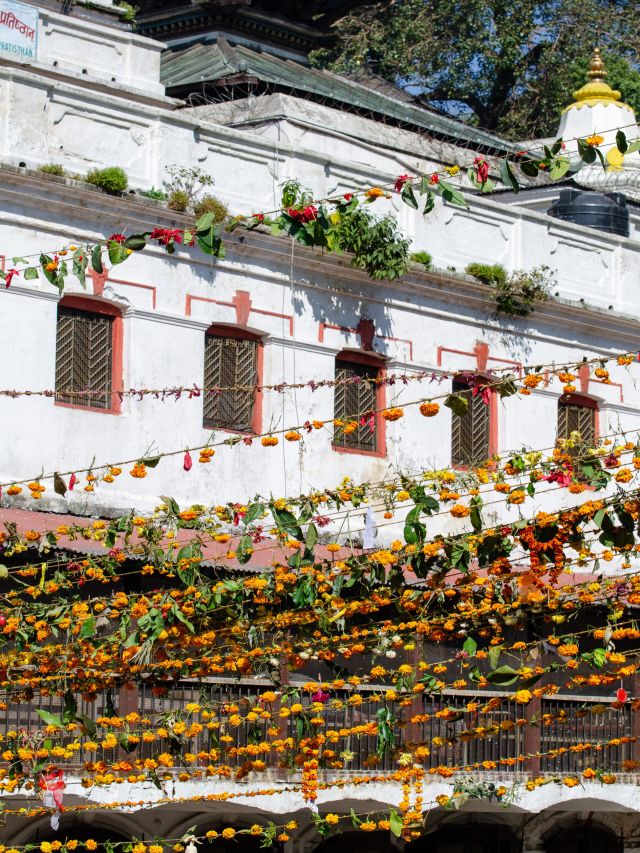
    A more confronting stop awaits at Pashupatinath Temple. Today is Bala Chaturdashi, a Hindu festival where thousands of devotees gather to honour their dead ancestors. Vendors hauling foam mattresses do a lucrative trade as people set up for a night of vigil. This includes burning the bodies of recently deceased relatives on bamboo pyres in the Bagmati River, which flows into the sacred Ganges.  

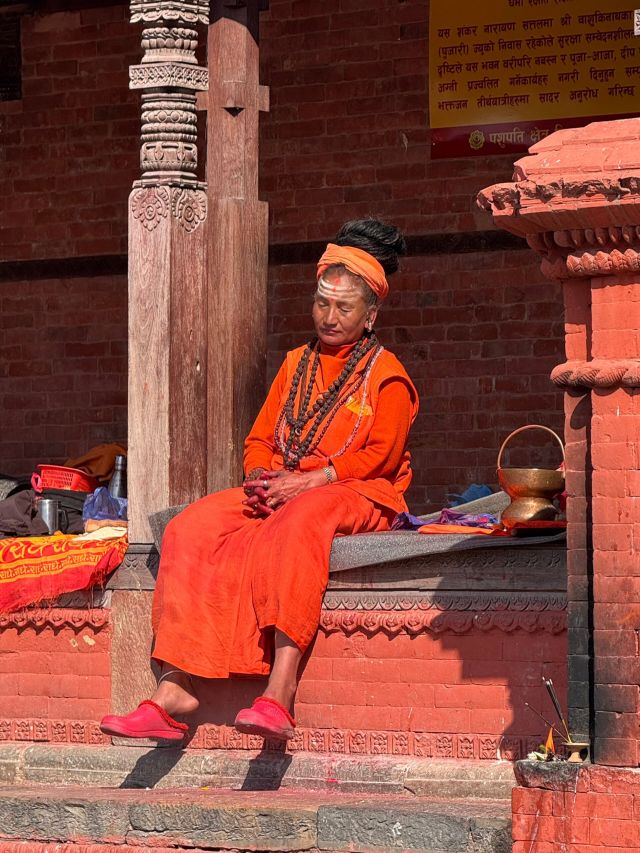
    A woman at annual Hindu festival Bala Chaturdashi
    A woman at annual Hindu festival Bala Chaturdashi, in Kathmandu. (Credit: Kate Hennessy)

    Wrapped in a shroud, the bodies are positioned with their heads facing north to the Himalayas where Lord Shiva resides. They’re covered with flowers and straw and set alight by male family members.  

    Hours later, the ashes are swept into the river where devotees will take a holy dip the next day. As much as Monica assures us it’s not voyeuristic to watch, I struggle to do so. “Here you see the reality of life because everyone ends up there,” she says, gesturing to the river.  

    Life unfiltered in the Terai region

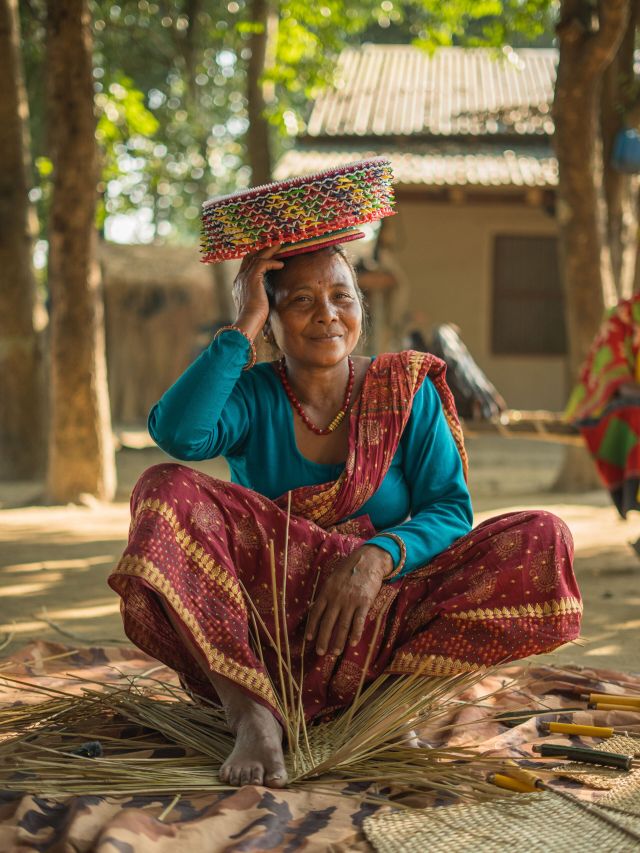
    tharu woman
    Tharu woman and master weaver Parbati Chaudhary in Bhada Village. (Credit: Bheem Thapa)

    The reality of life needs processing time, which the western Terai region delivers in spades. The Terai is largely separated from India by the Karnali River and Bardiya National Park, where elephants, rhinos and the elusive Bengal tiger roam.  

    Once a nomadic tribe, the Indigenous Tharu people are now the largest ethnic group here. “They didn’t know their daily life was interesting for international travellers but they’re starting to understand now,” says CHN founder Shiva.  

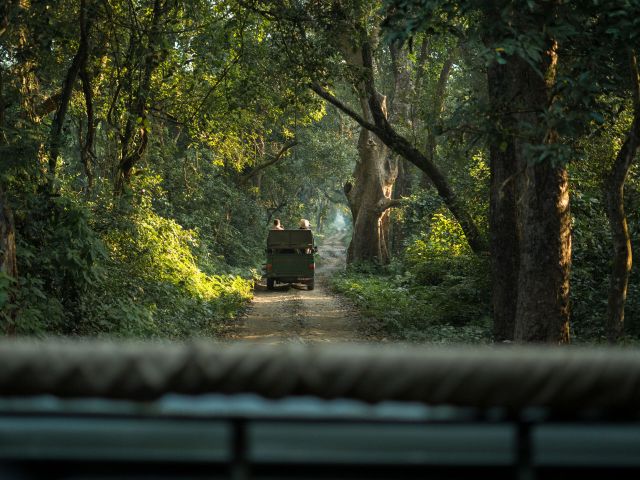
    safari through Bardiya National Park
    Take a Jeep safari through Bardiya National Park. (Credit: Bheem Thapa)

    We fly Buddha Air to Dhangadhi airport and drive five hours to stay in Tharu homes. The journey to Bhada village is a blur of roadside fruit stalls, traffic-stopping sacred cows and fields sown with wheat, rice, mustard, spinach, cauliflower and potatoes. Nepal’s agriculture feeds only Nepal.  

    Marigolds
    Marigolds are an important part of Hindu rituals. (Credit: Simon Urwin)

    “The only thing we export is young people,” says our guide Bikal. As the light dims and we plunge evermore rural, mysterious mounds of compacted hay – some house-sized – loom like the creatures from Where The Wild Things Are. Even our trusty driver gets flummoxed by a dirt road that abruptly ends and we find ourselves hurtling across a paddock.  

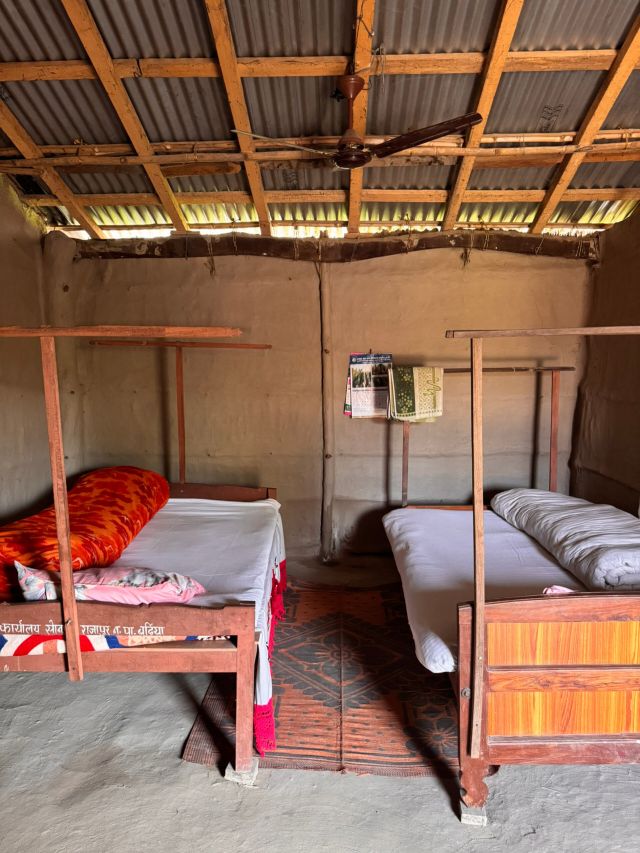
    On arrival, some are ferried to mud-walled cottages greened by gourd creepers, with thatched roofs and rustic-chic mosquito nets. Myself and two others are ushered to the home of corner store owner, mechanic and mushroom farmer Man Kumar Chilaruwa and his wife Rajkumari.  

    community homestay entrance
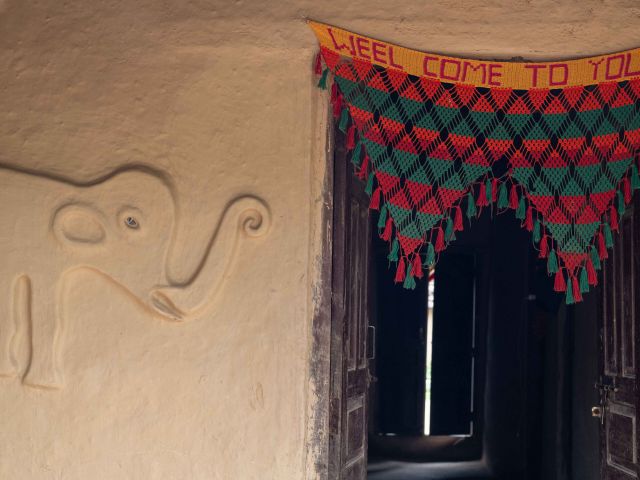
    A warm welcome at a community homestay. (Credit: Simon Urwin)

    They escort us to a bunker-esque back building with steel doors and a folding security gate, behind which is gleaming linoleum, dolphin-printed tiles and a shower cavity that must be gingerly stepped through to reach the toilet.  

    The ceiling lights emit a rainbow of colours (the bathroom light gets stuck in, frankly, a quite frightening red). We’re nevertheless touched that our hosts invested in all this bling when the average salary is around $275 a month.  

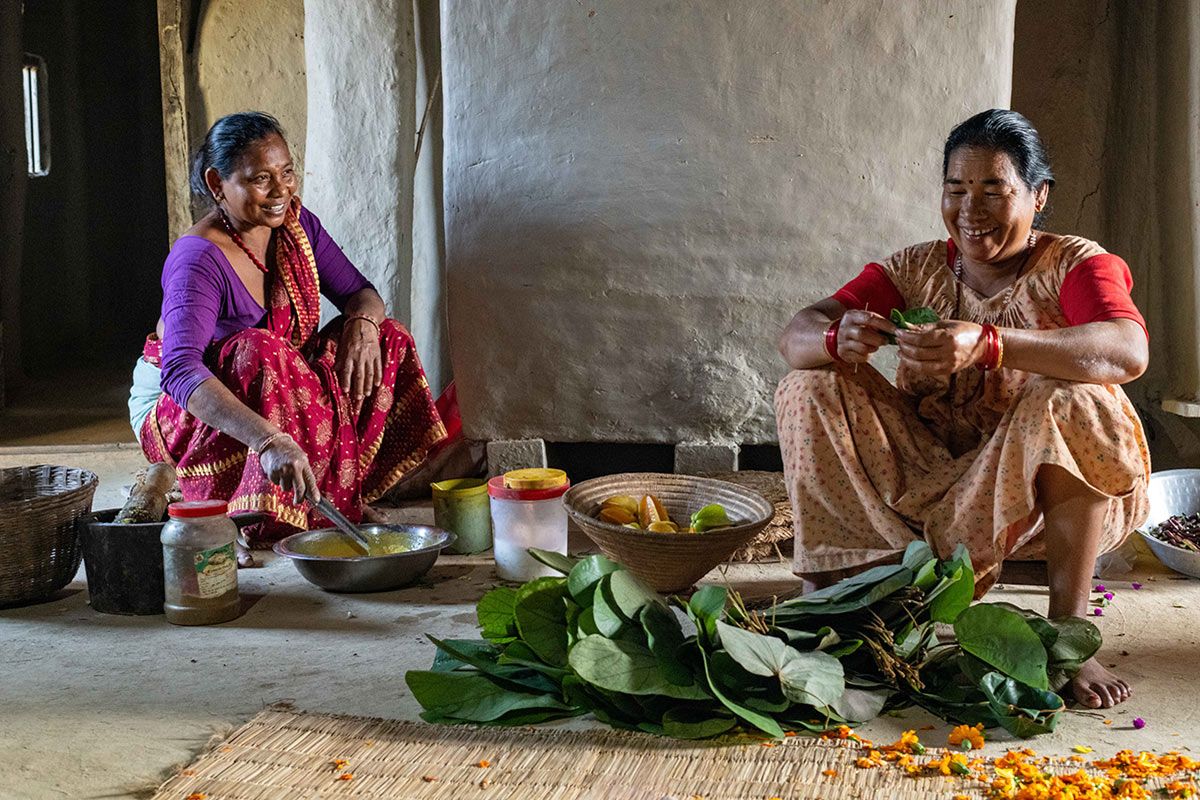
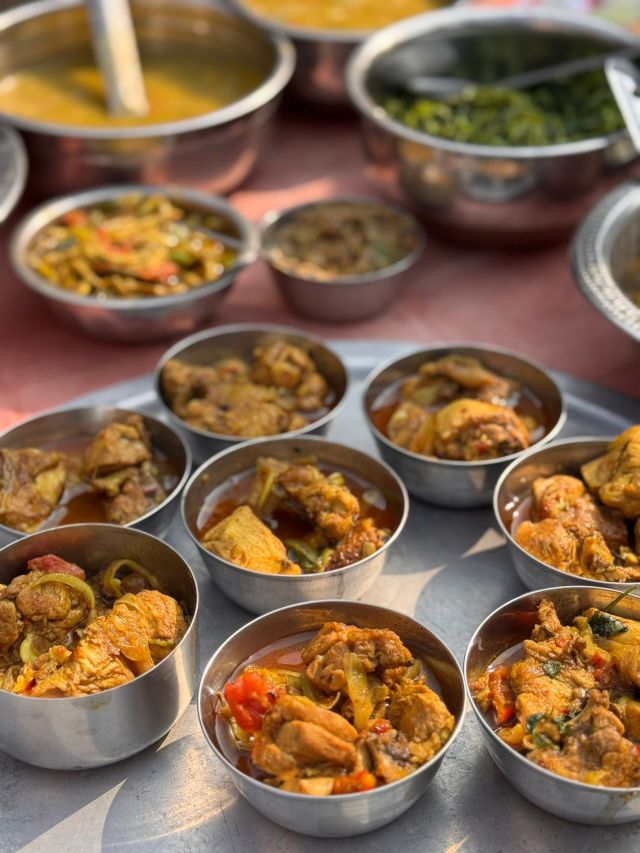
    In the coming days, we participate in Tharu traditions such as making moonshine, dancing, weaving straw handicrafts and gold-panning. We’re fed well with staples of rice, mustard greens, lentil pancakes, daal, curried chicken and tomato chutney served on antibacterial saal leaves.  

    food at community homestay
    Dig in. (Credit: Kate Hennessy)

    Sonara community homestay president Indradevi Tharu tells us river snails are often served, and the boiled and pickled flesh of rats hunted in the rice fields. “Perhaps next time?” we say and all have a laugh.  

    The power of community homestays 

    community homestay owners in Nepal
    Barda community homestay owners Parbati Chaudhary and Ram Krishni Devi Chaudhary. (Credit: Simon Urwin)

    Immersing Western visitors in foreign cultural practices is not new. But with the Tharu, I never get that uneasy sensation that I’m being performed for. Despite being the only tourists, there’s no ‘othering’; just warm, composed and ultra-dignified welcomes. Like we’ve always been here.  

    “I love to have travellers in my village so I can see the world,” says local woman Parbati Chaudhary. “Why would I travel the world when the world comes to me?” 

    The graceful acceptance the Tharu offer, as well as the slow pace, works miracles on my frazzled nervous system. One day I even take a nap on a vacant homestay bed. 

    Sonara community room
    An authentic stay in the Sonara community. (Credit: Kate Hennessy)

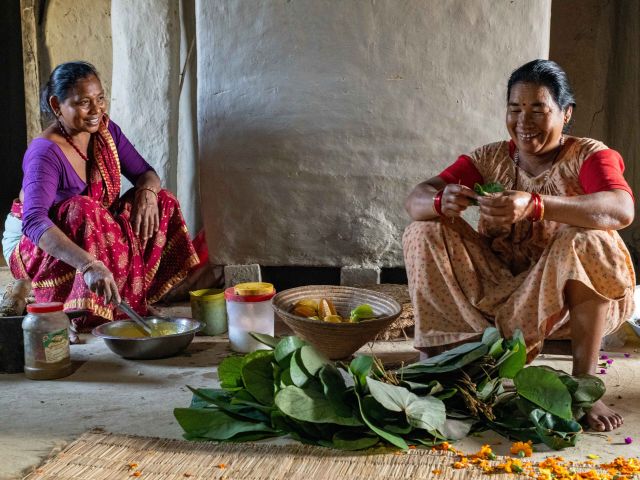
    Roosters strut and goats bray as we sit on the ground in al fresco kitchens, rolling rice flour into cylinders steamed to make dhikri (dumplings). When water is needed, we fetch it using a hand-operated pump as a family of ducks strolls by, side-eying us like curious neighbours.  

    Animal lovers will delight in Tharu villages. Kind and resourceful inventions are everywhere, such as snacking stations where two posts lean together, with leafy boughs dangling on rope for baby goats to forage from.  

    CHN’s CEO, Aayusha Prasain, nods knowingly when one in our group says she cried when she left her host, Shayam Chaudhary, in Bhada. Shayam’s 17-year-old son, Prashant, had translated, which deepened the connection.  

    “Community tourism turns travel into a relationship, not a transaction,” says Aayusha. “It places decision-making power in the hands of local communities, especially women and youth.” Since 2018, CHN has hosted more than 4000 travellers from 52 countries in 408 households, and estimates women’s participation has increased by 381 per cent.  

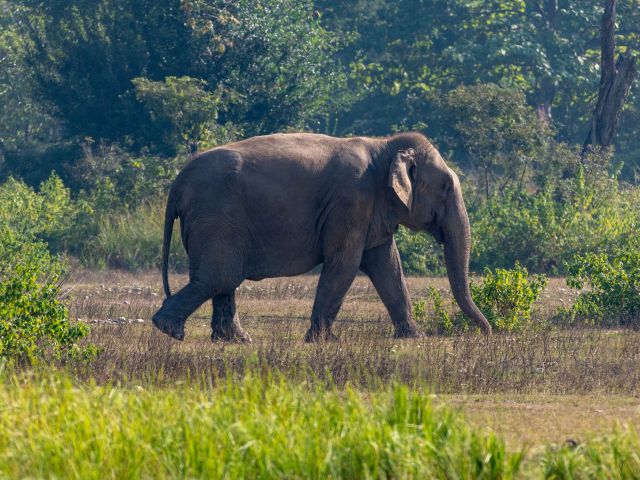
    Elephant watch
    Elephant watch. (Credit: Simon Urwin)

    In the Bardiya community, where vexing human-animal conflict has been a balancing act for decades due to elephants raiding crops, long-time homestay operator Salik Ram Chaudhary says young people keep the older ones on their toes.  

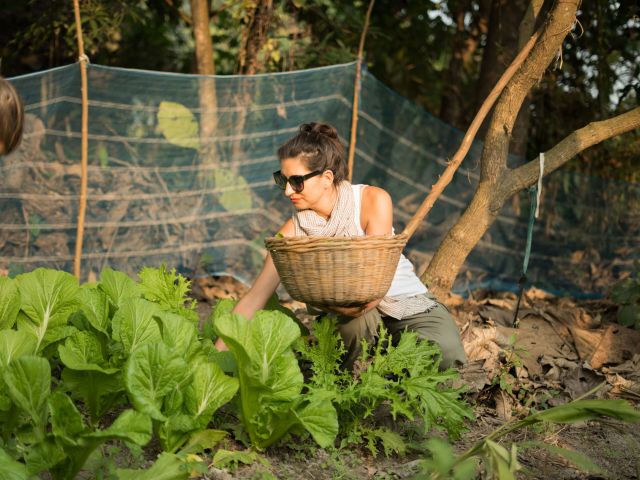
    Gathering greens
    Gathering greens. (Credit: Bheem Thapa)

    “We can’t keep homestays stagnant,” he says. “We have to upgrade our service and redefine our product or young people won’t see it as an attractive business. If we can keep evolving with this travelling trend we’re confident the youths will stay and continue it.” 

    Back in Kathmandu, Monica explains that after the deaths of young protestors in September, a determination had spread to not let their sacrifice be in vain. “We want to keep holding the government accountable,” she says. “We don’t know what situation we’re facing, but we’re ready to face it.”  

    Interested in Nepal but prefer to experience it in total comfort? Read our guide to luxury travel in Nepal