hero media

Is an Antarctica cruise worth it? Our verdict

Antarctica has long been the ultimate destination for intrepid travellers. Does a lifelong dream live up to the promise?

I’m gazing at a cluster of 20 sapphire-blue-tinged icebergs bobbing around in tranquil seas on a brilliant sunny day in Antarctica. Battered over time by high winds and waves, these glistening white monoliths range in size from colossal skyscraper-high street blocks and angular silhouettes to a Disneyland look-alike castle.

Antarctica is definitely putting on a show today. Suddenly a humpback whale pops up as if checking us out and, when satisfied, disappears under a blanket of silver-crested waves.

Incredible wildlife
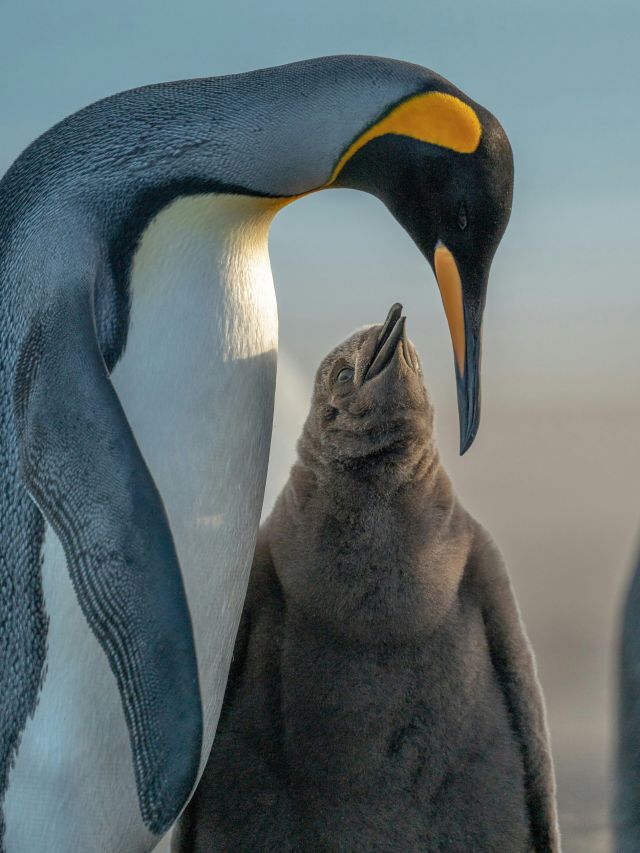
penguins in Antarctica
Witness penguins during an Antarctica cruise. (Credit: Unsplash/Bob Brewer)

Two hours later, we travel by Zodiac and step onto the White Continent, walking among playful penguins that are as curious about us as we are about them. Brown fluffy baby chicks huddle together for protection, reminding me of a fun kindergarten party. Nearby, hefty southern elephant seals are sunbaking and surveying us with one eye open, while the more active Antarctic fur seals frolic in the shallows.

They say nothing quite prepares you for this icy wonderland, and they are right. There’s something mystical and magical about Antarctica, a place I have always longed to visit.
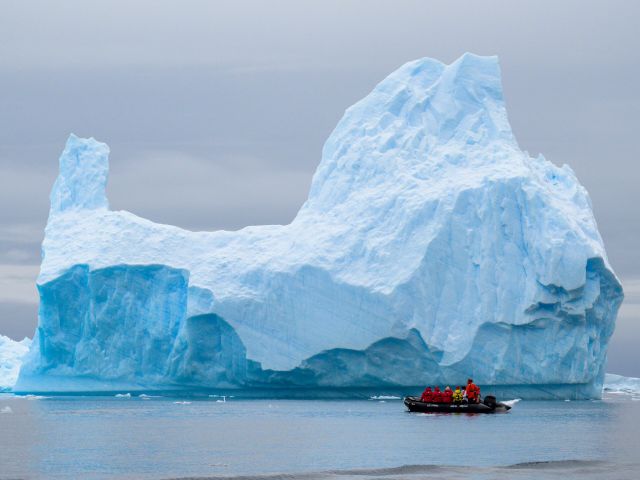
a ship in the Pleneau Island
See Antarctica’s ice magic up close. (Credit: Renato Granieri)

Polar explorer Roald Amundsen was spot on when he compared this beautiful untamed land to something straight from a fairytale. But it’s so much more than that.

It’s an assault on all your senses. For sight, it’s the endless white land; sound – the sharp cracking of icebergs calving; smell – wafts of pungent penguin poop known as guano. For taste, it’s the freshest air ever. And as for touch, I run my hand over the smooth snowy ice.

Learn from passionate scientists
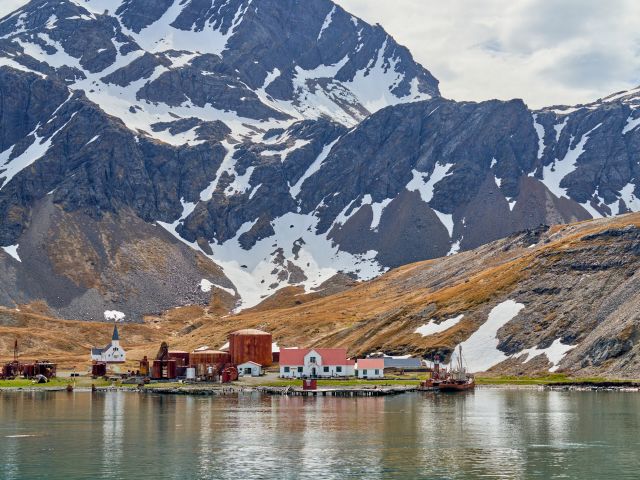
Grytviken, South Georgia
Grytviken is a hamlet on South Georgia. (Credit: Getty/Ian Deng)

Abercrombie & Kent’s 19-day Antarctica, South Georgia and Falklands: Holiday Voyage expedition cruise, which leaves from Argentina’s windswept Ushuaia located on the southern coast of Isla Grande de Tierra del Fuego, is a journey of awe-inspiring moments.

Scientist and expedition leader Marco Favero, who leads A&K expedition cruises in his summer break, ensures we don’t miss a thing. Along with researching ornithology and marine biology in South America and Antarctica, he is devoted to seabird conservation.

“Antarctica is always an adventure and I never get tired of it; there’s always something different to see," he says.

His wife, Dr Maria Patricia Silva Rodriguez, a noted ornithologist, agrees. She is on hand with a team of experts, sharing her vast knowledge of Antarctica’s bird and wildlife on our daily excursions or up on deck.
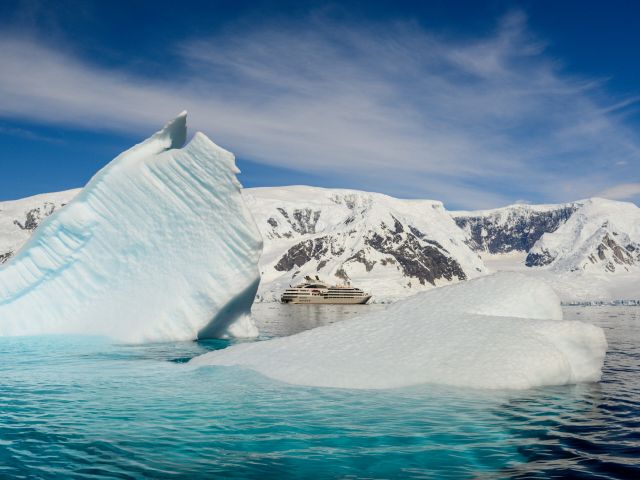
PONANT EXPLORATIONS luxury expedition ship at Wilhelmina Bay on the Antarctic Peninsula
Discover the White Continent on a PONANT EXPLORATIONS luxury expedition ship. (Credit: Renato Granieri)

Onboard lectures present the facts and figures of this vast continent in a way that makes you appreciate it even more. Passionate master storyteller Rob Caskie waves his signature walking stick as he shares harrowing tales of Antarctica’s intrepid explorers and their defiance in the face of what can only be described as impossible odds.

We learn about noted Anglo-Irish Antarctic explorer Sir Ernest Shackleton and his survival story aboard the Endurance expedition (1914–1916), where he saved his entire crew despite their ship being crushed by ice. So gripping are his tales, it’s not hard to imagine the desperation of these men and the extreme cold that seeped into their bones. I can picture the weight of heavy sodden clothes that never dry, food shortages and the need to wear nine pairs of socks. It’s in stark contrast today as we sit in a heated theatre for educational lectures on PONANT EXPLORATIONS’ elegant expedition cruiser Le Lyrial.

Walk in the footsteps of explorers
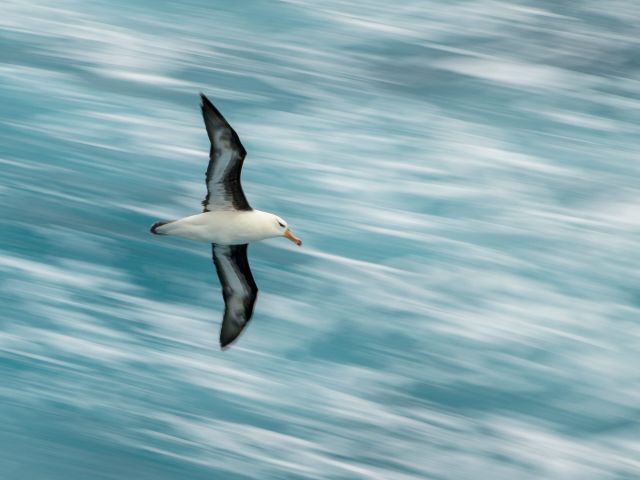
an albatross in Antarctica
An albatross glides gracefully at sea. (Credit: Renato Granieri)

The stories are all fascinating, but it’s not until you take those first steps on this land that you glean a little of what fuelled those explorers to tackle the utmost adventure.

I love the contrast of our ports, including the isolated Falkland Islands – home to more than 4000 people and a haven for wildlife. There are five different penguin species, elephant seals, sea lions and 65 per cent of the world’s black-browed albatross population.

The Historic Dockyard Museum in the capital Stanley showcases the lives of Antarctic explorers, as well as the impact of the 1982 war.
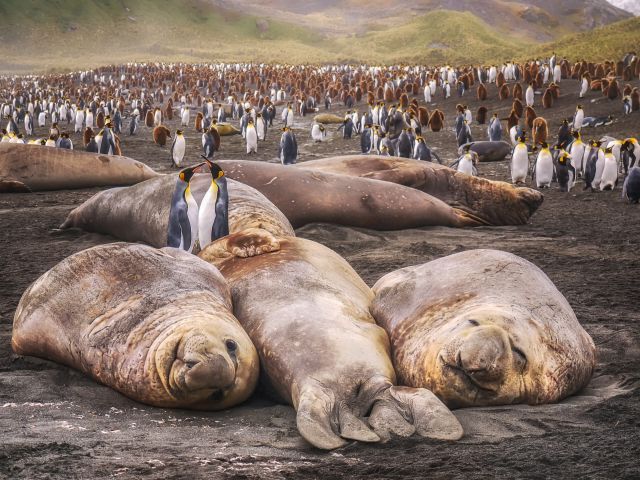
wildlife on South Georgia Island
Wondrous wildlife sets the scene on South Georgia Island. (Credit: Getty/Cheryl Ramalho)

South Georgia, the remote, mountainous British Overseas Territory in the South Atlantic, is most memorable for its millions of king penguins, fur seals and albatrosses. It’s an overwhelming sight while we witness some of their amusing antics as they slip and slide on the ice.
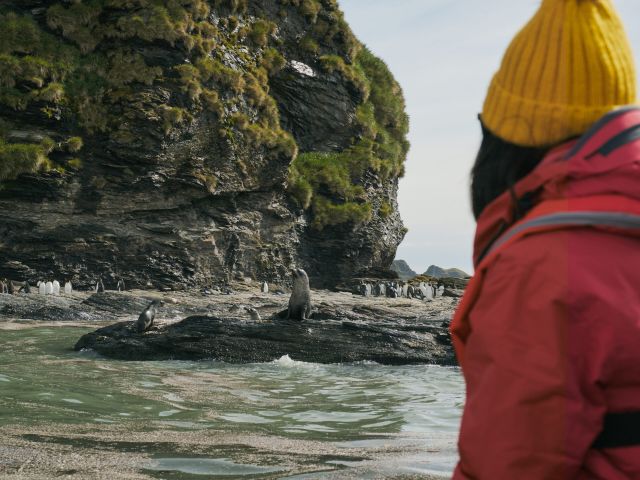
large colonies of penguins and seals onthe South Atlantic island
Animals abound on the South Atlantic island of South Georgia.

Long after I return, I reflect on so many poignant memories. One of the most unforgettable? Shackleton’s grave in the Grytviken Cemetery on South Georgia Island. It faces south, towards his beloved Antarctica, with the gravestone inscription: “I hold that a man should strive to the utmost for his life’s set prize," a Robert Browning quote.

Tourism and conservation in Antarctica
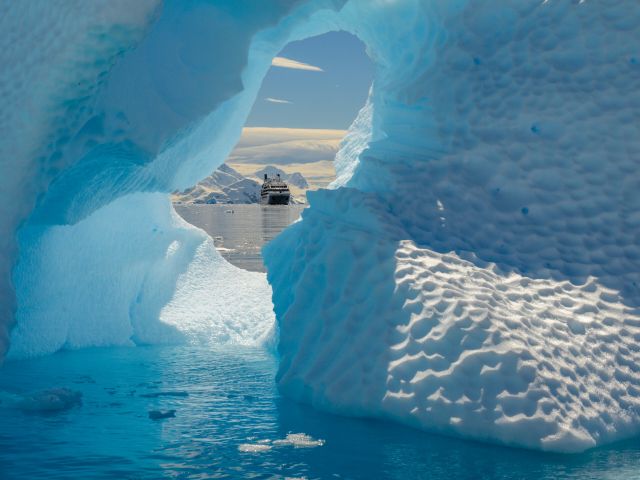
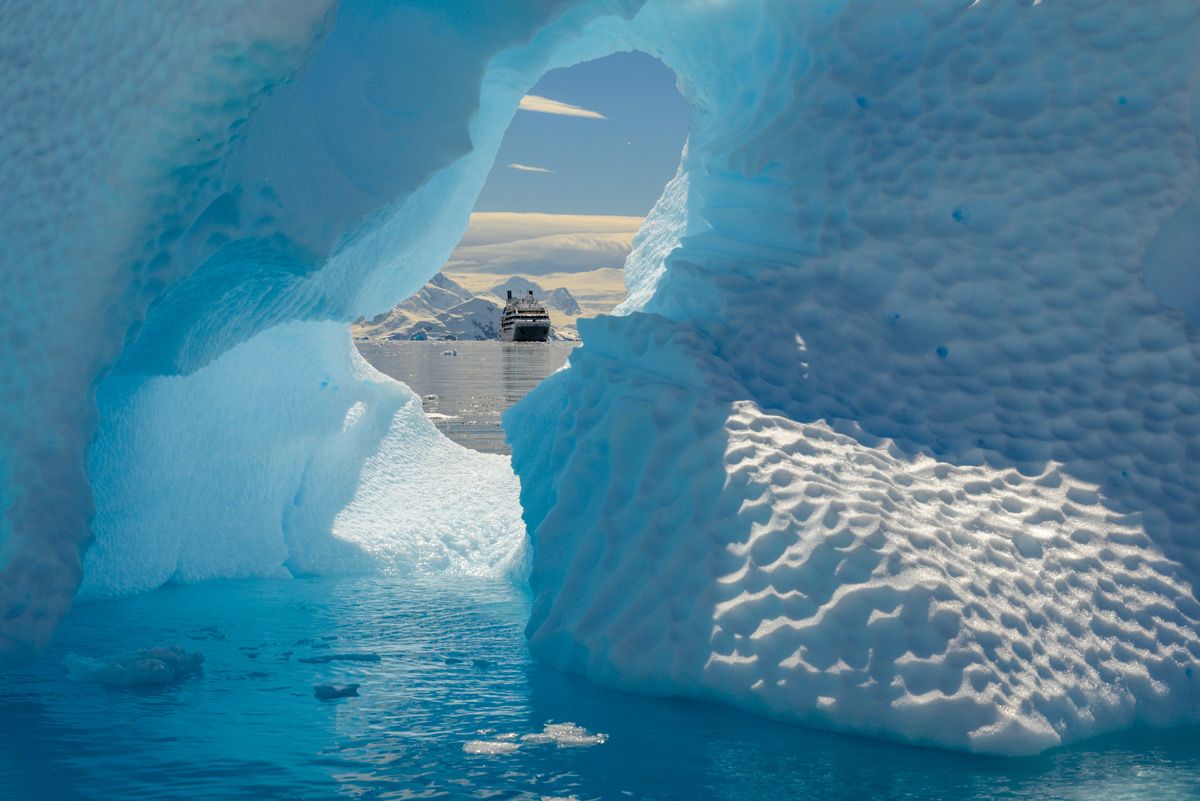
an ice window at Wilhelmina Bay
A breathtaking ice window captured at Wilhelmina Bay on the Antarctic Peninsula. (Credit: Renato Granieri)

Although tourism to Antarctica is increasing – you can now fly in and cruise – it is strictly controlled by the International Association of Antarctica Tour Operators along with Antarctic Treaty nations that restrict passenger numbers, landings and environmental impact.

It is somewhat of a conundrum, weighing up the threat of overtourism in this special part of the world with my burning passion to see this stunning natural reserve dedicated to peace and science, firsthand. But I leave convinced the rigid bio-protection protocols that are enforced, and the limit of tourist numbers, ease these concerns.

The wonder of the Antarctic, the coldest, driest, highest and windiest continent on Earth, simply leaves me in awe and ignites a burning desire to help preserve it for future generations.

Weekly travel news, experiences
insider tips, offers,
and more.

The verdict

My heart beats a little faster whenever I see the names of those early explorers who opened up this vast land and endured incredible hardship. This chance to visit one of the world’s last true wilderness areas is definitely life-changing for me.

Months later, I close my eyes and recall the unsurpassed beauty and the vastness, reliving the glorious rhythm of nature that played out in front of me. There really is nowhere else quite like it in the world.

Ways to cruise Antarctica
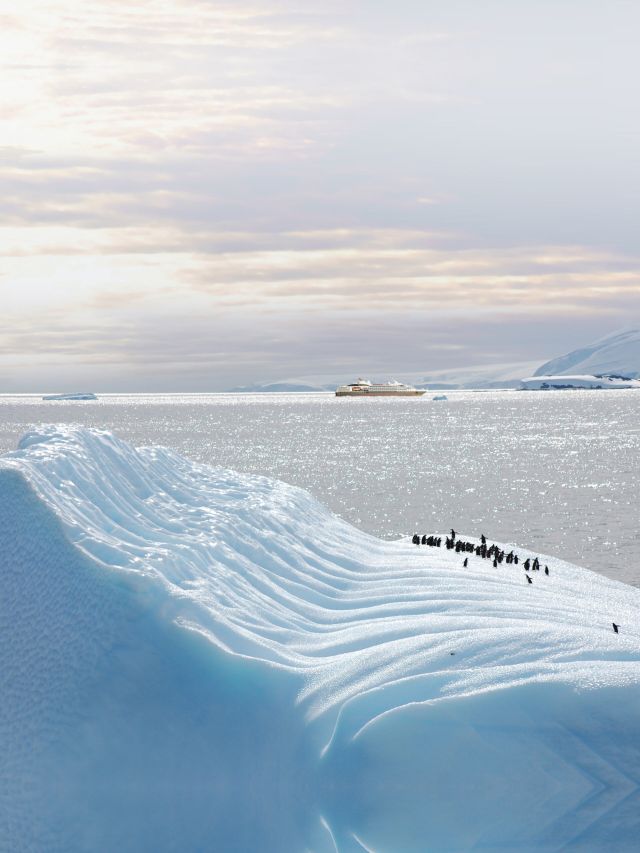
Arctic and Antarctica tour with Abercrombie & Kent’s Antarctica
Explore one of the most untouched territories on Earth with Abercrombie & Kent’s Antarctica.

Abercrombie & Kent’s Antarctica, South Georgia and Falklands: Holiday Voyage covers 19 days and five destinations with a maximum of 199 guests. Prices start from $36,730.

Want to travel to Antarctica solo? Do so sans single supplement on selected trips with HX Expeditions, where 20 per cent of guests are doing the same.

Environmentally conscious travellers can sail Antarctica with PONANT EXPLORATIONS aboard Le Commandant Charcot, the world’s only luxury icebreaker and first hybrid electric, LNG-powered polar exploration vessel.

Or, if you want to travel without sacrificing comfort, Silversea’s time-maxxing Antarctica Fly Cruise voyages will soon include a stay at The Cormorant at 55 South, the southernmost hotel on Earth.

Discover more must-try Antarctica experiences

Want to see more stories from International Traveller in your Google search results?

  1. Click here to set International Traveller as a preferred source.
  2. Tick the box next to "International Traveller". That's it.
hero media

Why a solo cruise in the Arctic is anything but lonely

    These are the ah-ha moments that made my solo luxury Arctic cruise profound and profoundly un-lonely.

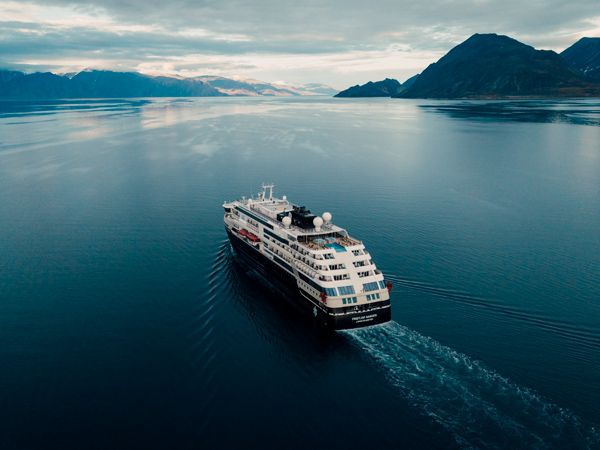
    Sounds like the dream expedition cruise, right? I board HX’s deluxe, hybrid-powered MS Fridtjof Nansen in Greenland’s capital, Nuuk. Sojourn a trio of towns on the autonomous territory’s west coast before negotiating oft-wild Baffin Bay. Then thread the once-impossible Northwest Passage, a labyrinthine route through the Canadian Arctic, ice-choked for all but a small period each year, meeting remote Inuit communities along the way. After that, it’s relatively open sailing all the way to Alaska.

    The catch? I’m sailing solo. Lonely? Strangely, no. Much of my abundant ‘me’ time is spent sprawled out on my ship-front suite’s chaise lounge, one deck below the bridge, where theoretically, I see icebergs and polar bears at the same time as the captain. Here, each evening, I reflect on a series of ah-ha moments, connections with people and place that turn my thoughts outward, inward and towards the much bigger picture.

    1. The challenges of modern Inuit life are surprisingly relatable

    Inuit people of Arctic Canada
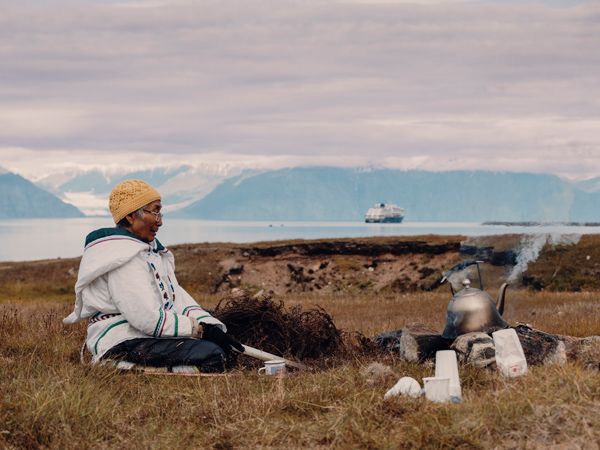
    The Inuit people of Arctic Canada blend modern and traditional lifestyles. (Credit: Greg Funnell)

    My pre-conceptions of the Inuit people of Arctic Canada turned out to be archaic; a vintage-National-Geographic ideal. The HX (formerly Hurtigruten’s expedition arm) ‘Through the Arctic Labyrinth’ cruise stops at Pond Inlet/Mittimatalik, Gjoa Haven/Uqsuqtuuq, and Cambridge Bay/Iqaluktuuttiaq, remote communities living a blend of modern and traditional lives.

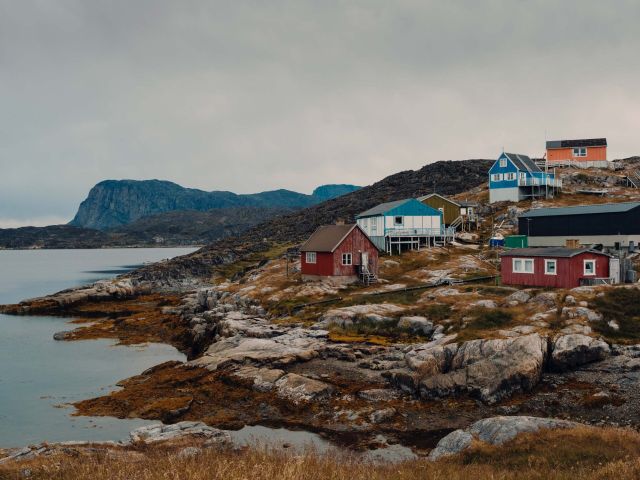
    Some elements of Arctic life are difficult to grasp; like spending the entire winter in extreme darkness. However, I nod along knowingly in many discussions. The cost-of-living crisis here is evergreen (freight costs). The local supermarket is basically your only choice in most towns – a one-stop shop where you can buy everything from groceries to quad bikes. Essential food – like milk, for example – is subsidised (yet still not cheap), but prices for discretionary items are off the charts. A can of Beaver Buzz energy drink? CAD$15!

    remote arctic town
    Remote towns such as Itilleq often only have one local supermarket. (Credit: Greg Funnell)

    The Inuit source much of their protein from hunting (seals, for example), but growing fresh vegetables in the Arctic is a stratospheric challenge. One solution? Gjoa Haven has a non-profit community greenhouse, where carrots, cherry tomatoes and even sunflowers are grown year-round inside insulated shipping containers.

    Arctic Canada’s housing crisis is equally relatable for the average Aussie. Pond Inlet guide Nicole is a busy carpenter in her hometown (although she was born in Yellowknife because there’s no birthing unit here). It’s year-round, twelve-hours-a-day work to keep up the demand for new units. Yes, even in winter. “If you are cold, go inside, get warm, then go out again,” she says.

    2. Discussions about the Inuit’s harrowing past are refreshingly honest (and healing for them)

    croker bay glacier
    The Inuit people know how to both survive in and protect beautiful yet harsh environments, such as Canada’s Croker Bay. (Credit: Yuri Choufour)

    HX ambassadors, community members selected from Canadian and Greenland towns en route, cruise alongside me on the Fridtjof Nansen. In daily presentations, they explain the traditional culture and practices of the Inuit but also deep dive into the communities’ challenges – many relating to the heinous and exploitative treatment of First Nations over preceding centuries.

    With a storyteller’s flair and an academic’s transparency, Peter Ittinuar Freuchen, Canada’s first Inuit MP, outlines the impact of historical abuse, neglect and family separation (children were taken away at birth) in the days when the government, he says, was trying to “take the Indian out of the Indian”.

    Harrowing, yes, but for the Inuit it’s a necessary step to heal. “Giving this presentation depresses me but we are trying to do things about [our loss of culture]. We’ve slowly been losing our languages, for example, but there’s programs now that are trying to keep them alive.”

    Many HX ambassadors tell me that tourism helps to reinforce a pride in the local cultures. “There’s a lot of things that we can teach you,” says Ikey from Gjoa Haven. “If you’re an outgoing person who likes to enjoy time out on the land, we’ll teach you how to survive, how to hunt, but also be respectful to the land. Because [then] the land’s going to respect you back.”

    3. The immense ice realm will make you feel small (embrace it)

    arctic ice floes
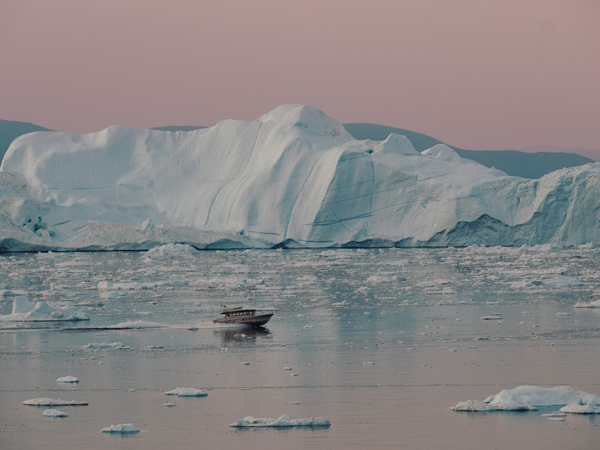
    Immense icy landscapes challenge your sense of scale. (Credit: Greg Funnell)

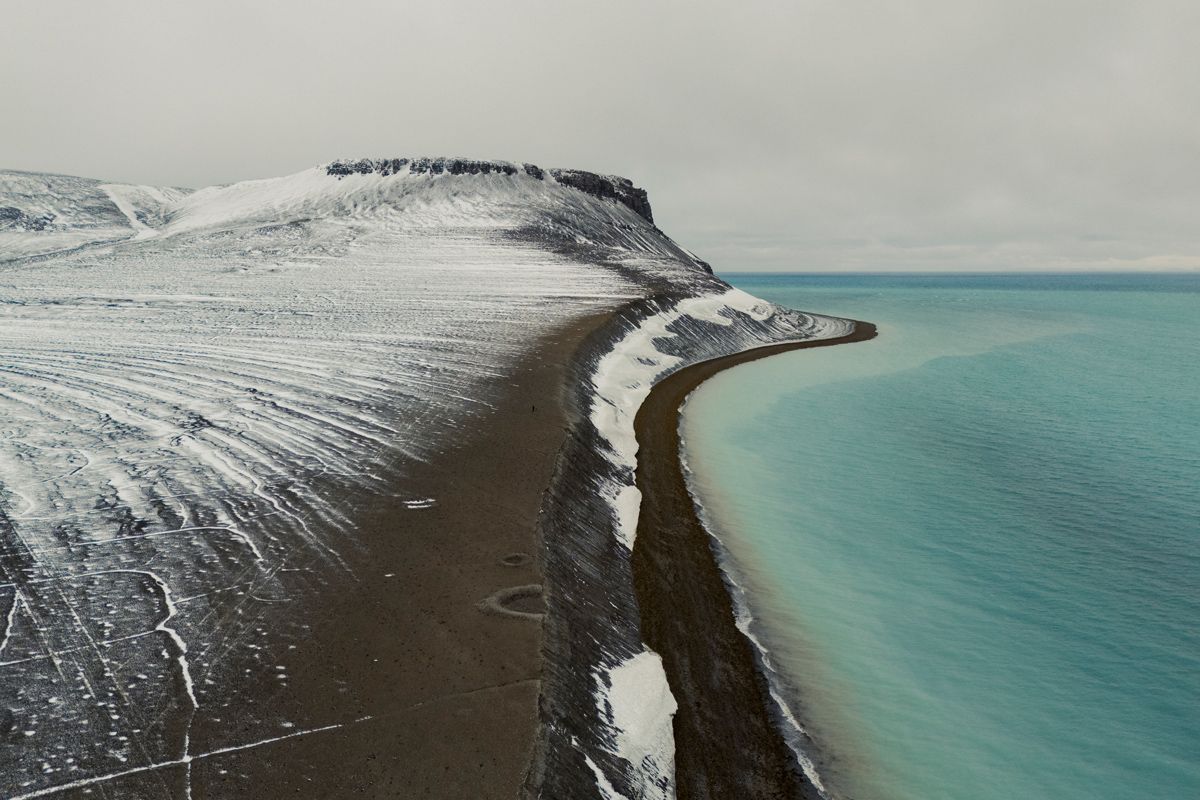
    Photos do not do justice to the scale and diversity of Greenland’s icy landscape (yes, even in summer). Ghosting through the bus-size sea ice of Disko Bay during a copper-coloured sunrise, ‘growlers’ making percussive thuds as they glance off the bow of the ‘Polar Class 6’ ship. Sea-kayaking through the mist, past Dali-esque icebergs, drifting faster than I’d even imagined. The blue ones, scientists say, can be up to 6000 years old. Or out in the zodiac, getting close but not too close to 80-metre glaciers, carving unexpectedly, dramatically; breath held.

    The moment that silenced me most? A flight over the Great Northern Glacier (reportedly the source of the Titanic-sinking iceberg). Lifting off from the town of Ilulissat, we glide over landscapes that are snow-free only briefly each year; bridled rock topped with steel blue ponds. And then, it appears. Or rather, the rest of the world disappears. The Northern Glacier, a 70-kilometre ‘ice fjord’, marks the front of an ice cap that covers 85 per cent of Greenland. It moves 40 metres a day, mainly on land now, having retreated noticeably in the past century.

    northwest passage ship
    HX’s ships are purpose-built to navigate remote locations.

    Even locals never tire of the grandeur. “We are seeing fewer icebergs in the past 15 years,” an elder from the cod-fishing village of Manitok, Greenland, tells me. “But we are very excited to see them; every one has an amazing shape. Just like the Northern Lights, which is quite normal to see here, but it still amazes us every time.”

    4. It’s heartening to meet scientists committed to fighting existential challenges like global warming

    North Arm Fiord, Nunavut.
    Scientists are fighting to preserve precious environments such as North Arm Fiord, Nunavut.

    Climate-change anecdotes I hear from the Inuit communities tally with what I hear from the multi-disciplinary resident scientists onboard the Fridtjof Nansen. It’s heartening to meet committed folk like Australian Dominic Barrington, an environmental scientist with a background in earth science, gathering data for big-picture climate studies.

    He takes passengers out on the ‘science boat’/zodiac to perform tests on the water around sea ice. The samples are sent to the Scripps Institution of Oceanography in San Diego, contributing to the Iceberg Ecosystems Project, which monitors how increasing amounts of fresh water from melting ice affect the marine environment.

    Colombian Daniela Tamayo, an ORCA (HX partner) ocean conservationist, focuses on the Northwest Passage’s “highly understudied marine creatures”. She spends much time on deck, surveying beluga and narwhal whales; logging numbers, noting behaviours. She hopes her studies will help lead to the advent of a “new marine protected area”, encouraging passengers to get involved with the animal-spotting citizen-scientist projects on board. “The more data, the more robust the study,” she says.

    5. Realising there are way more important things than ‘my’ polar bear photo

    HX Expeditions arctic
    Watching for wildlife from the ship’s Expedition Suite. (Credit: Tuan Lam)

    For many, getting ‘that’ polar-bear snap is their cruise trophy. My first sighting of the most wonderful mammal in the known universe comes in the Northwest Passage. To the naked eye, it’s just an off-white smudge on a misty shore. Through binoculars, the most-likely post-meal bear flits between naps and contemplating her next snack: seals playing down below on the shore.

    Instinctively, 10-year-old Steve wants the ship to move closer but AECO guidelines (Arctic Expedition Cruise Operators) stipulate that these ‘vulnerable’ animals shouldn’t be approached/harassed, stipulating ethical viewing distances. A few days later, as we negotiate a narrow strait, a polar bear retreats into the water when it sees the large vessel approaching, showing me that the world’s largest land predator is indeed a sensitive beast.

    Indirectly, the animals have a ‘say’ in our “leave-no-trace” shore excursions, too. As we begin a planned day hike up to a remote ridge in the passage, one of the armed ‘bear guards’ spots a polar bear approaching. It’s kilometres away but we immediately decamp back into the zodiac, buzzing back to the ship. Bears swim faster than you think and much faster than you want, goes the saying.

    6. It’s important to acknowledge the privileged, then enjoy ‘me time’ in this overly ‘we time’

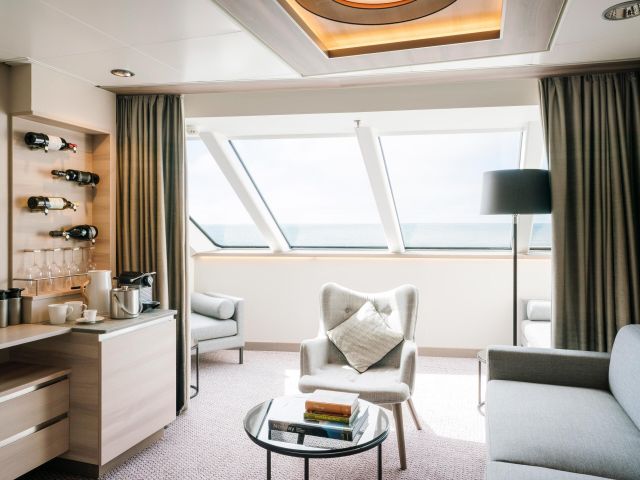
    Expedition Suite onboard the Fridtjof Nansen
    Unwind in the luxurious Expedition Suite onboard the Fridtjof Nansen. (Credit: Clara Tuma)

    I acknowledge that the unqualified privilege of being on a luxury cruise ship that navigates one of the most amazing environments on earth (seen by an infinitesimal percentage of humanity). I, therefore, embrace every activity and lecture possible, no matter my zombie-level jet lag or usual interests. I also pledged to relish every on-board indulgence like it’s my last month on earth, relatively guiltlessly and without instantly humble-bragging about it on social media.

    On sea days, I get up only when my body tells me to, wriggling into my fluffy robe and slippers, pre-breakfasting on complimentary cabin beverages and thoughtful daily snacks. I breakfast thoroughly in the Aune’s diverse buffet. I lunch on’ sea-streetfood’ – burgers, Norwegian waffles et al – at Fredheim, stopping by again in the afternoons for one of its signature calorific milkshakes. Some nights, I book in at the Lindstrom for a la carte dining.

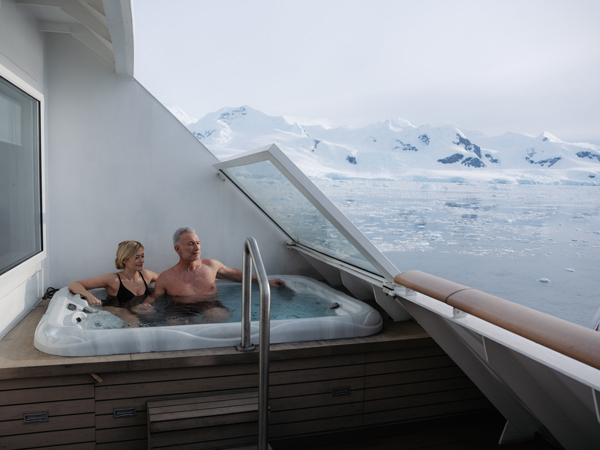
    Fridtjof Nansen balcony
    The Expedition Suite comes complete with a private hot tub. (Credit: Tuan Lam)

    Early afternoons, I hit the gym (sometimes) or walking track. Drool my way through a 90-minute signature treatment in the spa. Late afternoons, I retire to the deck-long Explorer Bar, for cookies, coffee and Negroni, staring out into ever-changing landscapes like Devon Island, apparently the largest uninhabited island on earth, a polar semi-desert where NASA has ‘tested’ astronauts. Then back to the suite to contemplate today, tomorrow and evermore.

    7. Learning the importance of listening before passing judgment (chats with a Greenlandic polar bear hunter)

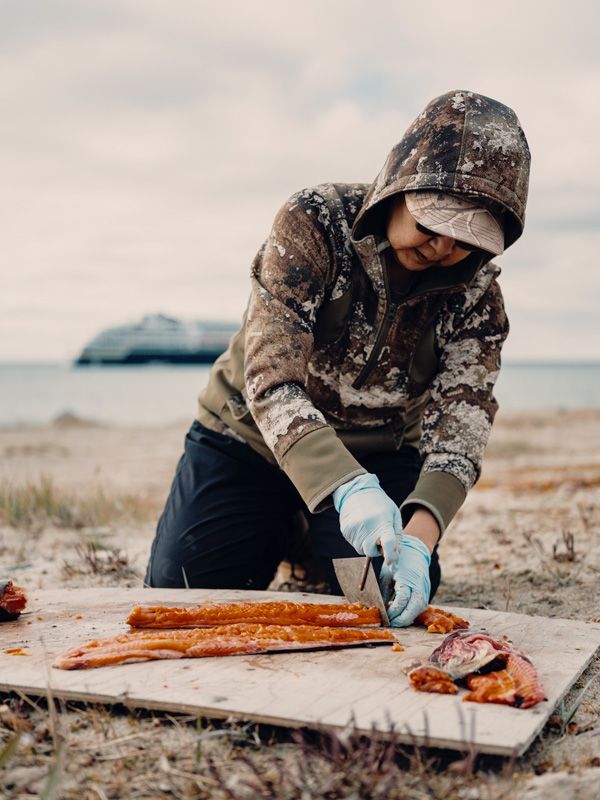
    inuit arctic char
    Arctic char is a primary source of food for the Inuit people. (Credit: Greg Funnell)

    As I meet Aleq, I have mixed emotions. The HX ambassador hunts animals that many (me included) prefer to be protected – including polar bears – back in his tiny northern Greenland town.

    Aleq unapologetically argues that he hunts sustainably, the way his ancestors did – using every part of the animal. He wants to help me understand why Inuit hunt and live the way they do. They do it the ‘old way’ where possible, including hunting narwhals by kayak and walruses with sled and dogs in winter (rather than on snowmobiles). They also don’t allow cruise ships to dock in his bay because it’s a whale birthing area.

    Aleq believes that European bureaucrats imposing fishing/hunting quotas from afar is unbalancing the ecosystem. He notes an explosion in the numbers of walruses, now encroaching into his bay for the first time in memory, in turn decimating fish numbers and affecting the health of narwhals and belugas. “If we can hunt more walruses, it would balance the ecosystem,” he says. Food for thought, for sure.

    Travel details

    Getting there
    Air Canada flies from Sydney to Reykjavík, Iceland, via two stops: Vancouver and Toronto. Pre- and post-cruise flights from Reykjavík to Nuuk and Nome to Seattle are included in the cruise price.

    Playing there
    Prices for the 26-day Northwest Passage – Through the Arctic Labyrinth (Greenland to Alaska) cruise onboard HX Expeditions’ MS Fridtjof Nansen are from $37,094 per person for a Polar Outside cabin. Expedition Suites start at $52,105 per person. Prices include pre- and post-cruise flights, overnight accommodation in Reykjavík and Seattle, most meals, drinks, a water-resistant jacket and a water bottle.

    Need to know
    Australians don’t require a visa for Greenland (up to 90 days), but need an ESTA to enter Alaska, USA.