hero media

The ultimate city guide to Windhoek, Africa

If you’re heading to Africa, you can’t go past Windhoek…

A green oasis in a dry, mountainous landscape, Namibia’s capital is surely one of the most surprising African cities, retaining striking connections to its Germanic past.


Windhoek is known for it’s

African crafts, German castles and a gateway to the Namib wilderness.

Eat streets in Windhoek

For an upmarket South African menu and its fine wines head to The Stellenbosch Wine Bar & Bistro. Joe’s Beerhouse is great for a selection of craft beers and well-cooked game

Out & about in Windhoek

Head to the old heart of Windhoek for a stroll past its intriguing German colonial buildings, some of which are as old as the city itself.

Start in the middle of it all at the city’s most recognisable landmark: the striking German Lutheran Christuskirche.

It’s a rather photogenic, curious mix of neo-Gothic and Art Nouveau influences, designed by Gottileb Redecker, who also created the country’s parliament building just down the road.

The official name of the parliament is the Tintenpalast, or ‘ink palace’, perhaps a cheeky reference to the vast quantities of ink spent drafting red tape.

Rest your legs a while in the ornate gardens before heading over to the city’s oldest building, the imposing Alte Feste, the ‘Old Fort’, built in 1890 to house the Schutztruppe, Germany’s occupying forces in Africa.

The fort marks the beginning of the modern city of Windhoek, and you’ll find the National Museum of Namibia here too.

Insider’s secret

Housed in the industrial setting of the Old Brewery complex you’ll find the fantastic mixed-use arts space that is the Warehouse Theatre.

Join office workers for their post-work drinks in its cosy bar, the Boiler Room, and adjoining courtyard, before going on to watch everything from a play, stand-up and live bands at one of several stages. warehousetheatre.com.na

Retail reconnaissance

The people of Namibia produce some stunning art and fabrics that you shouldn’t leave the country without.

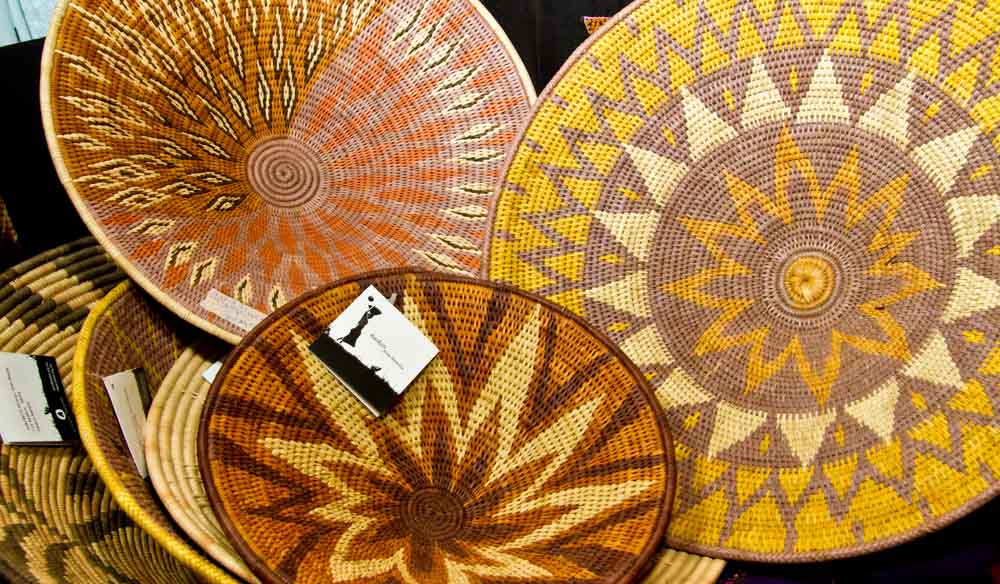
Head to the Namibian Crafts Centre for more than 30 stalls selling everything from woven baskets, beadwork jewellery, tribal masks, and exquisite sculptures fashioned from the roots of the country’s ironwood trees.

A 10-minute walk away you’ll find the colourful and bustling Post Street Mall for more arts and crafts, the centre of which is marked by a public installation incorporating meteorites from the famous Gideon Meteor that exploded over Namibia in prehistoric times.

The Ultimate Experience

Of the three German castles in Windhoek it’s Heinitzburg Castle that you can’t leave the city without paying a visit, if just for a cocktail or two.

Commissioned by Count von Schwerin in 1914 for his fiancé, ensuring he positioned it with the best views of the city, the castle is now a luxury hotel and the ideal spot for an evening drink to take in the city and the mountains beyond from its Garden Terrace.

If you’ve settled in for the night then stay for dinner at Leo’s at the Castle; the priciest restaurant in town but also the best.

Weekly travel news, experiences
insider tips, offers,
and more.

Caffeine hits

With easy access to beans from across the continent, Windhoek has experienced a surging coffee culture in recent years.

The Kaffee Bar in the Wecke & Voigts store, is a ‘national treasure’ of a cafe, to get your fix for the day.

Stay & play

Affordable

Winnie Guesthouse has well-appointed rooms, a restaurant, bar and an outdoor pool to escape the African heat.

Moderate

In the heart of the old town, the Hilton Windhoek has restaurants, bars, a rooftop pool, spa and gym.

Luxe

Stay in the regal setting of Heinitzburg Castle with fantastic views out across the city.

Want to see more stories from International Traveller in your Google search results?

  1. Click here to set International Traveller as a preferred source.
  2. Tick the box next to "International Traveller". That's it.
hero media

At the foot of the pyramids, Egypt finally tells its own story

    Ancient Egyptian history has been scattered across the globe for decades, admired, preserved, and studied, but it’s rarely seen where it actually belongs. The newly opened Grand Egyptian Museum (GEM) brings it home.

    From a viewing platform inside the Grand Egyptian Museum, the Great Pyramids of Giza rise from the desert, and for a moment, it feels like modern Egypt and ancient Egypt are shaking hands. The museum, grand in name and reality, has been a long time coming—since 1992, to be exact. Towering pharaohs, relics, and entire chapters of civilisation are on display here, all in full view of the pyramids. And because the GEM is the largest archaeological museum in the world dedicated to a single civilisation, it gets to tell Egypt’s story through its own voice, something many overseas institutions, understandably, haven’t quite managed.

    Reshaping Giza

    GEM entrance and gardens
    The GEM holds its own commanding position. (Image: Natasha Bazika)

    You might expect any building beside the Great Pyramids of Giza to fade into the background, but the GEM doesn’t bow to its famous neighbours. Perfectly aligned on the same axis and vast enough to span 70 football fields, the museum is less of an addition to Giza and more of a marker of the shift from a gateway to a cultural district.

    Inside, hieroglyphs carved from alabaster sweep across the walls and triangles appear everywhere, yet it’s a 3,200-year-old, 11-metre-tall, statue of Ramesses II who commands the room. His scale dictated the soaring atrium ceilings, which pour in natural light, unusual in museums but safe for the stone artefacts displayed.

    Hieroglyphs line the walls of the main entrance of the GEM
    Hieroglyphs line the walls of the main entrance. (Image: Natasha Bazika)

    Unlike many museums, the GEM has really considered how visitors move through it. The six-storey grand staircase leads you chronologically through Egypt’s history, from the Predynastic era to the Coptic period, flanked by statues that grow in scale and complexity as you climb. Elevators and lifts run alongside, keeping the journey accessible to everyone.

    At the top, a viewing wall frames the pyramids before you enter the main gallery to see artefacts rarely seen outside tombs, including the complete contents of Tutankhamun’s tomb, a highlight for many visitors.

    Pharaohs, artefacts and everything in between

    The GEM's showpiece Ramesses II
    The GEM’s showpiece Ramesses II. (Image: Natasha Bazika)

    The GEM holds around 100,000 artefacts across seven millennia, but the experience is entirely modern. Digital panels, QR navigation and clear bilingual signage make self-guided wandering easy, while short, glare-free labels in English, Arabic and braille are colour-coded to move you from broad themes to object-level detail.

    That said, a guide adds context you don’t get from a panel. I was lucky to have Essam Al Ebd Aziz, an Egyptologist, on board a 12-day Uniworld Nile cruise, walk me through some of the museum’s standout pieces.

    Top of the list is, of course, the Tutankhamun exhibit. Almost everything from his tomb, much of it never shown outside the Valley of the Kings, is here, from his golden funerary mask to delicate jewellery and ceremonial objects. But the GEM isn’t just about one boy king.

    GEM entrance is guarded by an 11-metre-tall Ramesses II statue.
    An 11-metre-tall Ramesses II statue guards the entrance. (Image: Natasha Bazika)

    Essam points out the canopic chest of Hetepheres, mother of Khufu, where her organs were stored in alabaster. I loved the forty little marching soldier figurines from the tomb of Mesehti, all lined up and hanging on a wall. And then there’s the statue of Metri, a scribe, with piercing blue eyes carved from lapis lazuli. All these pieces, and thousands more, now sit under one roof. And for the first time, people can see Egypt’s history in one place, told in its own voice, without leaving the shadow of the pyramids. That alone changes everything.

    The ultimate city guide to Windhoek, Africa | International Traveller