hero media

The ultimate solo safari survival guide

Solo travellers can make their safari even better with the following tips.

When I joined a safari in South Africa as a solo traveller, I couldn’t help but wonder if I was doing the right thing. Would I enjoy the experience and fit in as a single traveller? Thankfully, the answer was a resounding yes, but there are some things you need to know to ensure your solo safari adventure is memorable for all the right reasons.
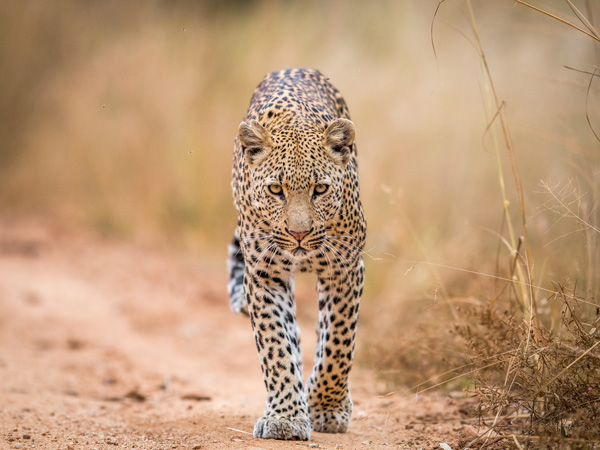
Leopard on safari in South Africa
Solo travellers can make their safari even better with the following tips.

Choose your season

High season is busier and more expensive, but it also tends to offer the best weather and wildlife spotting opportunities. However, you don’t necessarily have to visit at this time of year.

When you’re a solo traveller, travelling during the low or shoulder seasons can be worth it as you’re more likely to find accommodation deals with no single supplement. Provided you choose a lodge that isn’t accessed by charter flights, which usually require a minimum of two passengers to operate, a shoulder season safari can be a great choice.
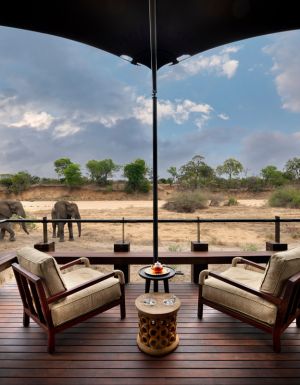
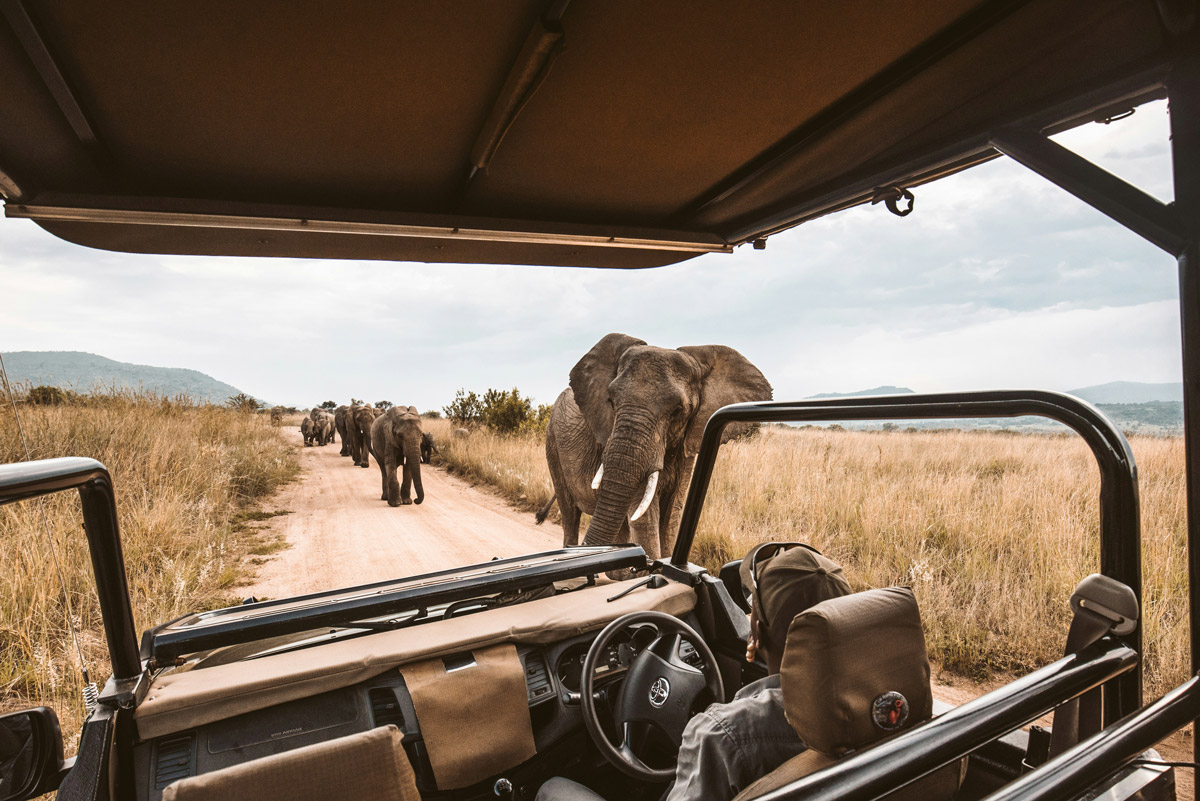
a herd of elephants at the back of a jeep safari
A shoulder season safari can be a great choice.

Consider the time of year

If you enjoy a sleep-in, you may prefer not to visit in summer as you’ll have an earlier wake-up call for the first game drive of the day. On the upside, this gives you more time to enjoy the lodge and its facilities before lunch.

In winter, the timings are different, with a later wakeup call and earlier second game drive and dinner as the days are shorter.
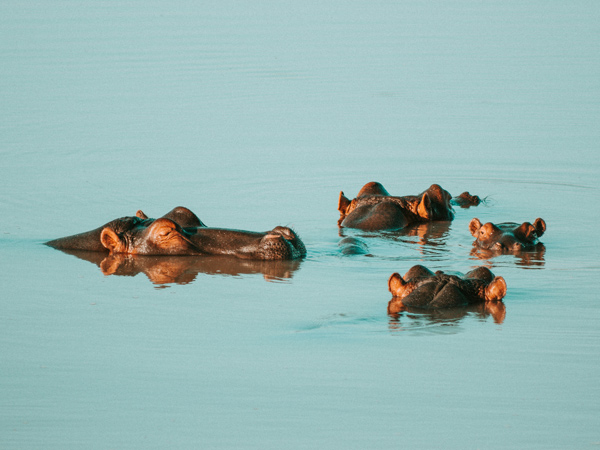
Hippos on safari in South Africa
The time of year you go on safari can determine the experience you might have.

Research different lodges

There are safari lodges in Africa to suit everybody; the trick is choosing the one that’s right for you. Some lodges welcome families, while others are honeymoon havens or popular with tour groups.

Solo travellers will likely be happiest at accommodations like Shamwari Private Game Reserve, which catered to a variety of travellers, most of whom spoke English, so it was easy to chat.
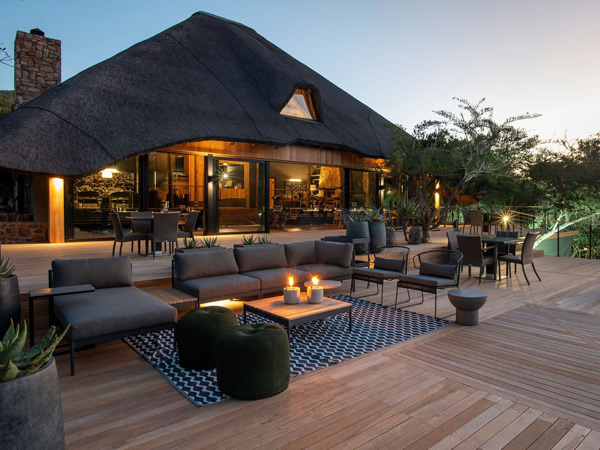
the Shamwari Private Game Reserve accommodation
Settle into the traditional Shamwari Private Game Reserve. (Image: Shamwari Private Game Reserve)

Check the dining arrangements

If you’re travelling alone, check the arrangements for meals and discuss alternatives, if necessary, before you book. I was always seated by myself for lunch, which was fine with me but may not suit everyone. Other lodges insist on communal dining for every meal.

Bayethe Safari Lodge at Shamwari Private Game Reserve offers a nice balance, with a brai (the South African equivalent of an Australian barbeque) for each safari group and their guide every second night. On the alternate evening, guests can dine as they wish.
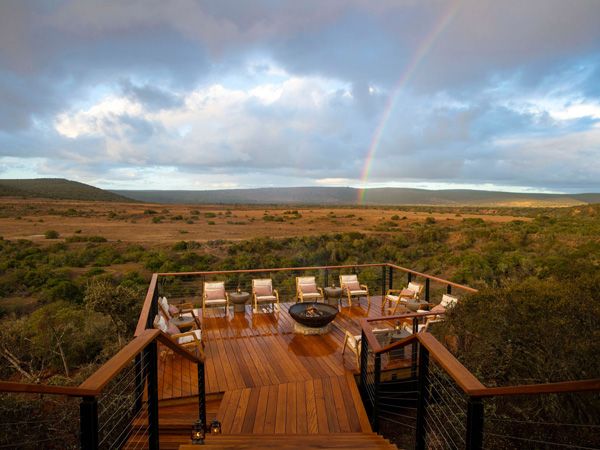
the outdoor safari deck with rainbow in the background at Shamwari Private Game Reserve
Bayethe Safari Lodge offers a nice balance of food options. (Image: Shamwari Private Game Reserve)

Pack light and leave your wheeled suitcase at home

Unless you’re staying at a high-end lodge, you’ll probably be carrying your own bag at least some of the time (or all of the time if you’re on a budget safari tour), so being able to move around comfortably with your luggage is essential.

Fortunately, it’s easy to pack light for an African safari as the weather is warm and clothes tend to dry quickly. Avoid bringing a wheeled suitcase as these don’t cope well with dirt roads and rugged paths.
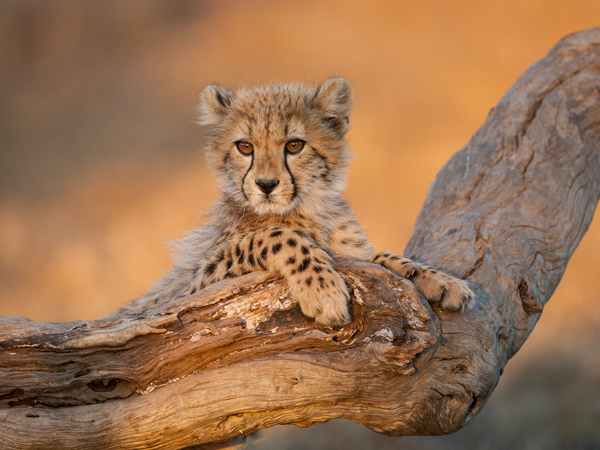
a baby cheetah resting on a tree branch
Your clothes will dry quickly in the African heat.

Don’t arrive at your lodge too early

While this might seem like a clever way to extract extra value for money from your trip, avoid the temptation to arrive at your lodge early in the morning. As I discovered, it can feel quite lonely waiting for your room to be ready while other guests gather around you, talking excitedly about what they’ve seen on their morning drive.

Instead, arrive just in time for lunch, settle into your room and then head out on your first game drive in the afternoon.
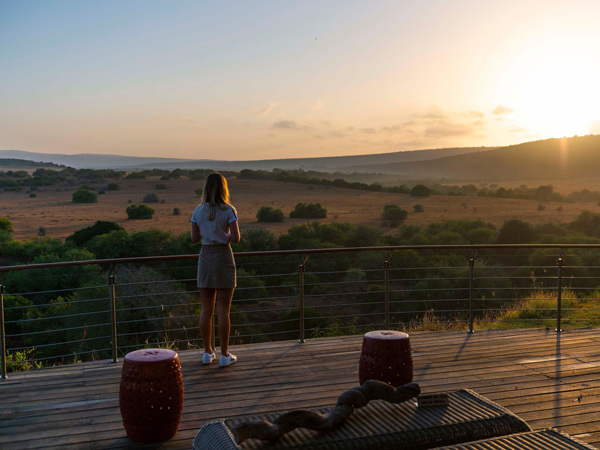
a woman relaxing on the balcony at sunrise, Shamwari Private Game Reserve
Avoid FOMO by not arriving too early in the day. (Image: Shamwari Private Game Reserve)

Embrace the opportunity to meet other travellers

The communal nature of a safari holiday lends itself to socialising so, even if you usually prefer your own company, embrace the opportunity to meet other travellers from around the world. Once you’ve met the people in your safari vehicle, it’s easy to strike up a conversation as you all share a passion for travel, nature, animals and conservation.
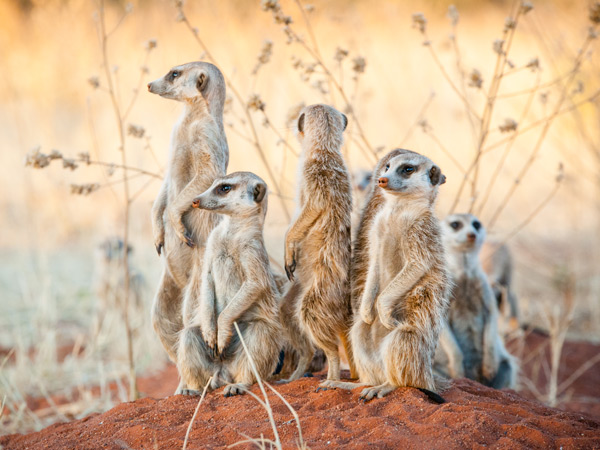
Meerkats on safari in South Africa
Meet like-minded travellers on your safari.

Weekly travel news, experiences
insider tips, offers,
and more.

Switching groups is possible, just ask

While it’s usually a pleasure meeting other travellers on safari, if you find yourself hoping your guide will find lions so you can feed an annoying ‘never-stops-talking’ guest to them, it’s possible to change groups. Simply ask discretely at the office or have a quiet word with your guide. Switching is easy as the lodge only needs to find a single spot in another jeep, yet another advantage of travelling solo.
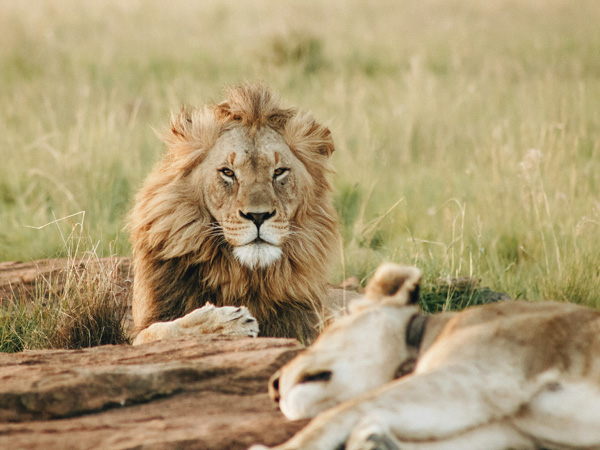
Lions on safari in South Africa
You can swap groups if you’re not vibing with your current one. (Image: Wade Lambert)

Get to know your guide

If you’re staying at a lodge for a few days or more, you’ll probably have your guide to yourself for a ‘private’ game drive or two, as the other people in your vehicle check out and a new group joins you. Sitting up front in a safari vehicle with no other guests is a special experience that only single travellers get to enjoy.

On these trips, conversation tends to venture beyond the usual safari patter, and includes the chance to learn more about the local wildlife and what life is like in South Africa from someone who lives there.
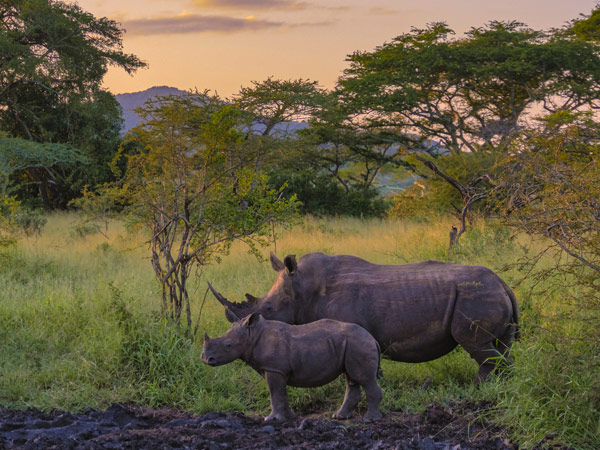
White Rhinos on safari in South Africa
Learn more about local wildlife with your guide.

Embrace the joy of quiet reflection

As a solo traveller, you’ll engage more deeply with your environment on safari, plus there is time for quiet reflection after each game drive. There is also much joy to be found in having the freedom to please yourself during such a unique travel experience. As I discovered, a solo safari is the ultimate holiday for adventurous single travellers.
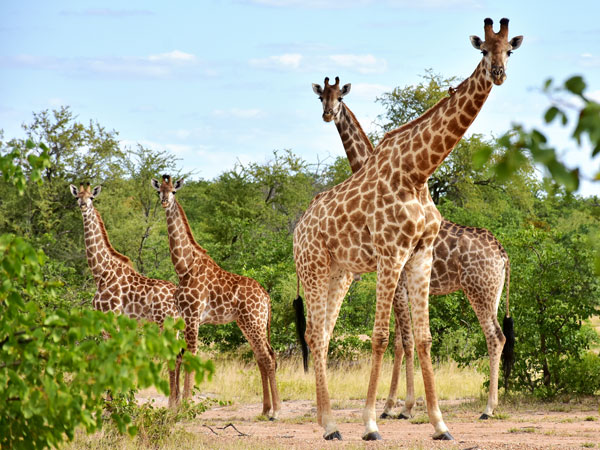
Giraffes on safari in South Africa
As a solo traveller, you’ll engage more deeply with your environment on safari.
The writer travelled with assistance from Shamwari Private Game Reserve.

Want to see more stories from International Traveller in your Google search results?

  1. Click here to set International Traveller as a preferred source.
  2. Tick the box next to "International Traveller". That's it.
hero media

At the foot of the pyramids, Egypt finally tells its own story

    Ancient Egyptian history has been scattered across the globe for decades, admired, preserved, and studied, but it’s rarely seen where it actually belongs. The newly opened Grand Egyptian Museum (GEM) brings it home.

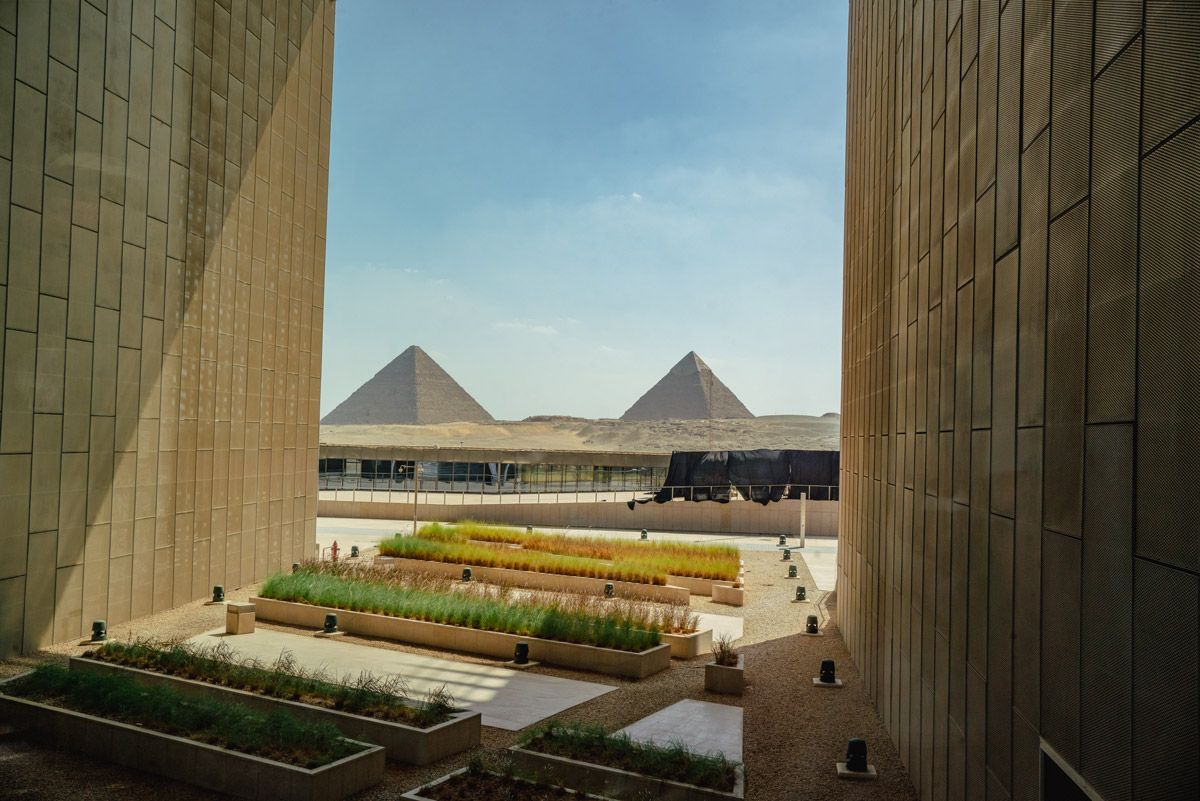
    From a viewing platform inside the Grand Egyptian Museum, the Great Pyramids of Giza rise from the desert, and for a moment, it feels like modern Egypt and ancient Egypt are shaking hands. The museum, grand in name and reality, has been a long time coming—since 1992, to be exact. Towering pharaohs, relics, and entire chapters of civilisation are on display here, all in full view of the pyramids. And because the GEM is the largest archaeological museum in the world dedicated to a single civilisation, it gets to tell Egypt’s story through its own voice, something many overseas institutions, understandably, haven’t quite managed.

    Reshaping Giza

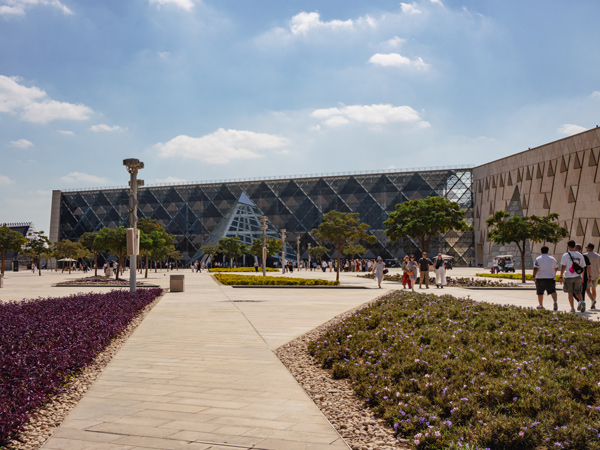
    GEM entrance and gardens
    The GEM holds its own commanding position. (Image: Natasha Bazika)

    You might expect any building beside the Great Pyramids of Giza to fade into the background, but the GEM doesn’t bow to its famous neighbours. Perfectly aligned on the same axis and vast enough to span 70 football fields, the museum is less of an addition to Giza and more of a marker of the shift from a gateway to a cultural district.

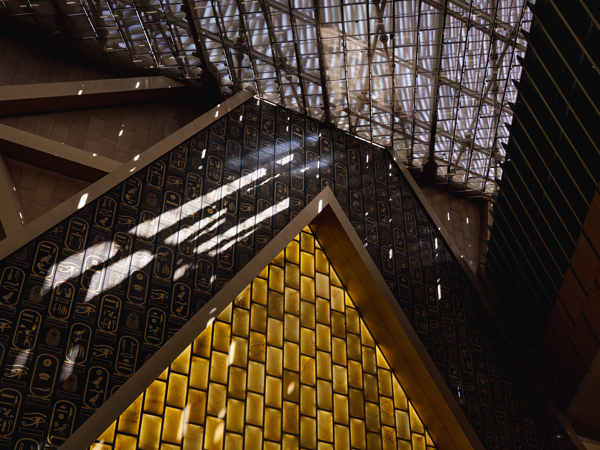
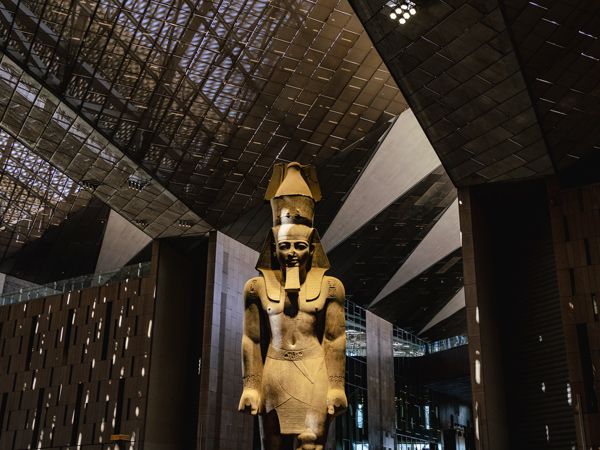
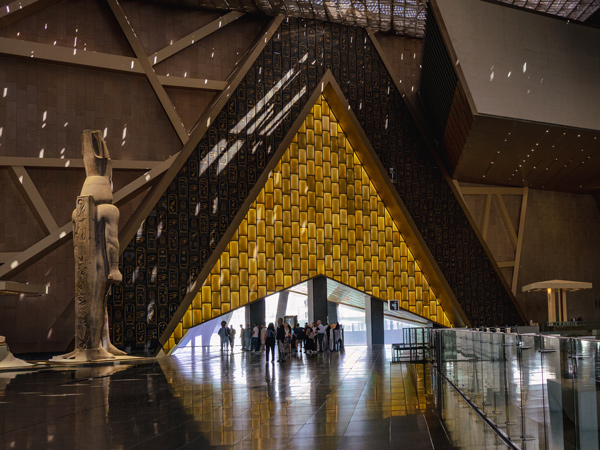
    Inside, hieroglyphs carved from alabaster sweep across the walls and triangles appear everywhere, yet it’s a 3,200-year-old, 11-metre-tall, statue of Ramesses II who commands the room. His scale dictated the soaring atrium ceilings, which pour in natural light, unusual in museums but safe for the stone artefacts displayed.

    Hieroglyphs line the walls of the main entrance of the GEM
    Hieroglyphs line the walls of the main entrance. (Image: Natasha Bazika)

    Unlike many museums, the GEM has really considered how visitors move through it. The six-storey grand staircase leads you chronologically through Egypt’s history, from the Predynastic era to the Coptic period, flanked by statues that grow in scale and complexity as you climb. Elevators and lifts run alongside, keeping the journey accessible to everyone.

    At the top, a viewing wall frames the pyramids before you enter the main gallery to see artefacts rarely seen outside tombs, including the complete contents of Tutankhamun’s tomb, a highlight for many visitors.

    Pharaohs, artefacts and everything in between

    The GEM's showpiece Ramesses II
    The GEM’s showpiece Ramesses II. (Image: Natasha Bazika)

    The GEM holds around 100,000 artefacts across seven millennia, but the experience is entirely modern. Digital panels, QR navigation and clear bilingual signage make self-guided wandering easy, while short, glare-free labels in English, Arabic and braille are colour-coded to move you from broad themes to object-level detail.

    That said, a guide adds context you don’t get from a panel. I was lucky to have Essam Al Ebd Aziz, an Egyptologist, on board a 12-day Uniworld Nile cruise, walk me through some of the museum’s standout pieces.

    Top of the list is, of course, the Tutankhamun exhibit. Almost everything from his tomb, much of it never shown outside the Valley of the Kings, is here, from his golden funerary mask to delicate jewellery and ceremonial objects. But the GEM isn’t just about one boy king.

    GEM entrance is guarded by an 11-metre-tall Ramesses II statue.
    An 11-metre-tall Ramesses II statue guards the entrance. (Image: Natasha Bazika)

    Essam points out the canopic chest of Hetepheres, mother of Khufu, where her organs were stored in alabaster. I loved the forty little marching soldier figurines from the tomb of Mesehti, all lined up and hanging on a wall. And then there’s the statue of Metri, a scribe, with piercing blue eyes carved from lapis lazuli. All these pieces, and thousands more, now sit under one roof. And for the first time, people can see Egypt’s history in one place, told in its own voice, without leaving the shadow of the pyramids. That alone changes everything.