hero media

Lions, high tea and romance: travel from Sydney to Namibia on this luxe rail journey

Evoke the romance of old-world rail travel on this 17-day luxury rail adventure through Namibia and South Africa.

Dramatic landscapes, diverse wildlife and a rich culture: all this and more make a trip to Namibia bucket list worthy. But how to get there? How about a luxury ride with Constellation Journeys’ inaugural trip from Sydney to Namibia on the world-renowned Rovos Rail, the ‘Pride Of Africa’?
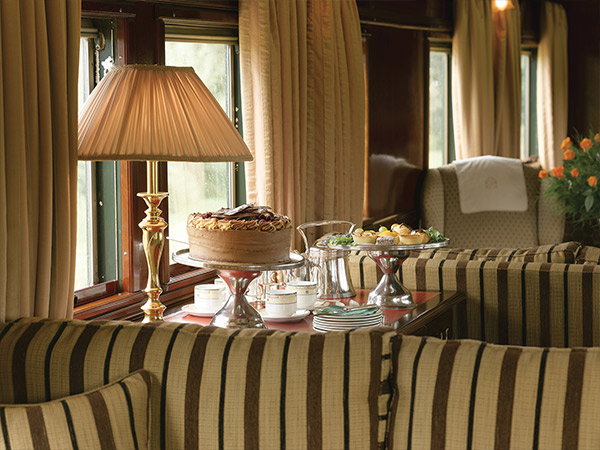
rovos rail lounge car
Travel in luxury and elegance on the Rovos Rail.

This exclusive 17-day luxury rail adventure through Namibia and South Africa combines the romance of rail travel with a backdrop of Africa’s most iconic landscapes. See the red dunes of Sossusvlei, join open-air safaris in Namibia’s largest wildlife sanctuary, Etosha National Park, take a private catamaran cruise in the striking coastal city of Walvis Bay, visit the cultural sites of Soweto and explore the eerie ghost town of Kolmanskop.
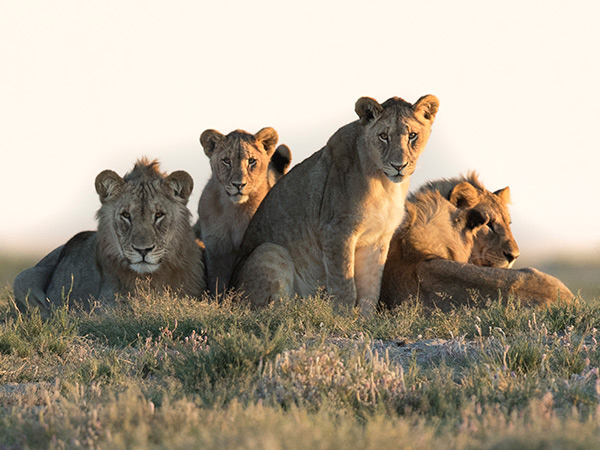
lioness pack in namibia
Spot local wildlife on an open-top safari.

“This journey is truly the epitome of exploration and indulgence," said Dan Kotzmann, Founder of Constellation Journeys, who created this tailored program with Product & Operations Manager, Jodie Andrews, based on their combined, extensive knowledge of Namibia.

“From wildlife safaris and desert panoramas to historic towns and luxury lodges, Namibia offers extraordinary diversity – best enjoyed at a leisurely pace aboard Rovos Rail."

Rovos Rail itself often makes top train journeys of the world lists for style, elegance, comfort and outstanding service. With a range of cabin choices, from mid-range, you’re looking at room for a king-sized bed, small table, small fridge, cupboard (plus overhead luggage rack) and a bathroom complete with toilet and shower. Not your average sleeper train!
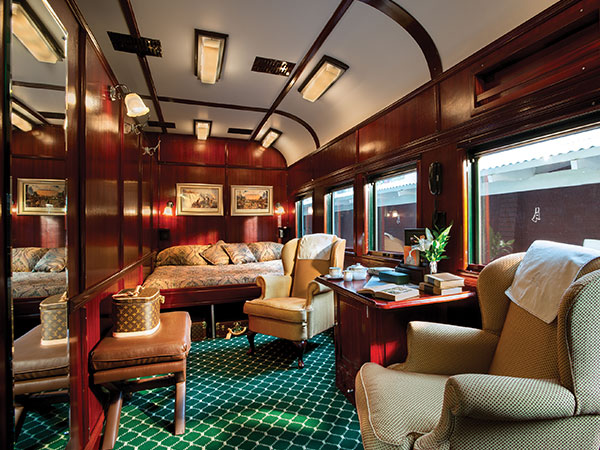
rovos rail royal room
Find plenty of room to spread out on board.

And Constellation Journeys tours are known for a very high ratio of staff to guests, expert Journey Leaders and a doctor on call who travels with guests.

The details

There are reportedly only a few rooms left on this Rovos Rail journey, so get in quick. The price is $32,925 per person. The tour departs from Sydney on 16 March 2026, flying into Johannesburg. Extra fees apply for this flight.

rovos rail through namibia desert
Travel from Johannesburg to Namibia.

Want to see more stories from International Traveller in your Google search results?

  1. Click here to set International Traveller as a preferred source.
  2. Tick the box next to "International Traveller". That's it.
Kassia Byrnes
Kassia Byrnes is the Native Content Editor for International Traveller. She's come a long way since writing in her diary about family trips to Grandma's. After graduating a BA of Communication from University of Technology Sydney, she has been writing about her travels (and more) professionally for over 10 years for titles like AWOL, News.com.au, Pedestrian.TV, Body + Soul and Punkee. She's addicted to travel but has a terrible sense of direction, so you can usually find her getting lost somewhere new around the world. Luckily, she loves to explore and have new adventures – whether that’s exploring the backstreets, bungee jumping off a bridge or hiking for days.
View profile and articles
hero media

At the foot of the pyramids, Egypt finally tells its own story

    Ancient Egyptian history has been scattered across the globe for decades, admired, preserved, and studied, but it’s rarely seen where it actually belongs. The newly opened Grand Egyptian Museum (GEM) brings it home.

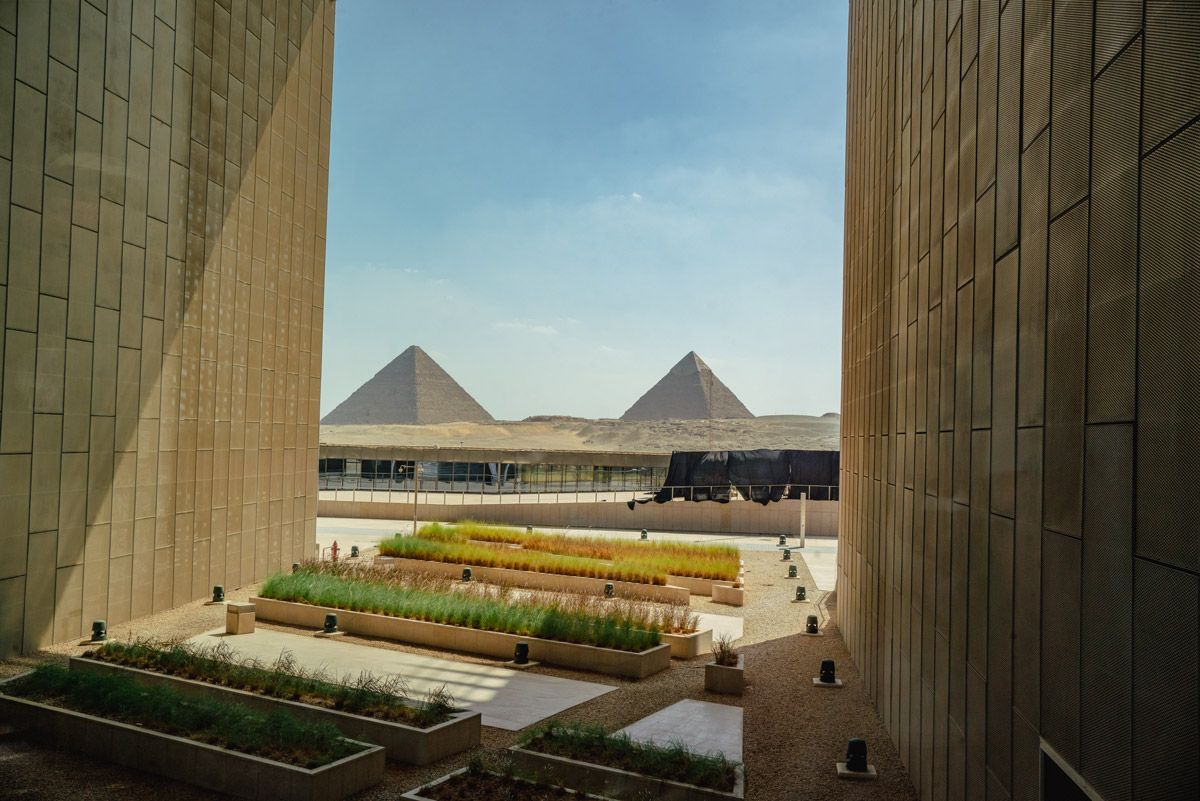
    From a viewing platform inside the Grand Egyptian Museum, the Great Pyramids of Giza rise from the desert, and for a moment, it feels like modern Egypt and ancient Egypt are shaking hands. The museum, grand in name and reality, has been a long time coming—since 1992, to be exact. Towering pharaohs, relics, and entire chapters of civilisation are on display here, all in full view of the pyramids. And because the GEM is the largest archaeological museum in the world dedicated to a single civilisation, it gets to tell Egypt’s story through its own voice, something many overseas institutions, understandably, haven’t quite managed.

    Reshaping Giza

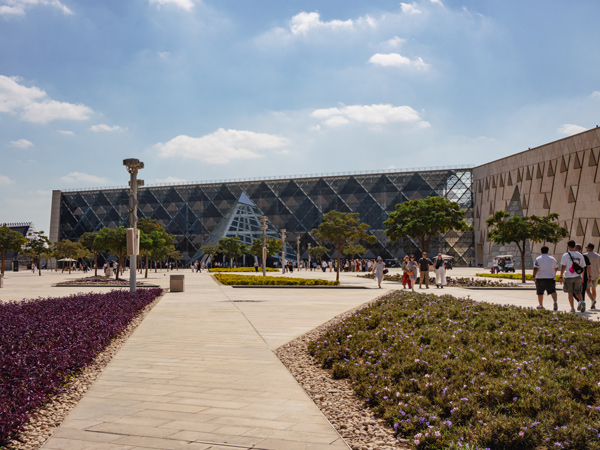
    GEM entrance and gardens
    The GEM holds its own commanding position. (Image: Natasha Bazika)

    You might expect any building beside the Great Pyramids of Giza to fade into the background, but the GEM doesn’t bow to its famous neighbours. Perfectly aligned on the same axis and vast enough to span 70 football fields, the museum is less of an addition to Giza and more of a marker of the shift from a gateway to a cultural district.

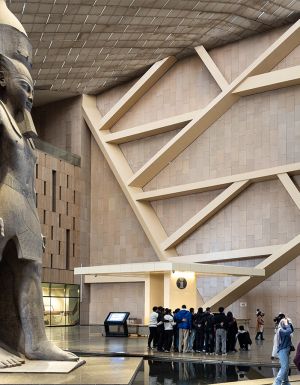
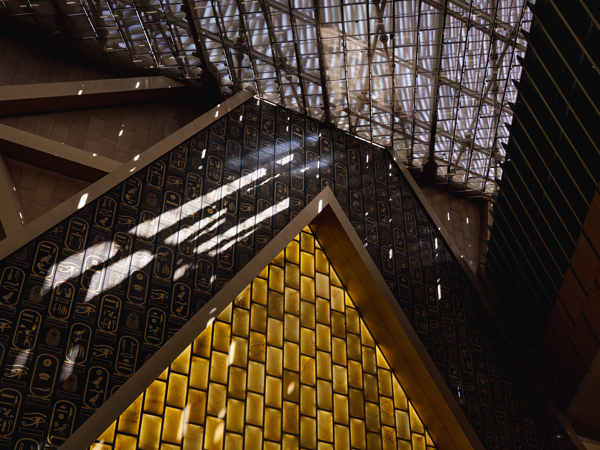
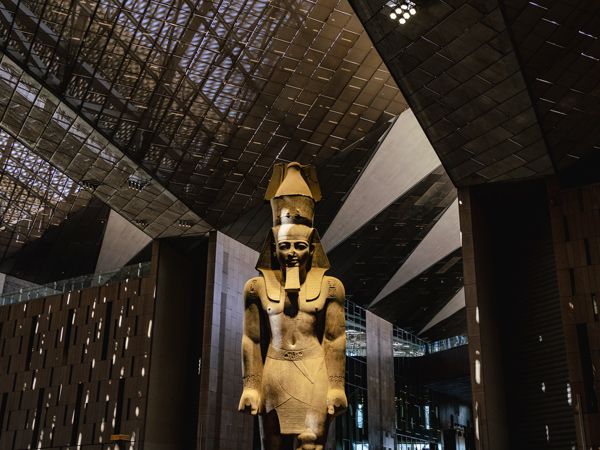
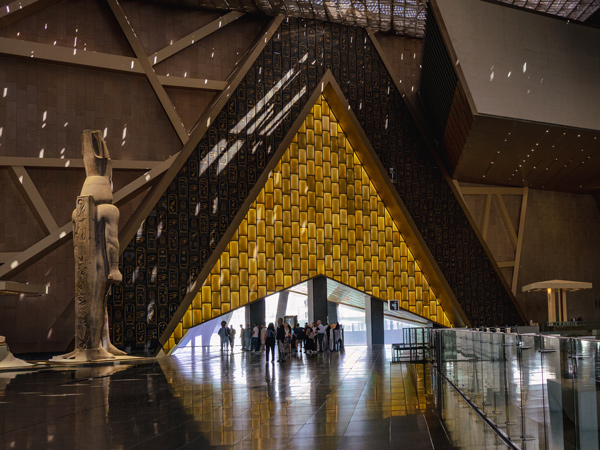
    Inside, hieroglyphs carved from alabaster sweep across the walls and triangles appear everywhere, yet it’s a 3,200-year-old, 11-metre-tall, statue of Ramesses II who commands the room. His scale dictated the soaring atrium ceilings, which pour in natural light, unusual in museums but safe for the stone artefacts displayed.

    Hieroglyphs line the walls of the main entrance of the GEM
    Hieroglyphs line the walls of the main entrance. (Image: Natasha Bazika)

    Unlike many museums, the GEM has really considered how visitors move through it. The six-storey grand staircase leads you chronologically through Egypt’s history, from the Predynastic era to the Coptic period, flanked by statues that grow in scale and complexity as you climb. Elevators and lifts run alongside, keeping the journey accessible to everyone.

    At the top, a viewing wall frames the pyramids before you enter the main gallery to see artefacts rarely seen outside tombs, including the complete contents of Tutankhamun’s tomb, a highlight for many visitors.

    Pharaohs, artefacts and everything in between

    The GEM's showpiece Ramesses II
    The GEM’s showpiece Ramesses II. (Image: Natasha Bazika)

    The GEM holds around 100,000 artefacts across seven millennia, but the experience is entirely modern. Digital panels, QR navigation and clear bilingual signage make self-guided wandering easy, while short, glare-free labels in English, Arabic and braille are colour-coded to move you from broad themes to object-level detail.

    That said, a guide adds context you don’t get from a panel. I was lucky to have Essam Al Ebd Aziz, an Egyptologist, on board a 12-day Uniworld Nile cruise, walk me through some of the museum’s standout pieces.

    Top of the list is, of course, the Tutankhamun exhibit. Almost everything from his tomb, much of it never shown outside the Valley of the Kings, is here, from his golden funerary mask to delicate jewellery and ceremonial objects. But the GEM isn’t just about one boy king.

    GEM entrance is guarded by an 11-metre-tall Ramesses II statue.
    An 11-metre-tall Ramesses II statue guards the entrance. (Image: Natasha Bazika)

    Essam points out the canopic chest of Hetepheres, mother of Khufu, where her organs were stored in alabaster. I loved the forty little marching soldier figurines from the tomb of Mesehti, all lined up and hanging on a wall. And then there’s the statue of Metri, a scribe, with piercing blue eyes carved from lapis lazuli. All these pieces, and thousands more, now sit under one roof. And for the first time, people can see Egypt’s history in one place, told in its own voice, without leaving the shadow of the pyramids. That alone changes everything.